

KitchenCanvas is the kind of file that looks like another Windows app, but okay, time out here, this is where you slow down. If you saw KitchenCanvas.exe after visiting kitchen-canvas.com, do not treat it like a normal download.
Now that does not mean your PC is infected just because a page opened. The danger starts when the file is downloaded or launched on the computer. Security tools have connected it with loader-like behavior, which means it may help bring in other unwanted stuff.
What makes this concerning is the behavior around it. Similar to Tomodachi Life malware and Instaler.exe, It may check browser settings, proxy information, installed programs, and system details, which is not what you expect from a harmless kitchen or design app. You might also see uninstall entries or strange related files.
We tested that SpyHunter successfully removes KitchenCanvas.exe* and we recommend using it. It will block KitchenCanvas.exe from reinstalling itself and it will make sure your device is clean from any malware.
 Try Free For 7 Days*
Buy now15% OFF if you buy straight without trial.
 OFFER
OFFERSo here is the safe way to look at it. If KitchenCanvas appears in downloads or installed programs, assume it is a potential threat. Follow the removal guide, and if that feels too complicated, SpyHunter 5 can help remove unwanted programs and viruses.
KitchenCanvas Removal Guide
This first section is a fast check for the most common visible traces of KitchenCanvas. It is worth trying before the longer guide because it may remove a simple installation quickly. If the infection survives the restart, proceed to the full cleanup without skipping sections.
Quick Manual Removal for KitchenCanvas – Try This First
- 1.1First, go to your downloads folder (This PC > Downloads), sort the items there by date, and see if any suspicious files have been downloaded recently. Found anything fishy? Delete it before continuing.
- 1.2Next, go to the Start Menu, navigate to Settings (the gear icon), and then to Apps.
- 1.3You’ll see all installed programs listed on that page – sort them by installation date and look for KitchenCanvas or anything else that looks suspicious, unfamiliar, or unwanted.
- 1.4If you find KitchenCanvas or another sketchy app, select it and start the uninstallation process. Be careful when following the uninstallation prompts so that you don’t let anything linked to the program remain on your PC.
-
1.5Afterward, look for the installation directory. You’ll often find it at
C:\UserNames\UserName\AppData\Local\Programs\, but it might also be elsewhere. - 1.6If you find the malware folder, remove it together with any leftover files that might still be in it.
After these initial steps, restart the machine and check whether the suspicious behavior has ended. If the same problem returns, that usually means a deeper startup entry, locked file, or hidden folder still needs to be removed.
SUMMARY:
| Name | KitchenCanvas.exe |
| Type | Trojan |
| Detection Tool |
Some threats reinstall themselves if you don’t delete their core files. We recommend downloading SpyHunter to remove harmful programs for you. This may save you hours and ensure you don’t harm your system by deleting the wrong files. |
How to Fully Get Rid of KitchenCanvas
The complete guide begins with SpyHunter 5 because it can search for KitchenCanvas before you spend time checking processes, folders, scheduled tasks, and registry entries by hand. The scan is optional, but it is strongly recommended for a faster and less error-prone cleanup.
Fastest Removal Option: Use SpyHunter 5
- 1.1Click here to download and install the anti-malware tool on your PC.
- 1.2
 Start SpyHunter 5, click the Buy button and choose between starting your 7-days free trial or directly purchasing the tool.
If you choose to buy SpyHunter 5 now, you can use our discount code, “HTRG15“, for 15% off.
- 1.3
 Once you activate SpyHunter, click Start Scan Now, select the Full Scan option, and let the tool do its job.
 - 1.4
 Once the scan completes (it could take a while, so have patience), you’ll see all malware and other undesirables listed.
Click Next to review the detections and then click Next again to delete all rogue items.
Preparatory Steps for Removing KitchenCanvas
Two setup actions make the manual part easier and safer when dealing with KitchenCanvas. First, show hidden files so concealed folders are visible. Then install the unlocking utility, which helps delete suspicious files that are being held by active processes.
1. Preparing for the KitchenCanvas Removal
- 1.1
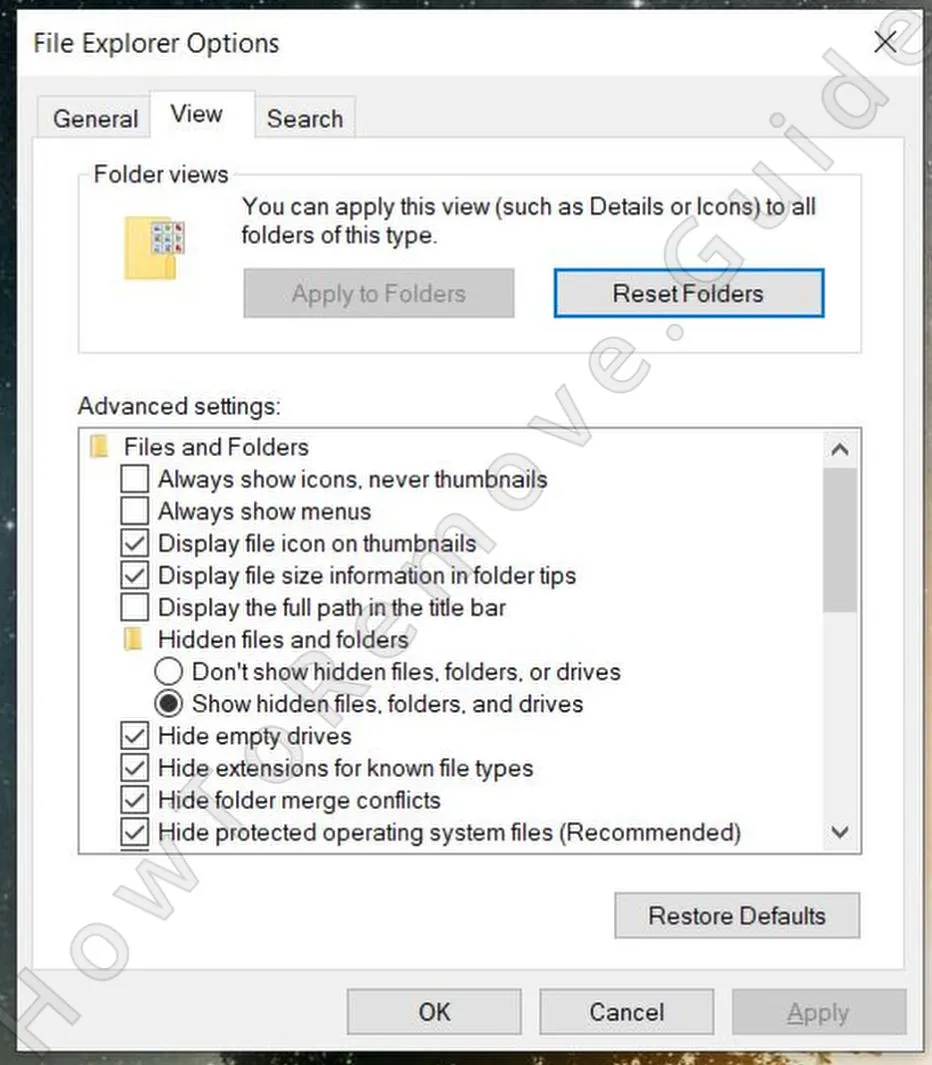 The first preparatory step you must perform is to enable the visibility of hidden files and folders.
Do this by searching for Folder Options in the Start Menu and selecting the View tab. Then activate “Show hidden files and folders” and save the change by clicking Apply and then OK. - 1.2Next, you’ll need to download and install a free utility called LockHunter It’s crucial because it lets you delete files locked by malicious processes.
You can continue manually, but some files may resist normal deletion even when you have found them. That happens when a running process keeps the file in use, so the utility gives you a way to remove the lock and delete the folder.
LockHunter is free, quick to install, and does not require a user account. Keep it ready for the moments when File Explorer reports that a suspicious item cannot be deleted because it is currently open or locked.
Remove KitchenCanvas Processes From the Task Manager
Look for active KitchenCanvas components in Task Manager, but expect the process name to vary or look intentionally ordinary. Judge suspicious entries by behavior, high CPU or memory use, location on disk, and whether the process matches software you installed.
2. How to Delete KitchenCanvas Processes in the Task Manager
-
2.1This is done through the Task Manager which you can open by pressing
Ctrl + Shift + Esc. - 2.2If it shows a simplified view, click More Details to expand it and see all running processes.
- 2.3
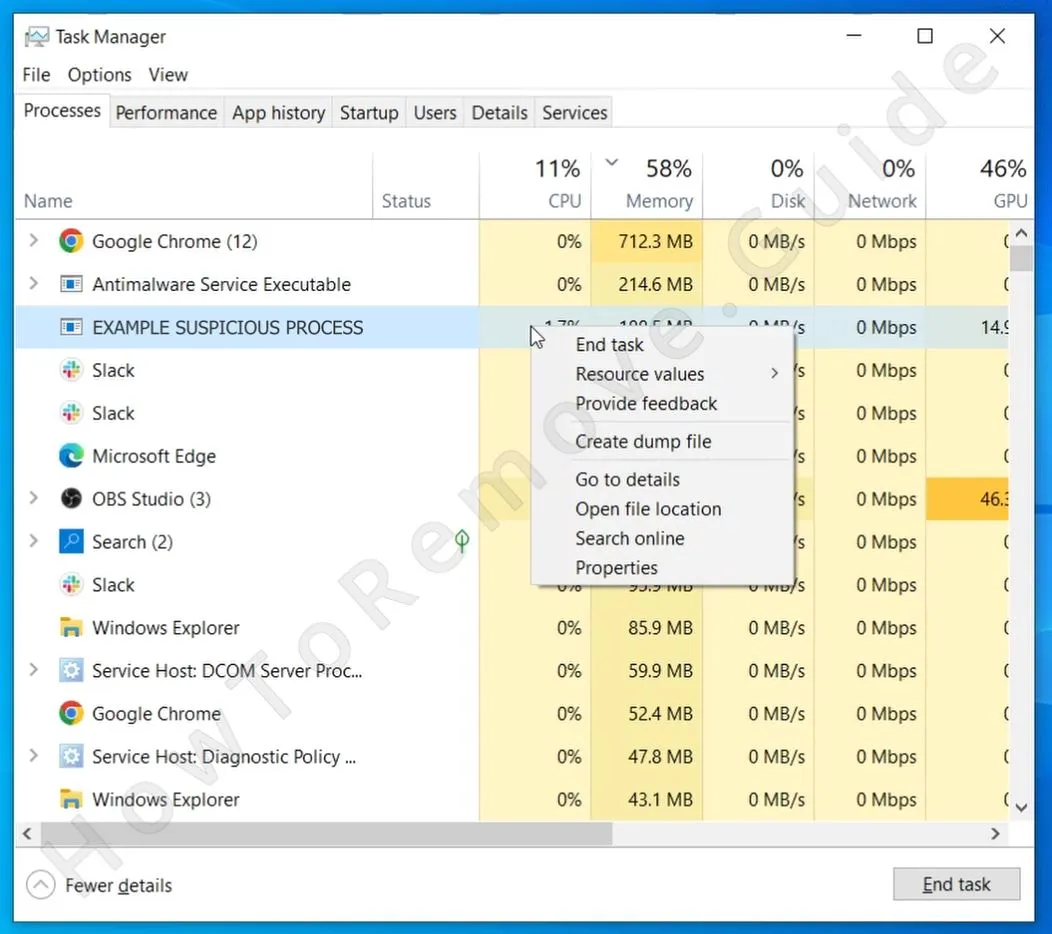 Sort the list of processes by how much Memory or CPU they are using. Then look out for any that are using unusually large amounts of either resource type and yet don’t seem related to any legitimate programs that you have on your PC.
Note: Don’t expect to find a rogue process named “KitchenCanvas“. Most forms of malware will hide their processes under innocent-looking names.
- 2.4For each dubious process, right-click it and select Open file location. This will lead you to a folder where the data used by this process is stored.
- 2.5You must delete that entire folder, but you’ll likely get an error when you attempt to do that because some of the files there are in use by the malware. The workaround is to use LockHunter: right-click the folder, select “What’s locking this folder?” from the context menu, and click Delete in the next window.
- 2.6After removing the files, go back to Task Manager, write down the name of the rogue process (you’ll need it later), then click it, and click the End Task button to quit it.
Delete KitchenCanvas Virus Files
The remaining files for KitchenCanvas can be spread across several locations, including Startup folders, Program Files, AppData, Roaming, and Temp. Check every listed path carefully and patiently, because a single surviving launcher may be enough to bring the problem back.
3. How to Get Rid of KitchenCanvas Files
-
3.1Start by examining the Startup folders at:
C:\ProgramData\Microsoft\Windows\Start Menu\Programs\StartupC:\Users\*Your Username*\AppData\Roaming\Microsoft\Windows\Start Menu\Programs\Startup -
3.2Search them for suspicious files, but if you aren’t what files are rogue, just delete everything in those folders except for the
desktop.inifile, which is a standard system file. -
3.3Next, inspect the
Program FilesandProgram Files (x86)in yourC:drive. Some malware apps will create folders there, so look for anything that looks linked to KitchenCanvas or that is otherwise unrecognized or out-of-place folders. Delete anything suspicious you may find. -
3.4Three other locations you must check are:
C:\Users\%user%\AppData\Local\C:\Users\%user%\AppData\Local\Programs\C:\Users\%user%\AppData\Roaming\Microsoft\Windows\Start Menu\Programs\
Again, if you notice anything fishy in them, it must be deleted. And if there’s a folder you aren’t sure about, it’s probably best to get rid of it. At worst, it will be something harmless linked to a legitimate program in your system. However, if you didn’t recognize its name right away, chances are it’s something you either don’t need or something that’s outright unwanted (like KitchenCanvas). -
3.5
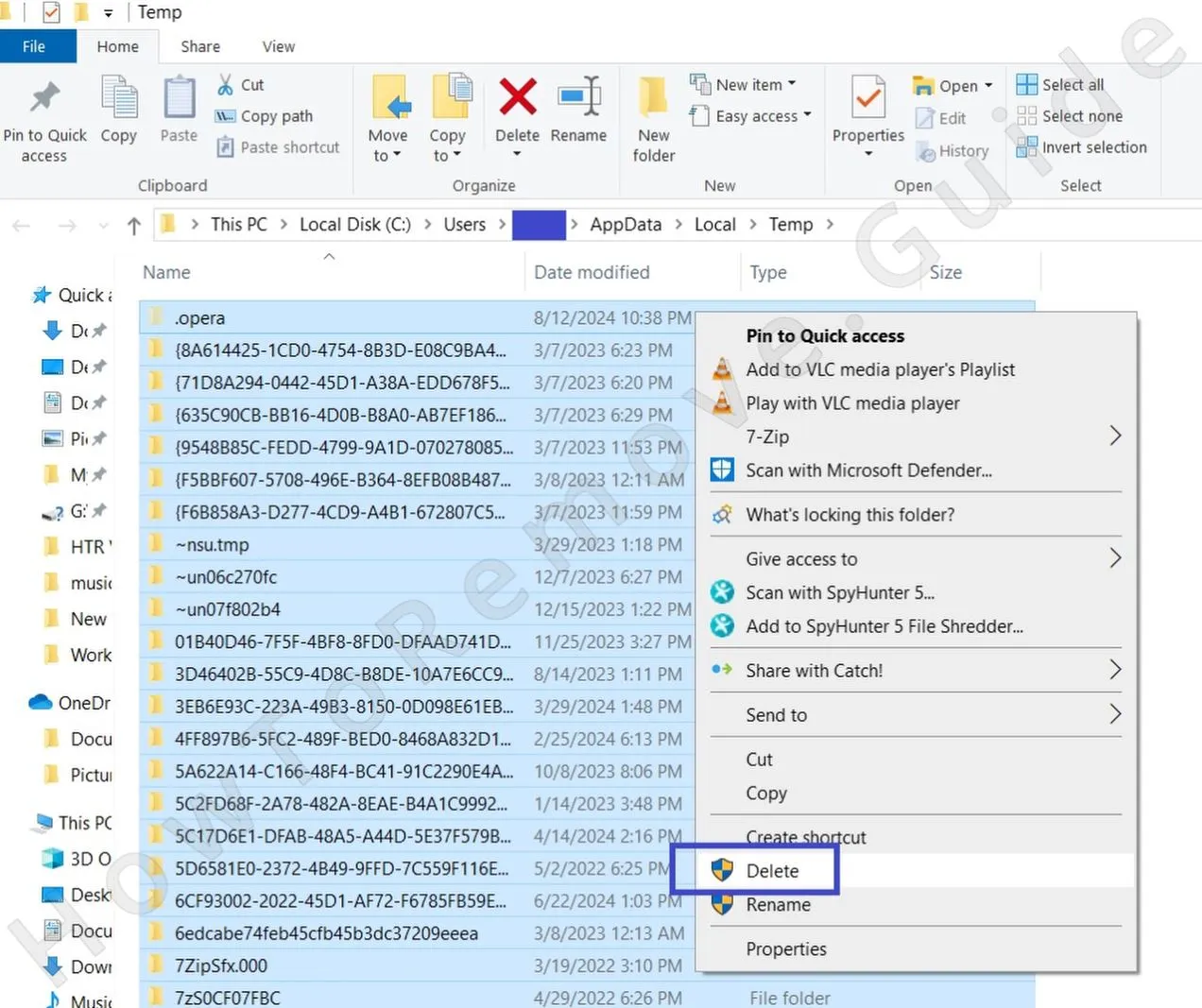 Finally, remember to clear the Temp folder. It’s located at
C:\Users\YourUsername\AppData\Local\Temp.
It stores only temporary files, which are all okay to delete. So, to save yourself some time spent looking for malware files, just Ctrl + A to select everything, and then press Delete from your keyboard to delete all of the folder’s contents.
Get Rid of KitchenCanvas Scheduled Tasks
Task Scheduler can give KitchenCanvas a way to restart at login, on a timer, or after system events. Inspect unfamiliar tasks, especially their action paths, and remove entries that clearly point to suspicious executables or scripts in unexpected folders you do not recognize.
4. Eliminate KitchenCanvas Scheduled Tasks
- 4.1
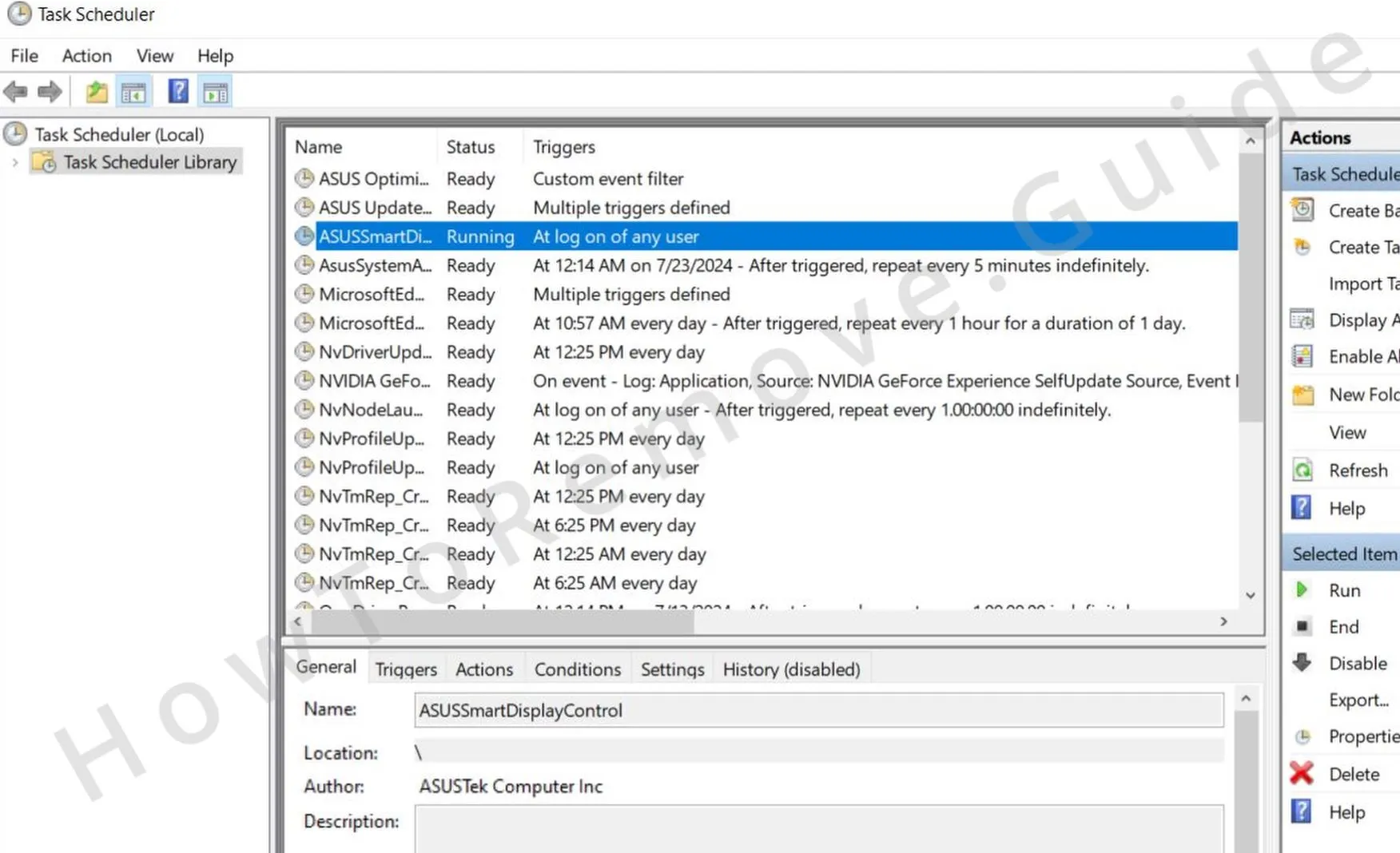 Open the Task Scheduler by searching for it in the Start Menu search bar. Then, one by one, review the scheduled tasks in the Task Scheduler Library.
 -
4.2For each task, double-click it and open the Actions tab, where you can learn what it is that the task is set to perform. Look for tasks that run unfamiliar executables, scripts, or anything located in the
AppDataorRoamingdirectories. - 4.3If you come across a task that executes anything suspicious, write down its file path, then right-click the task, and select Delete.
- 4.4After that, go to the file path you saved and delete the file that the task was set to run.
Uninstall the KitchenCanvas Malware App Through the Windows Registry
Registry entries connected to KitchenCanvas may keep the threat loading with Windows, but careless edits can damage legitimate settings. Follow the described searches closely and switch to SpyHunter 5 if you are unsure whether a value is safe to delete.
5. Remove KitchenCanvas Through the Registry
- 5.1Type “regedit” in the Start Menu and hit Enter to go to the Registry Editor.
- 5.2Then click Edit > Find to open the search box and then type the exact name of whatever program you tried to uninstall during the quick steps at the start of the guide.
- 5.3Click Find Next and if a result comes up, click the registry key (folder) in the left panel that contains it and delete that key. Perform another search after each deleted key until there are no more results for that search query.
- 5.4Next, search for the name of any other programs you attempted to delete. Also search for the names of processes you ended in the Task Manager earlier in the guide.
-
5.5After you’ve deleted all relevant entries, manually navigate to these registry keys:
HKCU\Software\Microsoft\Windows\CurrentVersion\RunHKCU\Software\Microsoft\Windows\CurrentVersion\RunOnceHKLM\Software\Microsoft\Windows\CurrentVersion\RunHKLM\Software\Microsoft\Windows\CurrentVersion\RunOnceHKLM\Software\Microsoft\Windows\CurrentVersion\Policies\Explorer\RunHKCU\Software\Microsoft\Windows\CurrentVersion\Policies\Explorer\RunHKEY_LOCAL_MACHINE\Software\Microsoft\Windows\CurrentVersion\RunServicesHKEY_LOCAL_MACHINE\Software\Microsoft\Windows\CurrentVersion\RunServicesOnceHKEY_LOCAL_MACHINE\Software\Microsoft\Windows\CurrentVersion\RunOnce\SetupHKEY_LOCAL_MACHINE\SYSTEM\CurrentControlSet\services - 5.6Select each of these keys to reveal their contents in the right panel. Then look for values referencing KitchenCanvas or any unknown applications. Delete only the specific values linked to the malware and leave the keys that contain them intact.
