

If you’ve noticed your PC crawling, freezing, or coughing up strange files, there’s a fair chance Stealerium has slipped in. A Trojan Horse that first showed up on GitHub in 2022 wrapped in the innocent-sounding label of “for education.” Underneath, though, it’s a .NET-built info-stealer that grabs elevated privileges the moment it settles in. From there, it does whatever its operators fancy: siphoning credentials, bank details, crypto wallets, VPN logins, browser cookies, even Steam tokens; or quietly harvesting sensitive files and Windows keys. Sometimes it plays cryptominer, sometimes a data thief, and sometimes just a staging ground for more malware. Distribution is classic social engineering – invoices, booking requests, bogus payment reminders – packaged with archives, IMG, JS, or VBS files. And once installed, it can hide its tracks with dynamic blocklists and offload your data through unusual pipes like Zulip chat or GoFile. Bottom line: this Trojan’s versatility, similar to Trojan:Win32/Vigorf.A and PDF Editor, is exactly what makes it dangerous. Disconnect, quarantine, and prepare a careful, step-by-step cleanup before the damage multiplies.
We tested that SpyHunter successfully removes Stealerium* and we recommend using it. It will block Stealerium from reinstalling itself and it will make sure your device is clean from any malware.
 Try Free For 7 Days*
Buy now15% OFF if you buy straight without trial.
 OFFER
OFFERStealerium Removal Guide
Starting with the simplest option prevents unnecessary changes and establishes a clean baseline for troubleshooting. Try uninstalling Stealerium first through Windows before taking deeper actions. Many issues clear up with a normal removal, and if they don’t, you’ll still have eliminated obvious components and made the later steps easier to carry out reliably.
Quick Steps to Remove Stealerium
- 1.1Before hunting obscure artifacts, open the Start menu and launch Settings (gear icon) so you can remove Stealerium the supported way. The Settings hub governs apps, hardware, and many policy-level controls. It’s the safest entry point for initial cleanup.
- 1.2Now that Settings is open, head into Apps. This view presents everything installed and lets you re-sort the list. Give it a moment if entries are loading slowly, since Windows sometimes populates this page in batches.
- 1.3To correlate new problems with recent changes, sort the apps list by Installation date. Grouping by recency helps you pinpoint items added around the time symptoms began and reduces scanning fatigue compared to reading alphabetically.
- 1.4With the list in order, review unfamiliar entries or anything you don’t recall installing. Select the suspect program, click Uninstall, and accept any prompts. If User Account Control appears, confirm with an administrator account so the removal can complete fully.
- 1.5After the uninstaller finishes, open File Explorer and navigate to C:\Users\YourUsername\AppData\Local\Programs. Look for leftovers using the same name or a similarly named folder. Some publishers leave behind updaters or helper files that don’t remove themselves.
- 1.6Should you find remnants, right-click the folder and choose Delete, then empty the Recycle Bin. Restart the system to force Windows to release any handles and refresh environment variables.
If symptoms remain after reboot, proceed with the full cleanup below.
SUMMARY:
How to Fully Get Rid of Stealerium
If a component is still running, it can reveal where it lives by locking files or spawning related tasks. That behavior can be useful for tracing Stealerium while it is active. Work carefully through these steps, documenting names and paths you encounter so you can cross-check them later.
1. Preparing for the Stealerium Removal
- 1.1
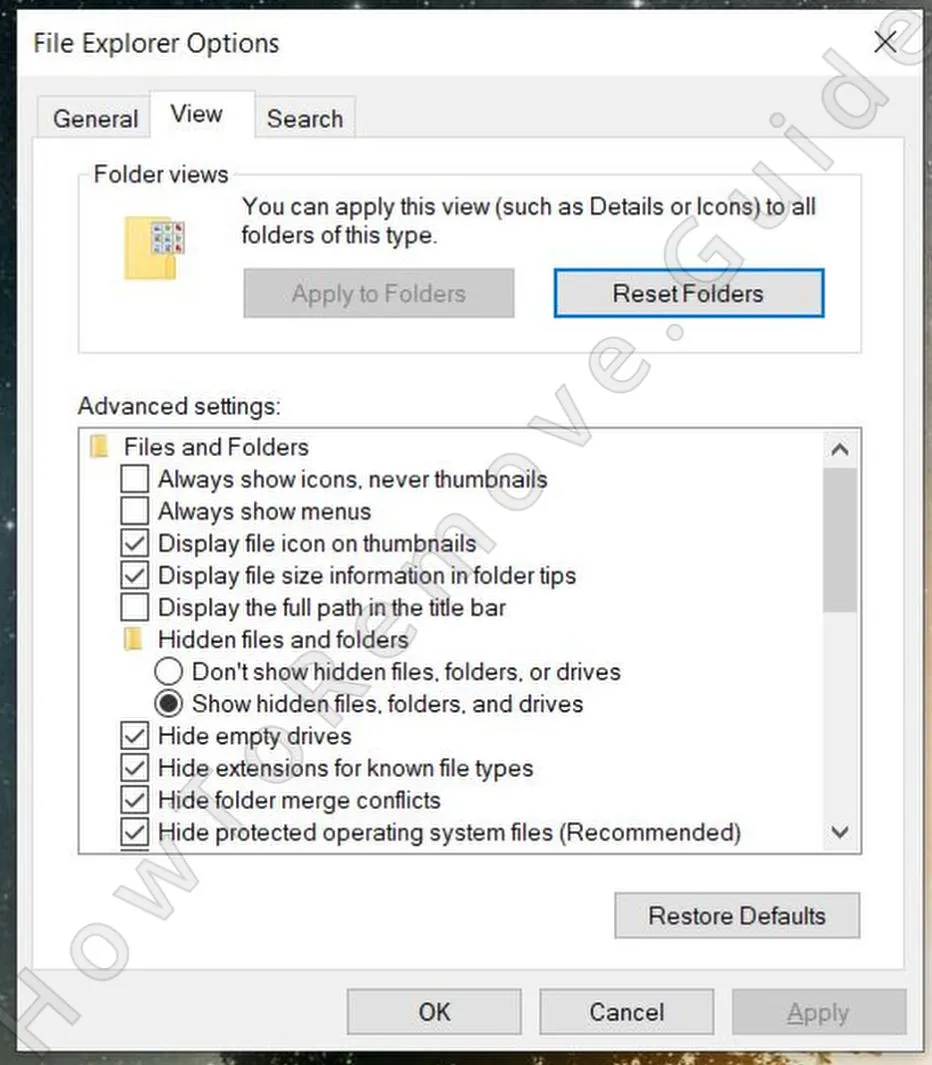 Hidden files often mask persistence points, so first open the Start menu, search Folder Options, then in View enable Show hidden files, folders, and drives and click Apply. This exposes concealed AppData locations that Stealerium could be using to survive reboots.
 - 1.2When Windows refuses to delete an in-use file, you’ll need help. Install LockHunter to identify locks and remove stubborn items safely. Keep it available throughout the guide, as you may need to free folders during multiple phases of the cleanup.
We understand if you don’t want to use third-party software and we generally try to keep our guides entirely “hands-on”. However, in this case, you may need this app to eliminate some malware files which is an essential part of the removal process.
But don’t worry, LockHunter won’t ask for money, doesn’t have ads, and doesn’t even require a registration. You can download and install it in about two minutes.
Remove Stealerium Processes From the Task Manager
Active processes can re-spawn deleted files or block changes, which makes persistence harder to dismantle. If you end them and remove their on-disk sources, the system can stabilize. Approach this methodically and favor verification over hunches to avoid terminating essential Windows services connected to Stealerium lookalikes.
2. How to Delete Stealerium Processes in the Task Manager
- 2.1Wondering where to see what’s running right now? Press Ctrl+Shift+Esc to open Task Manager, then review current apps and background tasks for entries tied to Stealerium. This window provides resource usage and quick links that aid investigation.
- 2.2If Task Manager shows the compact view, expand it by clicking More details in the lower-left corner. The additional tabs, including Processes, Startup apps, and Details, make it easier to pivot between high-level and granular views.
- 2.3
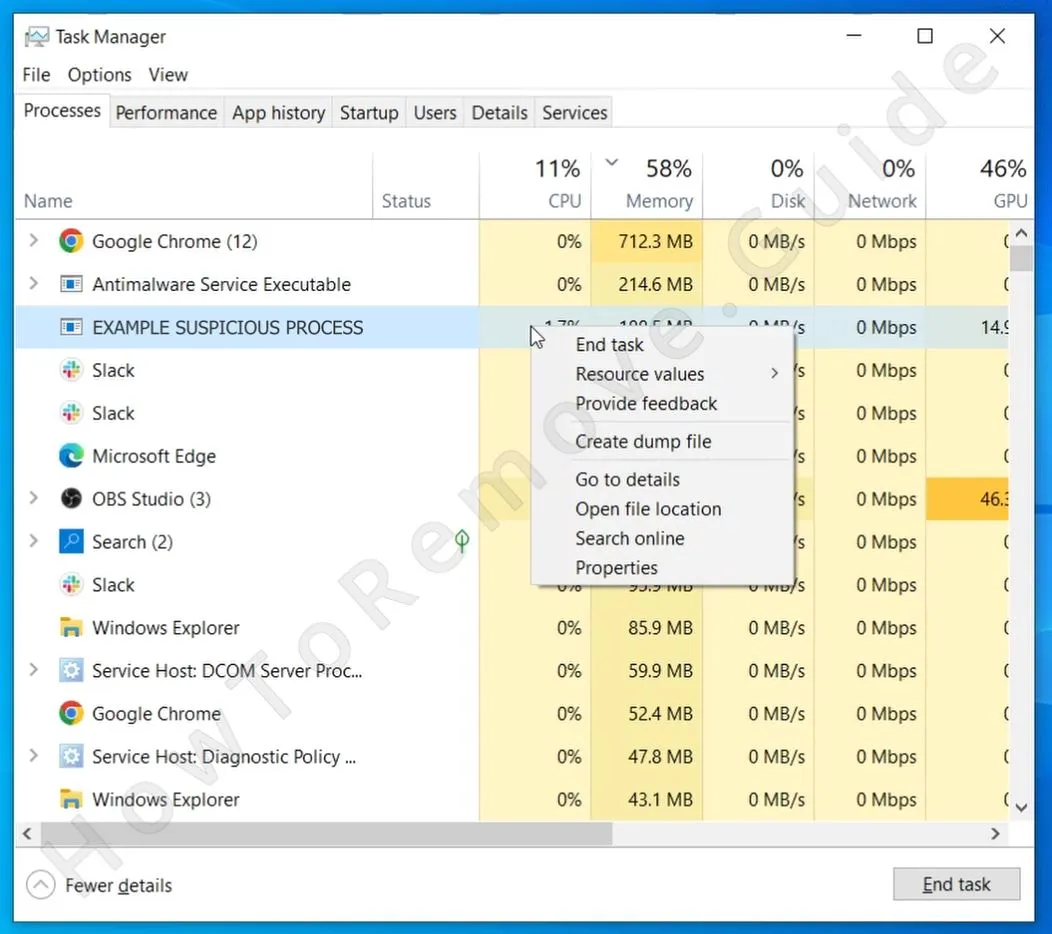 To prioritize suspicious items, sort by CPU or Memory using the column headers. Unexpected spikes from unknown names deserve attention.
Note: Don’t expect to find a rogue process named “Stealerium“. Most forms of malware will hide their processes under innocent-looking names.
- 2.4When an entry seems questionable, right-click it and select Open file location. Knowing where the executable resides is revealing. Files running from user-space paths like AppData are more suspect than signed binaries under C:\Program Files.
- 2.5Try deleting the entire containing directory from the file location window. If Windows blocks the action, right-click the folder and choose What’s locking this file? via LockHunter to release the grip and remove it. Eliminating the whole folder clears sidecar DLLs and loaders together.
- 2.6Return to Task Manager, highlight the same process, and click End task. This halts any immediate relaunch during cleanup. If it respawns instantly, that’s an indicator of a scheduled task or service you’ll handle in later sections.
We tested that SpyHunter successfully removes Stealerium* and we recommend using it. It will block Stealerium from reinstalling itself and it will make sure your device is clean from any malware.
Try Free For 7 Days*
Buy now15% OFF if you buy straight without trial.
Delete Stealerium Virus Files
Startup folders and program directories are common persistence points. Scripts, shortcuts, and renamed executables can all relaunch the unwanted software. Removing these items breaks automatic loading and stops rollbacks that undo your progress while you’re working against Stealerium.
3. How to Get Rid of Stealerium Files
- 3.1Start with the Startup locations used at logon. Open File Explorer and visit C:\ProgramData\Microsoft\Windows\Start Menu\Programs\Startup and C:\Users\YourUsername\AppData\Roaming\Microsoft\Windows\Start Menu\Programs\Startup. Delete questionable shortcuts or scripts that reference components associated with Stealerium.
- 3.2Clear both Startup directories entirely except for desktop.ini. That file configures the folder’s view and shouldn’t be touched. If deletion fails because a file is in use, unlock and remove it with LockHunter rather than skipping it.
- 3.3Next, browse to C:\Program Files and C:\Program Files (x86). Sort by Date modified to surface recently changed folders. Validate unknown vendor names, then permanently delete directories that aren’t part of legitimate software you recognize.
- 3.4Continue with C:\Users\YourUsername\AppData\Local\Programs and C:\Users\YourUsername\AppData\Roaming\Microsoft\Windows\Start Menu\Programs. Items stashed here often masquerade as helpers or updaters. Remove any folder or link that appears out of place, especially those created around the onset of symptoms.
- 3.5
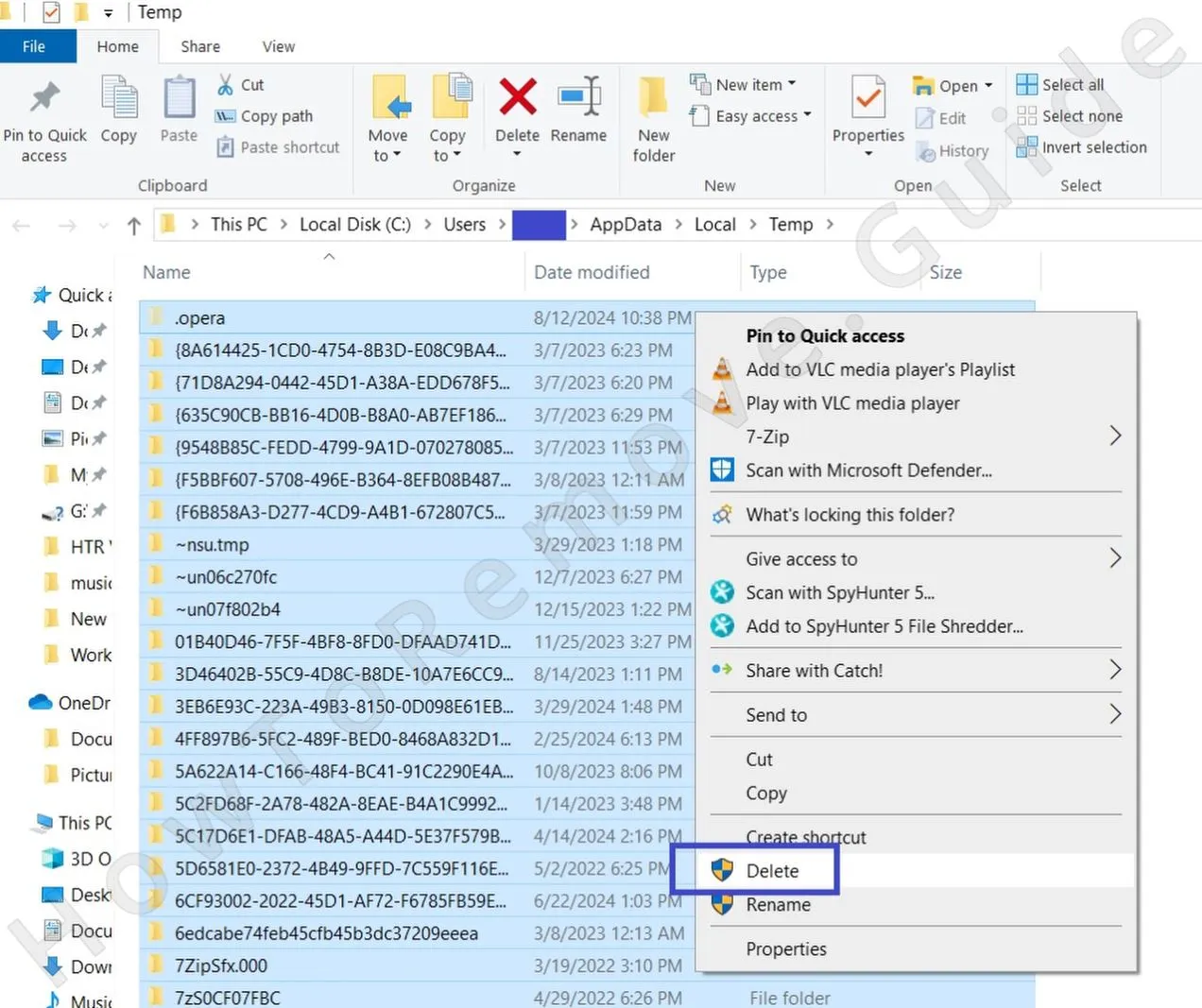 Finish by purging cached junk. Navigate to C:\Users\YourUsername\AppData\Local\Temp, press Ctrl+A to select everything, and tap Delete. Clearing temp files eliminates dropped payloads, leftover installers, and scripts that might rerun at login.
Get Rid of Stealerium Scheduled Tasks
Scheduled tasks frequently relaunch unwanted software at boot, logon, or under idle conditions. Removing them requires careful inspection of actions and paths. Delete only items you can clearly attribute to the problem, since removing the wrong task could disrupt legitimate maintenance rather than preventing Stealerium from returning.
4. Eliminate Stealerium Scheduled Tasks
- 4.1
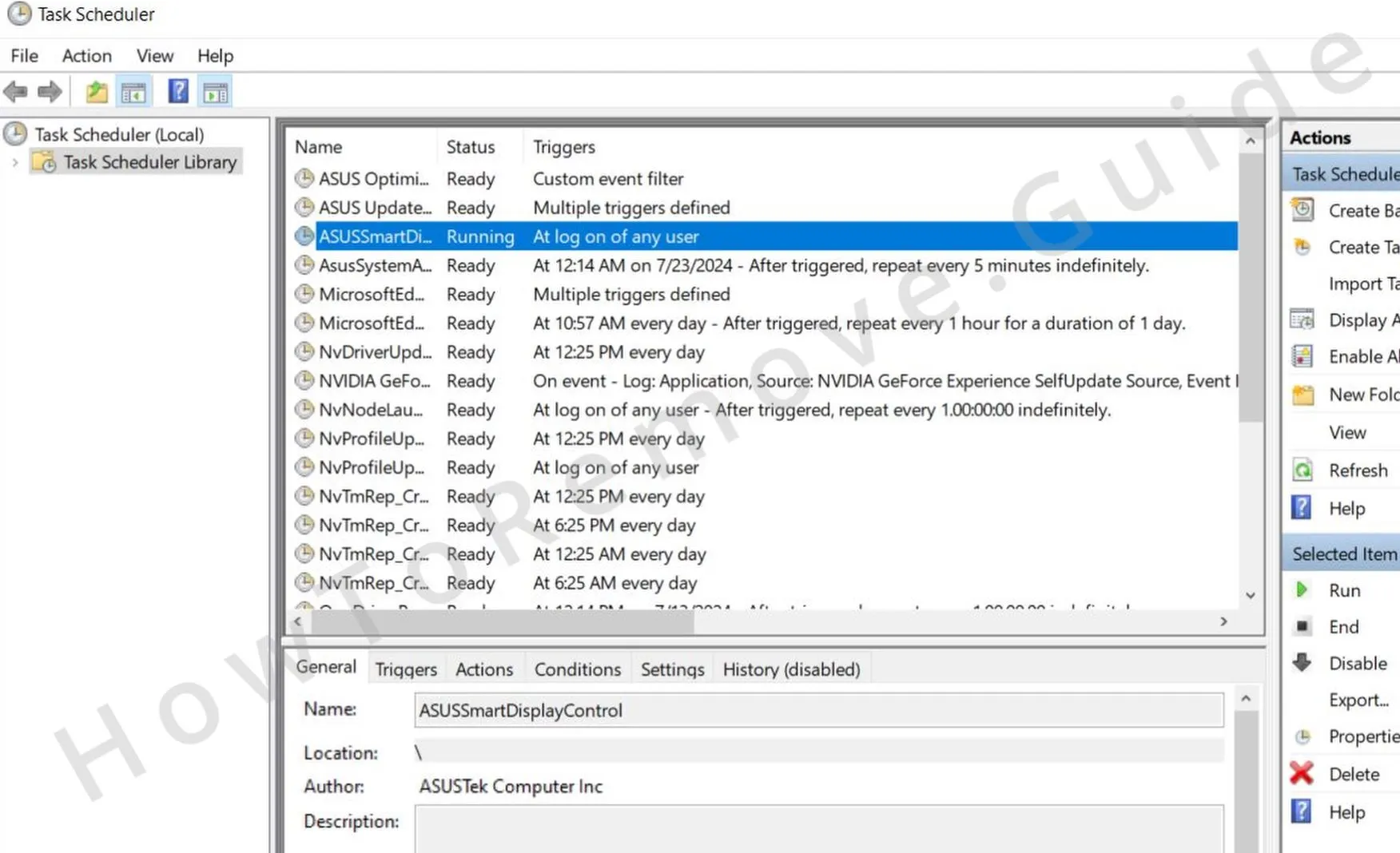 To examine automated triggers, open the Start menu, type Task Scheduler, press Enter, and expand Task Scheduler Library. Here you’ll find system and third-party jobs, including those that could be set to relaunch Stealerium on a schedule.
 - 4.2Open tasks one at a time. In each task’s properties, check the Actions tab to see the Program/script and parameters, and review Triggers to learn when it fires. Understanding both pieces helps you judge intent accurately.
- 4.3Give special attention to actions starting executables from AppData, Roaming, or temporary directories. Legitimate software rarely uses those paths for core binaries. Unsigned or recently created scripts here are highly suspect and warrant removal.
- 4.4When you identify a questionable task, copy the full file path from Actions so you can remove the payload later. Then delete the task from Task Scheduler Library. Confirm the prompt to ensure it can’t run again.
- 4.5Use File Explorer to navigate to the recorded path and delete the executable or script it referenced. If Windows denies the operation, unlock the file using LockHunter and remove the entire folder to prevent reinfection by companion files.
- 4.6Repeat this review across all unfamiliar entries. Move deliberately and verify names and locations as you go. Leaving a single malicious task behind can resurrect the problem at the next sign-in or scheduled time.
Uninstall the Stealerium Malware App Through the Windows Registry
Registry entries often store autoruns and service registrations that outlive file deletions. Editing the registry demands precision. Proceed only when you can confirm what a key points to, and back out of any uncertain changes. This method helps uncover startup hooks still binding Stealerium to your system.
5. Remove Stealerium Through the Registry
- 5.1Open the Run dialog with Win+R, type regedit, and press Enter to launch Registry Editor. Here you can locate startup references and service definitions that keep Stealerium active even after files are removed.
- 5.2Use Ctrl+F and search for the original program’s name exactly as it appeared during uninstall. The registry search scans keys, values, and data. Allow it time to traverse large hives without interrupting the process.
- 5.3When a match appears, select its parent key in the left pane, verify it truly relates to the unwanted software, then right-click and choose Delete. Press F3 to continue the search until you loop through all results.
- 5.4Run additional searches for other suspicious program names you removed earlier, plus any process names you noted in Task Manager. Threats often scatter identifiers across different locations to frustrate one-pass cleanup.
- 5.5Perform one more search for the exact string you’re targeting to catch obscure entries. A single overlooked autorun value can silently reinstate components at the next reboot and undo your work.
- 5.6Manually review these common autorun and service paths: HKCU\Software\Microsoft\Windows\CurrentVersion\Run, HKCU\Software\Microsoft\Windows\CurrentVersion\RunOnce, HKCU\Software\Microsoft\Windows\CurrentVersion\Policies\Explorer\Run, HKLM\Software\Microsoft\Windows\CurrentVersion\Run, HKLM\Software\Microsoft\Windows\CurrentVersion\RunOnce, HKLM\Software\Microsoft\Windows\CurrentVersion\Policies\Explorer\Run, HKEY_LOCAL_MACHINE\Software\Microsoft\Windows\CurrentVersion\RunServices, HKEY_LOCAL_MACHINE\Software\Microsoft\Windows\CurrentVersion\RunServicesOnce, HKEY_LOCAL_MACHINE\Software\Microsoft\Windows\CurrentVersion\RunOnce\Setup, and HKEY_LOCAL_MACHINE\SYSTEM\CurrentControlSet\services. Only remove entries that clearly reference the unwanted program or unidentified executables you confirmed elsewhere.
Reboot after finishing the registry pass to confirm persistence is gone. Keep monitoring for redirects, pop-ups, or strange relaunches over the next few sign-ins. If nothing returns, your system cleanup is complete and the underlying issue should remain resolved.
