

At first glance, Weumox.com looks like a crypto casino, but the warning signs add up quickly. Security checks have flagged the site as dangerous, and the domain appears to be only days old even though the platform suggests it has operated for years.
The biggest warning sign appears when a user tries to cash out. Instead of processing a payout, the platform can demand another payment for taxes, wallet checks, or account activation. That structure matches the advance-fee pattern authorities warn about in crypto fraud.
That demand is often wrapped in flashy bonuses, polished game screens, inflated activity numbers, and borrowed credibility from famous names. None of that proves legitimacy. When a platform hides who runs it, where it is licensed, and how payouts work, caution is the response.
Scams of Weumox.com‘s type are known to steal personal data and passwords. Install SpyHunter Pro to scan for risks, remove any dangerous trackers, and enable real-time protection.

Try Free For 7 Days*
Buy now15% OFF if you buy straight without trial.
 OFFER
OFFERAnyone who sent crypto or uploaded personal documents should move carefully and stop paying immediately.
Handle any interaction with Weumox.com, Xhopex, or Kotewex as a compromise scenario. The notes below map the visible red flags, the mechanics of the extraction process, and the containment steps that reduce follow-on loss.
ALREADY INTERACTED? ACT BEFORE THEY ASK AGAIN
If you have already dealt with Weumox.com, assume the conversation is designed to keep you paying and stop treating support as a good-faith counterparty. Lock your email, exchange, and wallet access first, then preserve chats, screenshots, URLs, and transaction IDs. These are the five most urgent cleanup steps to take next:
- Reset passwords and enable 2FA on your email, crypto exchanges, and wallets; terminate other active sessions.
- Notify any exchanges and services touched by the funds; provide TxIDs and ask that accounts/addresses be flagged per policy.
- Migrate assets to fresh wallets with new seed phrases and revoke any existing token approvals on connected chains.
- If you uploaded ID documents, place credit/fraud alerts where available and monitor for identity-theft signals.
- Assemble an evidence bundle – wallet addresses, TxIDs, site URLs, chats, and screenshots – and file reports with police/IC3 and any involved platforms.
How We Know Weumox.com is a Scam
Once you ignore the visual polish, the indicators line up with a familiar scam template. The site combines fake opportunity, weak verifiability, and withdrawal-stage pressure in a way that repeatedly shows up across short-lived crypto-casino clones.
The payout problem appears on cue
The timing gives the game away. Deposits and gameplay appear seamless, but the first serious “compliance” problem arrives only when funds are supposed to leave. That asymmetry strongly suggests a scheme built around blocking cash-out rather than managing it.
Licenses collapse when checked
Independent checking usually breaks the illusion. Supposed permits, company numbers, seals, or jurisdiction claims are often absent from official records, impossible to match, or connected to businesses unrelated to the domain.
Winning too easily is part of the bait
An account that becomes unusually profitable immediately should raise suspicion, not confidence. The exaggerated success is part of the conditioning process: it makes the visible balance emotionally valuable before the scam starts demanding more money.
Crypto-only handling protects the operator
A crypto-only payment path keeps users away from the consumer protections that exist elsewhere. Few reversal options, no standard merchant dispute channel, and limited identity transparency all benefit the operator if complaints begin.
Trust cues are fabricated at low cost
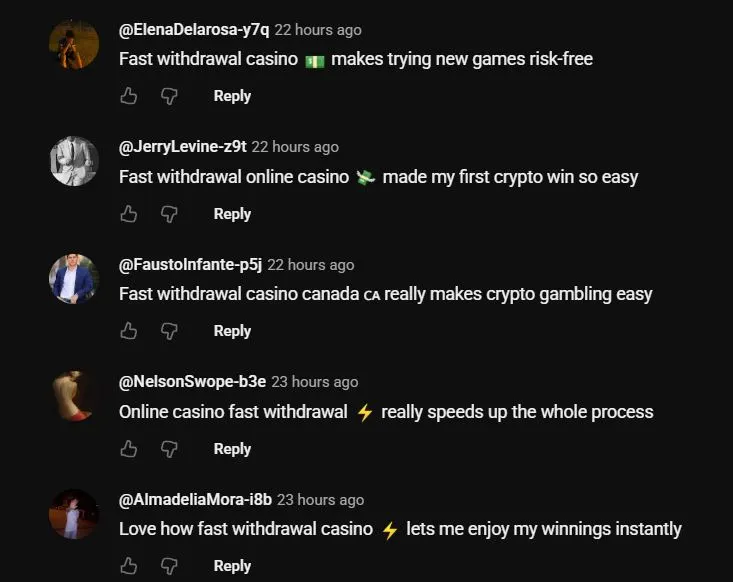
Comment floods, rolling win notifications, referral chatter, and influencer-style codes are easy to manufacture. They are there to simulate community trust at scale, not to provide independent evidence that the platform is genuine.
Disposable domains expose the churn
Public lookup tools such as who.is frequently show a pattern of recent domain creation, hidden registrants, and recurring naming themes. That turnover is a strong indicator of clone-based scam operations that expect frequent abandonment.


How the Weumox.com Scam Deception Funnel Works
Breaking the process into stages is useful because the fraud is less convincing when viewed structurally. The site needs attraction, apparent proof, withdrawal friction, and escalation in that order; once you see the sequence, the emotional pressure loses much of its force.
In practice the funnel is repeatable: promotional hooks bring traffic in, engineered wins create belief, a withdrawal attempt triggers invented administrative barriers, and the victim is cycled through fee requests until contact dries up or a replacement domain takes over.
Hype funnels the first visit
The first approach often arrives through social surfaces rather than direct sales language. Viral clips, screenshots of winnings, group invitations, and enthusiastic comments create borrowed legitimacy by making the site look like a trend people are already using.
The interface is built to feel familiar
After the click, the interface is designed to suppress doubt. Professional-looking dashboards, branded graphics, chat widgets, and bonus banners create the impression of maturity before the user has checked ownership, licensing, or history.

The balance is inflated to trigger hope
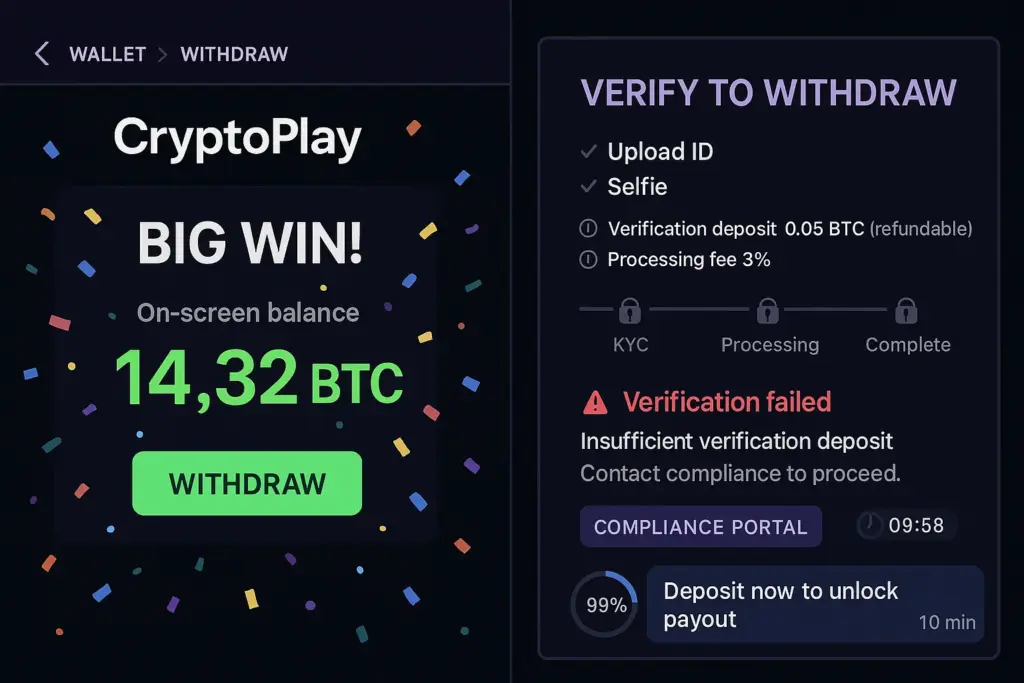
The displayed balance is doing psychological work. It can rise fast enough that the victim starts planning around money that does not actually exist, which makes later demands for “one more payment” feel temporarily acceptable.
The scam reframes extortion as compliance
Every obstacle is repackaged as compliance. Perhaps there is an AML hold, a tax reserve, a release charge, a tier upgrade, or a confirmation transfer. The common feature is that resolution always requires more value from the victim and never results in an actual payout.

Delays and follow-up cons extend the damage
If additional payments stop, the tactics often change from pressure to drift. Support stalls, promised dates slide, the site becomes unreachable, and in some cases a separate recovery scam appears later to sell false help for the original loss.
Staying safe from crypto casino scams like Weumox.com
The strongest defenses are usually boring ones: verify first, slow the process down, and refuse to let marketing urgency replace due diligence. That simple discipline blocks a large share of these schemes before they ever become a wallet or ID problem.
Start with the regulator, not the ad
Do the external check before anything else. Search official regulator records using the named company, the advertised jurisdiction, and the domain itself so you can see whether the operator is truly authorized and whether the site is even tied to the entity it claims.
A fresh domain deserves extra scrutiny
Domain age is contextual, but context matters. A fresh site with oversized promises, hidden ownership, and little real reputation deserves skepticism, and archived pages can reveal recycled designs or renamed operations that did not begin as new as they appear.
No legitimate payout needs a pre-payment
A legitimate withdrawal does not require you to send more crypto to the same destination first. Whether the excuse is tax, liquidity, verification, or activation, pre-payment to access your own balance should be treated as a stop signal.
Choose providers you can trace in the real world
Where you can, use operators that can be traced beyond the site itself. Clear ownership, named entities, published terms, normal payment rails, and established customer support create accountability that throwaway scams generally cannot tolerate.
Keep exposure isolated in separate wallets
Keep experiments isolated. A separate wallet for unproven services prevents one bad decision from exposing core holdings, and after any suspicious interaction you should consider new seed phrases, fresh addresses, and approval revocation.
Marketing phrases are not proof of fairness
Technical slogans are cheap. If a platform advertises fairness or auditability, the claim should be independently checkable through transparent documentation and reproducible verification steps rather than trusted because it sounds specialized.
Preserve records while access still exists
Preserve evidence while the pages still load and the chat history still exists. URLs, wallet addresses, TxIDs, emails, screenshots, and account views make reports more actionable and improve the odds that platforms or investigators can connect related activity.
Insert time between excitement and action
A pre-set cooling-off rule helps because these scams thrive on compressed timing. No deposit on first exposure gives you room to check complaints, licensing, domain history, and payment demands before emotion turns into action.
Useful Resources for Scam Reporting and Prevention (By Country)
Reporting quickly is still worthwhile even when reversal is unlikely. Exchanges, compliance teams, chain-analysis services, and occasionally stablecoin issuers may at least tag activity, retain records, or help authorities if the submission is detailed and timely.
Report through official channels fast
| Country / Agency | URL | Category / Use-case | Phone/Email |
| Australia – Crime Stoppers | https://www.crimestoppers.com.au | Anonymous tips about crime | 1800 333 000 |
| Australia – National Anti-Scam Center (Scamwatch) | https://www.scamwatch.gov.au/report-a-scam | General scams; phishing; texts/emails | |
| Australia – Police Assistance Line (non-emergency) | https://www.police.gov.au | Local police report | 131 444 |
| Australia – ReportCyber (ACSC) | https://www.cyber.gov.au/report | Cybercrime (hacks, fraud, extortion) | |
| Canada – Canadian Anti-Fraud Center (CAFC) | https://www.antifraudcentre-centreantifraude.ca/report-signalez-eng.htm | General scams incl. phone/text/email | |
| France – DGCCRF (SignalConso) | https://signal.conso.gouv.fr | Consumer scams/deceptive practices | |
| France – PHAROS – Internet-Signalement | https://www.internet-signalement.gouv.fr | Online content & cybercrime reports | |
| Germany – Bundeskriminalamt / Local Police | https://www.polizei.de/Polizei/DE/Home/home_node.html | Report online fraud | |
| Germany – Weißer Ring – Victim Support | https://weisser-ring.de | Victim support | 116 006 |
| India – DoT Helpline (Sanchar Saathi) | https://sancharsaathi.gov.in | Fraudulent telecom/SIM related | 155260 |
| India – National Consumer Helpline | https://consumerhelpline.gov.in | Consumer scams | 1800-11-4000 / 1915 |
| India – National Cyber Crime Reporting Portal | https://cybercrime.gov.in | Cybercrime incl. online fraud | 1930 |
| Japan – Consumer Affairs Agency (CAA) | https://www.caa.go.jp/policies/policy/consumer_policy/caution/cybercrime/ | Consumer scams | |
| Japan – National Police Agency – Cybercrime | https://www.npa.go.jp/bureau/cyber/ | Cybercrime reporting | |
| Mexico – Guardia Nacional (National Guard) | https://www.gob.mx/gn | Cybercrime reporting | |
| Mexico – Instituto Federal de Telecomunicaciones (IFT) | https://www.ift.org.mx | Telecom/online services scams | |
| Mexico – PROFECO | https://www.gob.mx/profeco | Consumer fraud & ecommerce | |
| Netherlands – AFM – Report investment fraud | https://www.afm.nl/en/consumenten/themas/beleggen/misleiding-misbruik | Investment/crypto | |
| Netherlands – Fraudehelpdesk | https://www.fraudehelpdesk.nl/melden | General scams (incl. phishing/SMS) | 088-7867372 |
| Netherlands – Politie – Meldpunt Internetoplichting | https://www.politie.nl/themas/internetoplichting.html | Online shopping fraud | |
| New Zealand – CERT NZ | https://www.cert.govt.nz/individuals/report-an-issue/ | Phishing, identity scams | |
| New Zealand – Department of Internal Affairs – Spam | https://www.dia.govt.nz/Spam-Contact-Us | Email/SMS spam | [email protected] |
| New Zealand – IDCARE | https://www.idcare.org | Victim support (identity compromise) | 0800 121 068 |
| New Zealand – Netsafe – Report | https://www.netsafe.org.nz/report/ | Online harms & scams | |
| New Zealand – New Zealand Police (non-emergency) | https://www.police.govt.nz/use-105 | Report fraud/online crime | 105 |
| Nigeria – Economic & Financial Crimes Commission (EFCC) | https://www.efcc.gov.ng | Financial scams incl. crypto/investment | [email protected] |
| Nigeria – Nigeria Police Special Fraud Unit (SFU) | https://www.specialfraudunit.org.ng | Serious fraud | Voice/SMS: 0708 227 6895; WhatsApp: 0812 760 9914 |
| Poland – CERT Polska (CERT.PL) | https://cert.pl/en/report/ | Cyber incidents & phishing | |
| Poland – Dyzurnet.pl | https://dyzurnet.pl | Illegal online content (esp. child protection) | |
| Poland – Polish Police (Policja) | https://www.policja.pl | Report scams to police | |
| Singapore – Anti-Scam Centre / Anti-Scam Helpline | https://www.scamalert.sg | General scams; texts; calls | 1800-722-6688 |
| Singapore – Monetary Authority of Singapore (MAS) | https://www.mas.gov.sg/investor-alert-list | Investment/crypto checks | |
| Singapore – Singapore Police Force | https://www.police.gov.sg/iwitness | Police report (cybercrime) | |
| South Africa – Cybersecurity Hub (CSIRT) | https://www.cybersecurityhub.gov.za | Cyber incidents incl. scams | |
| South Africa – South African Fraud Prevention Service (SAFPS) | https://www.safps.org.za | Identity fraud support | 011-867-2234 |
| South Africa – South African Police Service (SAPS) | https://www.saps.gov.za | Police report (cybercrime unit) | |
| South Korea – Korea Communications Commission (KCC) | https://www.kcc.go.kr | Telecom-related fraud | |
| South Korea – Korea Internet & Security Agency (KISA) | https://www.kisa.or.kr | Phishing, online harms | |
| South Korea – Korean National Police Agency – Cyber Bureau | https://ecrm.cyber.go.kr | Cybercrime reporting | |
| Spain – INCIBE – Oficina de Seguridad del Internauta (OSI) | https://www.osi.es/es/reporte | Cybersecurity & online fraud | |
| Spain – Policía Nacional / Guardia Civil | https://www.policia.es | Report scams to police | |
| Sweden – Crime Victim Authority (Brottsoffermyndigheten) | https://www.brottsoffermyndigheten.se | Victim support & compensation | 090–70 82 00 |
| Sweden – Polisen (Swedish Police) | https://polisen.se | Report fraud/cybercrime | 114 14 (non-emergency); 112 (emergency) |
| Sweden – Swedish Consumer Agency (Konsumentverket) | https://www.konsumentverket.se | Unfair business practices | |
| United Arab Emirates – Abu Dhabi Police – Aman Service | https://www.adpolice.gov.ae | Cybercrime tips/reporting | SMS 2828; 800 2626 |
| United Arab Emirates – Dubai Police – eCrime | https://www.dubaipolice.gov.ae | Cybercrime reporting | 04 606 1600 |
| United Arab Emirates – Ministry of Interior – Cyber Crime Dept. | https://www.moi.gov.ae | Cybercrime incl. online scams | |
| United Arab Emirates – Telecommunications Regulatory Authority (TRA) / TDRA | https://www.tra.gov.ae | Telecom-related scams/phishing | |
| United Kingdom – Action Fraud (NFIB) | https://www.actionfraud.police.uk | General scams & cybercrime (non-emergency) | 0300 123 2040 |
| United Kingdom – Citizens Advice Consumer Service | https://www.citizensadvice.org.uk/consumer/get-more-help/if-you-need-more-help-about-a-consumer-issue/ | Consumer problems & scam guidance | 0808 223 1133 |
| United Kingdom – Financial Conduct Authority (FCA) | https://www.fca.org.uk/consumers/report-scam-us | Investment/crypto & financial services | |
| United Kingdom – National Cyber Security Centre (NCSC) | https://www.ncsc.gov.uk/collection/phishing-scams | Phishing emails & suspicious websites | |
| United Kingdom – Stop Scams UK ‘159’ | https://stopscamsuk.org.uk/159 | Banking APP fraud (direct to your bank) | 159 |
| United States – AARP Fraud Watch Network Helpline | https://www.aarp.org/money/scams-fraud/ | Victim support | 833-372-8311 |
| United States – Better Business Bureau – Scam Tracker | https://www.bbb.org/scamtracker | Business/marketplace scams | |
| United States – FBI Internet Crime Complaint Center (IC3) | https://www.ic3.gov | Internet crime incl. investment/crypto | |
| United States – Federal Trade Commission – ReportFraud | https://reportfraud.ftc.gov | General scams, phishing, texts/emails | 1-877-382-4357 |
| United States – National Center for Disaster Fraud | https://www.justice.gov/disaster-fraud | Disaster-related scams | (866) 720-5721 |
| United States – SEC Tips & Complaints | https://www.sec.gov/tcr | Investment & securities/crypto-asset offerings |
The core principle is simple: a casino front that asks for more crypto before releasing a withdrawal is functioning as an extraction system, not a gaming service. Protect what is left, preserve the trail, and assume the next clone will use the same script.
