

Even if you don’t read anything else on this page, you should know and remember this – Xbezo.bet is a scam. It’s not a legitimate site, and it doesn’t give you an unprecedented opportunity to win a large amount of money without risking your own funds. This is just another templated sham site, similar to Weumox.com, Xhopex, and many others that we’ve encountered in the past.
The Xbezo.bet front page may look glossy, and your account balance may rise after each spin, but that’s just a trick to gain your attention and trust.
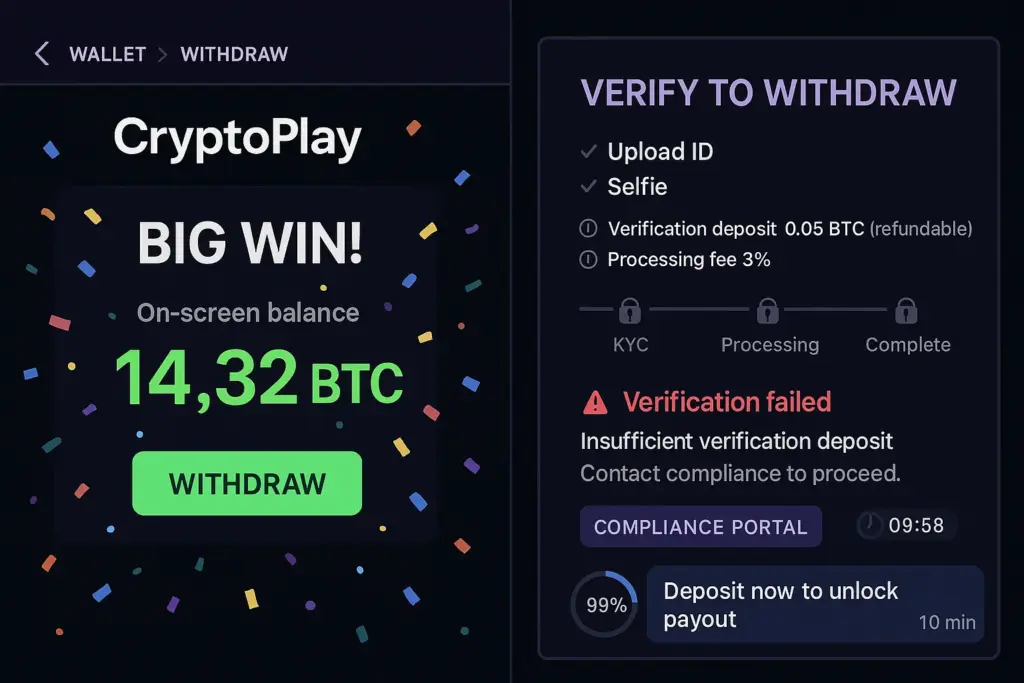
The real trouble begins only when you try to move money out. Suddenly, you get clearance fees, compliance holds, or verification deposits, and each supposed requirement nudges you into depositing money out of your own pocket to claim winnings that were never actually real.
Scams of Xbezo.bet‘s type are known to steal personal data and passwords. Install SpyHunter Pro to scan for risks, remove any dangerous trackers, and enable real-time protection.

Try Free For 7 Days*
Buy now15% OFF if you buy straight without trial.
 OFFER
OFFERThere’s actually a pretty simple mechanism under the casino styling, but people still fall for it due to inexperience and naivety.
Needless to say, any sum deposited onto this site is money lost, but the even bigger problem is that the scammers could gain access to sensitive personal details and cause even more problems. That’s why damage control, and not recovery of already lost money, should be your priority in such situations.
Think of any contact with Xbezo.bet, as incident response territory, not a routine dispute. The sections below break down the markers of fraud, the sequence used to pressure victims, and the steps that help contain both wallet loss and data exposure.
STOP AND SECURE YOUR ACCOUNTS NOW
If you already sent funds to Xbezo.bet, do not argue with support, do not send a “last” payment, and do not trust promises that release is just one step away. Lock down your email, exchanges, and wallets first, then archive every screenshot, chat, and transaction reference. These are the five quickest containment actions to take immediately:
- Reset passwords and enable 2FA on your email, crypto exchanges, and wallets; terminate other active sessions.
- Notify any exchanges and services touched by the funds; provide TxIDs and ask that accounts/addresses be flagged per policy.
- Migrate assets to fresh wallets with new seed phrases and revoke any existing token approvals on connected chains.
- If you uploaded ID documents, place credit/fraud alerts where available and monitor for identity-theft signals.
- Assemble an evidence bundle – wallet addresses, TxIDs, site URLs, chats, and screenshots – and file reports with police/IC3 and any involved platforms.
How We Know Xbezo.bet is a Scam
Strip away the gambling theme and the pattern becomes familiar. This page carries the same warning cluster seen across cloned crypto-casino scams. One sign can be explained away; several showing up together point to a business model built around trapping withdrawals rather than honoring them.
The barrier shows up only when money should leave
Pay attention to when the trouble starts. Registration works, deposits work, and the games appear to work, yet the first serious objection appears only when you request a payout. That sequencing is consistent with an advance-fee trap, not with a real operator resolving routine compliance.
The legal badges do not hold up
The badges and claims tend to collapse once you check them away from the page. Purported licenses, company numbers, or approvals are frequently missing from regulator records, misquoted, or linked to organizations that have nothing to do with the site.
The lucky streak is part of the script
Instead of believable variance, the account often shows conveniently large gains early in the session. Those numbers function as conditioning: the more convinced you are that the balance is real, the easier it is for the scam to justify the next payment.
Crypto rails strip away recourse
By steering users toward one-way crypto transfers, the operator avoids many of the safeguards attached to banks and card networks. Limited reversal paths and thin merchant accountability are not accidental side effects here; they are strategic advantages for the scam.
The social proof feels mass-produced
Busy feeds, celebratory pop-ups, glowing testimonials, and promo-code chatter can all be fabricated with almost no effort. Their purpose is not to prove credibility but to manufacture the feeling that many other people have already verified the site for you.
Rapid-fire domains suggest a clone network
A quick check with open lookup tools such as who.is often reveals recent registration dates, privacy-shielded ownership, or repeated turnover across closely related names. That kind of churn fits disposable scam infrastructure far better than a durable gambling brand.


How the Xbezo.bet Scam Deception Funnel Works
Seeing the playbook step by step is useful because the scam depends on emotional momentum. Once you can label the stages—attraction, reassurance, blockage, escalation, disappearance—the whole experience becomes easier to interrupt before more money or information is handed over.
The pattern is usually straightforward: attention is pulled in with hype, confidence is built with fake wins, the withdrawal request triggers invented restrictions, and then the victim is funneled through a series of extra-payment demands until the domain stalls, vanishes, or reappears as another clone.
Promotion channels create borrowed credibility
The opening contact is often borrowed from places people already scroll past without much suspicion. Short clips, copied success posts, group-chat invitations, or comment threads full of “winners” present the site as something discovered socially rather than sold aggressively.

A polished front-end suppresses doubt
Once the visitor lands, the design does much of the persuading. Familiar casino visuals, polished dashboards, badges, counters, and responsive widgets are arranged to create instant familiarity before the user has paused to verify who is actually behind the service.

Fake gains prime the victim for compliance
A fast-rising balance is not the reward; it is the setup. After a small deposit or bonus claim, the account value can increase so sharply that withdrawal feels like the obvious next step, which is exactly when the pressure machinery starts.
Every new hurdle arrives with a paid workaround
Each obstacle arrives packaged as a fixable administrative issue. Perhaps you must submit ID, cover an anti-money-laundering reserve, pay a release fee, upgrade the account, or send a confirming amount first. Every excuse sounds temporary, yet each one simply expands the loss.

Silence, stalling, and recovery bait follow
Once a victim slows down, the script often changes. Support may become reassuring, evasive, or suddenly unavailable; new deadlines can appear; then the site may stop responding altogether. After that, a separate “recovery” approach may show up, attempting to monetize the same victim again.
Staying safe from crypto casino scams like Xbezo.bet
Prevention does not depend on expert-level technical knowledge. In most cases, a handful of patient checks and a refusal to rush money onto a fresh site are enough to stop this kind of scheme before wallet access, documents, and emotions all become entangled.
Verify the operator with regulators first
Begin outside the platform. Search the claimed business name, the stated jurisdiction, and the domain in official regulator databases to see whether the operator really exists, whether the license matches the activity claimed, and whether the listed entity is connected to the website you are using.
Treat a young domain as a warning, not a footnote
A recent registration date does not prove fraud by itself, but it matters more when combined with oversized bonuses, vague ownership, and no independent track record. Archived snapshots and historical lookup data can also expose reused templates or renamed copies of older scam pages.
Refuse every request to fund a withdrawal
Treat any demand for crypto to release winnings, settle tax, finish verification, or activate withdrawals as the moment the fraud stops pretending. Legitimate payouts are not unlocked by transferring even more money to the same party that already holds your funds.
Favor platforms tied to a real company record
Whenever possible, choose services that publish verifiable ownership, clear terms, standard support channels, and payment options connected to a real company record. The easier an operator is to trace in the real world, the harder it is for that operator to evaporate when challenged.
Separate trial wallets from serious holdings
Use separate wallets for testing unfamiliar services and keep high-value holdings away from anything you have not thoroughly vetted. If exposure does happen, fresh addresses, new seed phrases, and revoked token approvals can limit how much additional damage is possible.
Test every fairness claim instead of trusting it
Scam sites borrow reassuring jargon because many users will hear it as proof. Claims about fairness, audits, seeds, or hashes only matter if you can independently inspect the method and verify what the site says is happening.
Capture the evidence before pages disappear
The moment suspicion appears, start preserving material. Save the URL, wallet addresses, transaction IDs, chat logs, emails, screenshots, account pages, and every instruction you were given. Good records strengthen reports and give exchanges or investigators something concrete to follow.
Use a waiting period to break the sales spell
Create a personal delay rule before you ever need it: no deposits on first contact, first click, or first excitement. Time spent checking licensing, reading outside complaints, and inspecting the domain is often enough to break the emotional pacing the scam relies on.
Useful Resources for Scam Reporting and Prevention (By Country)
Even though blockchain transfers are hard to reverse, timely reporting still matters. Exchanges, forensic teams, and sometimes token issuers can flag activity, preserve evidence, or support law-enforcement inquiries when victims provide organized details quickly.
Find the right reporting channel immediately
| Country / Agency | URL | Category / Use-case | Phone/Email |
| Australia – Crime Stoppers | https://www.crimestoppers.com.au | Anonymous tips about crime | 1800 333 000 |
| Australia – National Anti-Scam Center (Scamwatch) | https://www.scamwatch.gov.au/report-a-scam | General scams; phishing; texts/emails | |
| Australia – Police Assistance Line (non-emergency) | https://www.police.gov.au | Local police report | 131 444 |
| Australia – ReportCyber (ACSC) | https://www.cyber.gov.au/report | Cybercrime (hacks, fraud, extortion) | |
| Canada – Canadian Anti-Fraud Center (CAFC) | https://www.antifraudcentre-centreantifraude.ca/report-signalez-eng.htm | General scams incl. phone/text/email | |
| France – DGCCRF (SignalConso) | https://signal.conso.gouv.fr | Consumer scams/deceptive practices | |
| France – PHAROS – Internet-Signalement | https://www.internet-signalement.gouv.fr | Online content & cybercrime reports | |
| Germany – Bundeskriminalamt / Local Police | https://www.polizei.de/Polizei/DE/Home/home_node.html | Report online fraud | |
| Germany – Weißer Ring – Victim Support | https://weisser-ring.de | Victim support | 116 006 |
| India – DoT Helpline (Sanchar Saathi) | https://sancharsaathi.gov.in | Fraudulent telecom/SIM related | 155260 |
| India – National Consumer Helpline | https://consumerhelpline.gov.in | Consumer scams | 1800-11-4000 / 1915 |
| India – National Cyber Crime Reporting Portal | https://cybercrime.gov.in | Cybercrime incl. online fraud | 1930 |
| Japan – Consumer Affairs Agency (CAA) | https://www.caa.go.jp/policies/policy/consumer_policy/caution/cybercrime/ | Consumer scams | |
| Japan – National Police Agency – Cybercrime | https://www.npa.go.jp/bureau/cyber/ | Cybercrime reporting | |
| Mexico – Guardia Nacional (National Guard) | https://www.gob.mx/gn | Cybercrime reporting | |
| Mexico – Instituto Federal de Telecomunicaciones (IFT) | https://www.ift.org.mx | Telecom/online services scams | |
| Mexico – PROFECO | https://www.gob.mx/profeco | Consumer fraud & ecommerce | |
| Netherlands – AFM – Report investment fraud | https://www.afm.nl/en/consumenten/themas/beleggen/misleiding-misbruik | Investment/crypto | |
| Netherlands – Fraudehelpdesk | https://www.fraudehelpdesk.nl/melden | General scams (incl. phishing/SMS) | 088-7867372 |
| Netherlands – Politie – Meldpunt Internetoplichting | https://www.politie.nl/themas/internetoplichting.html | Online shopping fraud | |
| New Zealand – CERT NZ | https://www.cert.govt.nz/individuals/report-an-issue/ | Phishing, identity scams | |
| New Zealand – Department of Internal Affairs – Spam | https://www.dia.govt.nz/Spam-Contact-Us | Email/SMS spam | [email protected] |
| New Zealand – IDCARE | https://www.idcare.org | Victim support (identity compromise) | 0800 121 068 |
| New Zealand – Netsafe – Report | https://www.netsafe.org.nz/report/ | Online harms & scams | |
| New Zealand – New Zealand Police (non-emergency) | https://www.police.govt.nz/use-105 | Report fraud/online crime | 105 |
| Nigeria – Economic & Financial Crimes Commission (EFCC) | https://www.efcc.gov.ng | Financial scams incl. crypto/investment | [email protected] |
| Nigeria – Nigeria Police Special Fraud Unit (SFU) | https://www.specialfraudunit.org.ng | Serious fraud | Voice/SMS: 0708 227 6895; WhatsApp: 0812 760 9914 |
| Poland – CERT Polska (CERT.PL) | https://cert.pl/en/report/ | Cyber incidents & phishing | |
| Poland – Dyzurnet.pl | https://dyzurnet.pl | Illegal online content (esp. child protection) | |
| Poland – Polish Police (Policja) | https://www.policja.pl | Report scams to police | |
| Singapore – Anti-Scam Centre / Anti-Scam Helpline | https://www.scamalert.sg | General scams; texts; calls | 1800-722-6688 |
| Singapore – Monetary Authority of Singapore (MAS) | https://www.mas.gov.sg/investor-alert-list | Investment/crypto checks | |
| Singapore – Singapore Police Force | https://www.police.gov.sg/iwitness | Police report (cybercrime) | |
| South Africa – Cybersecurity Hub (CSIRT) | https://www.cybersecurityhub.gov.za | Cyber incidents incl. scams | |
| South Africa – South African Fraud Prevention Service (SAFPS) | https://www.safps.org.za | Identity fraud support | 011-867-2234 |
| South Africa – South African Police Service (SAPS) | https://www.saps.gov.za | Police report (cybercrime unit) | |
| South Korea – Korea Communications Commission (KCC) | https://www.kcc.go.kr | Telecom-related fraud | |
| South Korea – Korea Internet & Security Agency (KISA) | https://www.kisa.or.kr | Phishing, online harms | |
| South Korea – Korean National Police Agency – Cyber Bureau | https://ecrm.cyber.go.kr | Cybercrime reporting | |
| Spain – INCIBE – Oficina de Seguridad del Internauta (OSI) | https://www.osi.es/es/reporte | Cybersecurity & online fraud | |
| Spain – Policía Nacional / Guardia Civil | https://www.policia.es | Report scams to police | |
| Sweden – Crime Victim Authority (Brottsoffermyndigheten) | https://www.brottsoffermyndigheten.se | Victim support & compensation | 090–70 82 00 |
| Sweden – Polisen (Swedish Police) | https://polisen.se | Report fraud/cybercrime | 114 14 (non-emergency); 112 (emergency) |
| Sweden – Swedish Consumer Agency (Konsumentverket) | https://www.konsumentverket.se | Unfair business practices | |
| United Arab Emirates – Abu Dhabi Police – Aman Service | https://www.adpolice.gov.ae | Cybercrime tips/reporting | SMS 2828; 800 2626 |
| United Arab Emirates – Dubai Police – eCrime | https://www.dubaipolice.gov.ae | Cybercrime reporting | 04 606 1600 |
| United Arab Emirates – Ministry of Interior – Cyber Crime Dept. | https://www.moi.gov.ae | Cybercrime incl. online scams | |
| United Arab Emirates – Telecommunications Regulatory Authority (TRA) / TDRA | https://www.tra.gov.ae | Telecom-related scams/phishing | |
| United Kingdom – Action Fraud (NFIB) | https://www.actionfraud.police.uk | General scams & cybercrime (non-emergency) | 0300 123 2040 |
| United Kingdom – Citizens Advice Consumer Service | https://www.citizensadvice.org.uk/consumer/get-more-help/if-you-need-more-help-about-a-consumer-issue/ | Consumer problems & scam guidance | 0808 223 1133 |
| United Kingdom – Financial Conduct Authority (FCA) | https://www.fca.org.uk/consumers/report-scam-us | Investment/crypto & financial services | |
| United Kingdom – National Cyber Security Centre (NCSC) | https://www.ncsc.gov.uk/collection/phishing-scams | Phishing emails & suspicious websites | |
| United Kingdom – Stop Scams UK ‘159’ | https://stopscamsuk.org.uk/159 | Banking APP fraud (direct to your bank) | 159 |
| United States – AARP Fraud Watch Network Helpline | https://www.aarp.org/money/scams-fraud/ | Victim support | 833-372-8311 |
| United States – Better Business Bureau – Scam Tracker | https://www.bbb.org/scamtracker | Business/marketplace scams | |
| United States – FBI Internet Crime Complaint Center (IC3) | https://www.ic3.gov | Internet crime incl. investment/crypto | |
| United States – Federal Trade Commission – ReportFraud | https://reportfraud.ftc.gov | General scams, phishing, texts/emails | 1-877-382-4357 |
| United States – National Center for Disaster Fraud | https://www.justice.gov/disaster-fraud | Disaster-related scams | (866) 720-5721 |
| United States – SEC Tips & Complaints | https://www.sec.gov/tcr | Investment & securities/crypto-asset offerings |
The takeaway is blunt: when a casino-styled site asks for additional crypto before it will send your balance, assume the display balance was bait from the start. Secure remaining accounts, document everything, and treat future clones of the same model as unsafe until proven otherwise.
