

Online scam sites rely on colorful banners, bold (and unrealistic) promises, and artificially generated hype to rope in less experienced users and get them to engage with them.
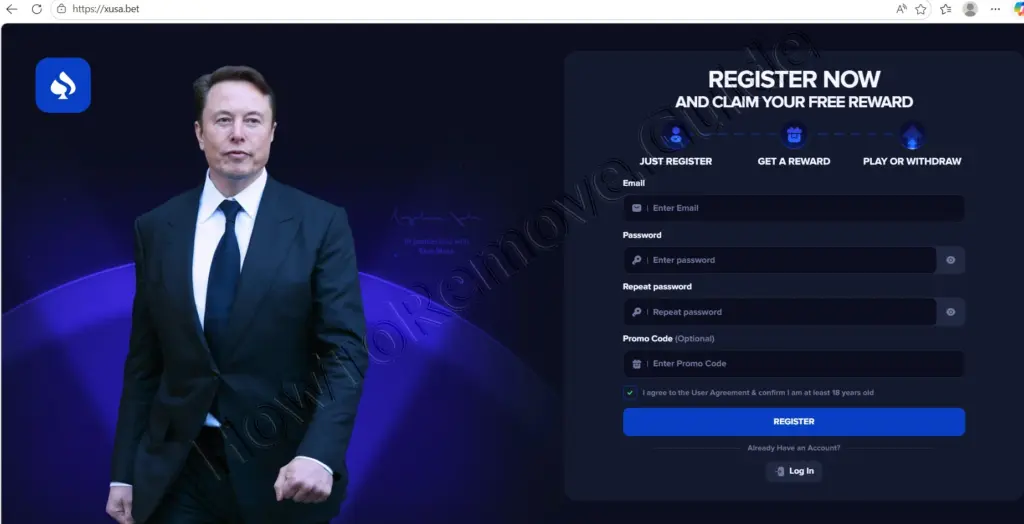
Xusa.bet is a good case study for this. It’s a template-made scam that shows the same behavior seen in many previous scam iterations like Denevex.com and Gusewin256. It is easy to register, easy to place bets with the generous starter bonus, and easy to watch the number on the screen grow.
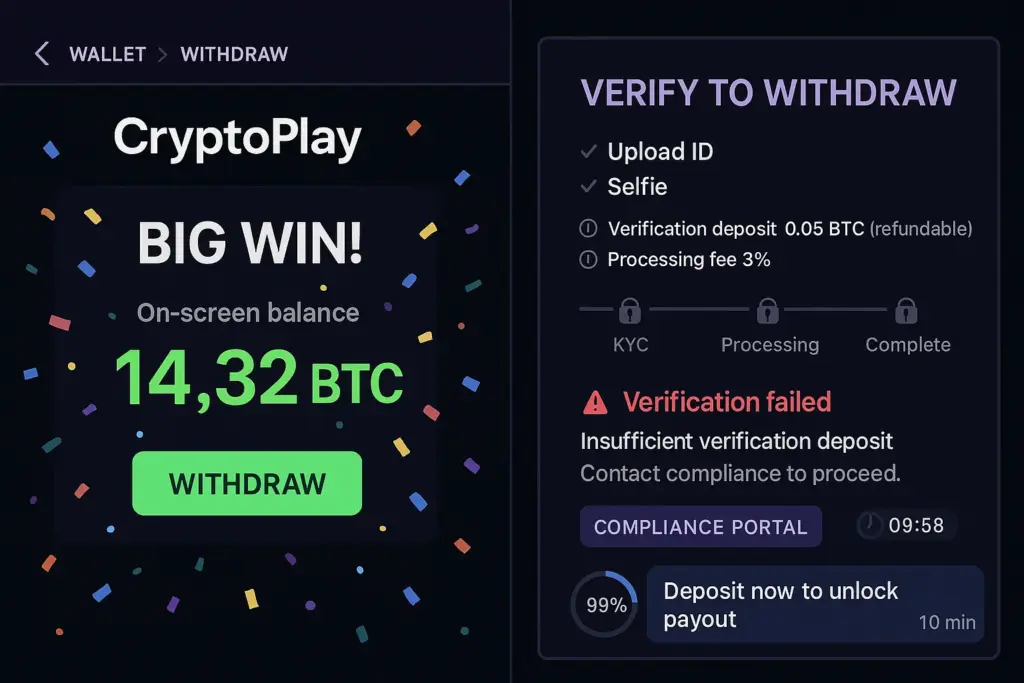
The problems start exactly where a real platform should prove itself: when you try to withdraw what you’ve seemingly already won. That’s when the site asks you for a “verification deposit,” and that’s when you should get off that site in case you haven’t already done so.
But many people are lured by the potential for claiming their significant winnings, they go through with the deposit, and they get scammed.
Scams of Xusa.bet‘s type are known to steal personal data and passwords. Install SpyHunter Pro to scan for risks, remove any dangerous trackers, and enable real-time protection.

Try Free For 7 Days*
Buy now15% OFF if you buy straight without trial.
 OFFER
OFFERThe deposit money is obviously gone for good once it falls into the hands of the scammers, but what’s worse is that the criminals behind operations like Xusa.bet may also gain access to sensitive data and then target your virtual wallets or online banking accounts.
For this reason, you should treat any contact with Xusa.bet, like a security event that needs containment. The guidance we provide below explains what makes these sites suspicious, how the scam usually unfolds, and what steps reduce the chance of further harm.
DON’T WAIT FOR A “FINAL FEE” MESSAGE
If you have already used Xusa.bet, stop responding, stop sending money, and stop hoping that one more payment will solve the issue. Secure your logins and wallets first, then gather every screenshot, wallet address, email, and chat message you still have. These are the five fastest protective actions to take right away:
- Reset passwords and enable 2FA on your email, crypto exchanges, and wallets; terminate other active sessions.
- Notify any exchanges and services touched by the funds; provide TxIDs and ask that accounts/addresses be flagged per policy.
- Migrate assets to fresh wallets with new seed phrases and revoke any existing token approvals on connected chains.
- If you uploaded ID documents, place credit/fraud alerts where available and monitor for identity-theft signals.
- Assemble an evidence bundle – wallet addresses, TxIDs, site URLs, chats, and screenshots – and file reports with police/IC3 and any involved platforms.
How We Know Xusa.bet is a Scam
You do not need a forensic lab to spot the pattern here. The site combines several warning signs that repeatedly show up on fake casino domains targeting crypto users, and the overall mix is much more telling than any single detail by itself.
The trap springs at withdrawal time
That timing matters. Nothing seems broken while the site is collecting deposits or showing game results, but resistance appears as soon as the user wants funds back. That is a classic sign that the problem is the business model itself.
Official-looking credentials fail simple checks
The safest move is to verify every official-looking claim elsewhere. Licenses, company registrations, and compliance seals often fail simple checks, lead nowhere, or point to entities that are unrelated to the site you are using.
Early wins are there to lower your guard
Winning too smoothly at the beginning is often part of the manipulation. A generous-looking balance builds excitement and trust, which makes later demands sound like temporary hurdles instead of what they really are.
One-way crypto payments limit your options
When a site only wants crypto, it also removes many of the tools victims might otherwise rely on. That means fewer chargeback routes, less transparency, and a much easier exit for the operator if complaints pile up.
Reviews, pop-ups, and praise can be staged
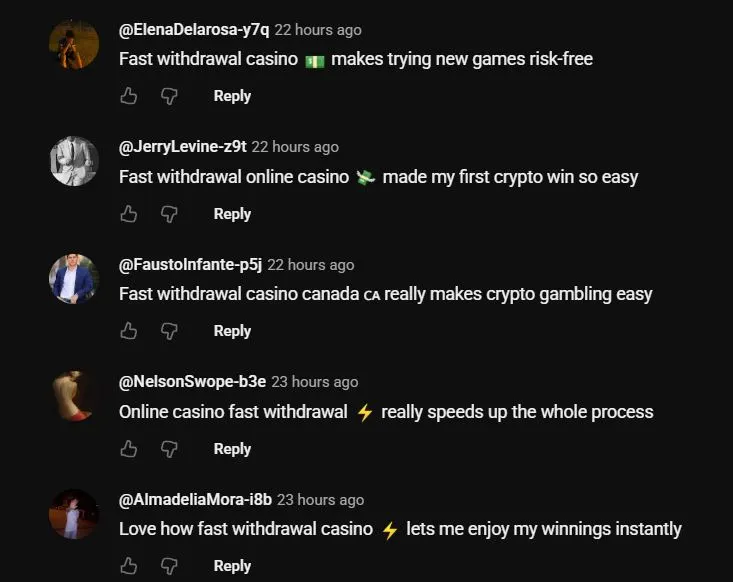
The site may look busy and widely praised, but those signals can be manufactured. Win pop-ups, glowing reviews, promo codes, and hype in comments often exist to create borrowed confidence, not to prove anything independently.
The domain history points to throwaway infrastructure
Even a quick look with services such as who.is can reveal short domain histories, hidden registration details, or naming patterns that suggest a replaceable network of copycat sites rather than a long-running brand.

How the Xusa.bet Scam Deception Funnel Works
Understanding the sequence helps because these scams work best when users react in the moment. Once you know the steps, it becomes easier to stop, question the story, and avoid sending more money or documents into the same funnel.
The usual pattern is easy to map: attention comes in through promotions, confidence is built with fake success, withdrawal attempts trigger invented rules, and then the user is pushed through repeated payment requests until the site stops answering or moves to another domain.
Social promos are often the opening hook
The first nudge may come from places that feel casual and familiar. A short social video, a direct message, a copied testimonial, or a comment section full of claims about big wins can make the site seem popular before you have checked any facts.
Design polish is doing the convincing
Once you arrive, the design tries to do the convincing for them. Game art, dashboards, badges, timers, and live-chat style features are arranged to make the platform feel established even if its real history is thin or hidden.

The fake balance is the emotional lever
The on-screen balance is the hook. It can rise fast enough that the victim starts thinking about payout rather than about verification, and that emotional shift sets up the next stage of the scam.
Each demand is framed as the final step
After that, every problem comes dressed as paperwork or process. Maybe the site asks for ID, a release fee, a tax payment, an upgraded tier, or a confirmation deposit. The language changes, but the result is always the same: more money asked for, no withdrawal delivered.

Once payments stop, the script changes
When the victim stops cooperating, the tone often changes. Support may delay, reassure, vanish, or redirect, and some people are later approached by fake recovery helpers trying to charge another fee to chase the original loss.
Staying safe from crypto casino scams like Xusa.bet
Staying safer usually comes down to slowing the situation down. A few basic checks, a firm rule against impulse deposits, and a willingness to walk away from unverifiable claims can prevent most of the damage before it starts.
Check the operator outside its own website
Begin with outside sources, not the homepage. Look up the named business, the claimed license, the jurisdiction, and the domain in official records so you can see whether the operator is real and whether the website actually belongs to that entity.
Domain age can reveal how fragile the setup is
A very new domain is not automatically fraudulent, but it should change your risk calculation, especially when the site makes oversized promises. Historical tools can also show whether the page design or name has been recycled from earlier operations.
Never send funds to release funds
The safest rule here is simple: do not send money to get money. Whether the excuse mentions tax, verification, activation, or compliance, a withdrawal that depends on another payment is not a normal withdrawal.
Stick to services with traceable ownership
Whenever possible, use services that leave a clear trail in the real world. Traceable ownership, published terms, conventional payment methods, and identifiable support channels make it harder for an operator to disappear without consequence.
Use compartmentalized wallets by default
It also helps to separate risk. Keep unfamiliar sites away from the wallet that holds important funds, and if you suspect exposure, move assets carefully, use fresh credentials, and revoke approvals that no longer need to exist.
“Provably fair” should be demonstrable, not decorative
Technical language should earn your trust, not borrow it. If a platform says its games are fair or verifiable, you should be able to inspect that claim independently through transparent documentation and usable proof.
Save screenshots and transaction details early
Do not wait to collect the record. Save URLs, transaction IDs, wallet addresses, emails, screenshots, account pages, and chats while they are still available. Good evidence makes reports clearer and helps connect the scam to other complaints.
A cooling-off rule blocks impulse deposits
A cooling-off habit is one of the simplest defenses. Waiting before any first deposit gives you time to search for complaints, inspect the domain, and decide with a clear head instead of reacting to hype.
Useful Resources for Scam Reporting and Prevention (By Country)
Quick reporting still has value even if a refund is uncertain. Exchanges, investigators, and in some cases token issuers may be able to flag suspicious movement, retain information, or support an official case when the evidence arrives promptly.
Know where to report before you need it
| Country / Agency | URL | Category / Use-case | Phone/Email |
| Australia – Crime Stoppers | https://www.crimestoppers.com.au | Anonymous tips about crime | 1800 333 000 |
| Australia – National Anti-Scam Center (Scamwatch) | https://www.scamwatch.gov.au/report-a-scam | General scams; phishing; texts/emails | |
| Australia – Police Assistance Line (non-emergency) | https://www.police.gov.au | Local police report | 131 444 |
| Australia – ReportCyber (ACSC) | https://www.cyber.gov.au/report | Cybercrime (hacks, fraud, extortion) | |
| Canada – Canadian Anti-Fraud Center (CAFC) | https://www.antifraudcentre-centreantifraude.ca/report-signalez-eng.htm | General scams incl. phone/text/email | |
| France – DGCCRF (SignalConso) | https://signal.conso.gouv.fr | Consumer scams/deceptive practices | |
| France – PHAROS – Internet-Signalement | https://www.internet-signalement.gouv.fr | Online content & cybercrime reports | |
| Germany – Bundeskriminalamt / Local Police | https://www.polizei.de/Polizei/DE/Home/home_node.html | Report online fraud | |
| Germany – Weißer Ring – Victim Support | https://weisser-ring.de | Victim support | 116 006 |
| India – DoT Helpline (Sanchar Saathi) | https://sancharsaathi.gov.in | Fraudulent telecom/SIM related | 155260 |
| India – National Consumer Helpline | https://consumerhelpline.gov.in | Consumer scams | 1800-11-4000 / 1915 |
| India – National Cyber Crime Reporting Portal | https://cybercrime.gov.in | Cybercrime incl. online fraud | 1930 |
| Japan – Consumer Affairs Agency (CAA) | https://www.caa.go.jp/policies/policy/consumer_policy/caution/cybercrime/ | Consumer scams | |
| Japan – National Police Agency – Cybercrime | https://www.npa.go.jp/bureau/cyber/ | Cybercrime reporting | |
| Mexico – Guardia Nacional (National Guard) | https://www.gob.mx/gn | Cybercrime reporting | |
| Mexico – Instituto Federal de Telecomunicaciones (IFT) | https://www.ift.org.mx | Telecom/online services scams | |
| Mexico – PROFECO | https://www.gob.mx/profeco | Consumer fraud & ecommerce | |
| Netherlands – AFM – Report investment fraud | https://www.afm.nl/en/consumenten/themas/beleggen/misleiding-misbruik | Investment/crypto | |
| Netherlands – Fraudehelpdesk | https://www.fraudehelpdesk.nl/melden | General scams (incl. phishing/SMS) | 088-7867372 |
| Netherlands – Politie – Meldpunt Internetoplichting | https://www.politie.nl/themas/internetoplichting.html | Online shopping fraud | |
| New Zealand – CERT NZ | https://www.cert.govt.nz/individuals/report-an-issue/ | Phishing, identity scams | |
| New Zealand – Department of Internal Affairs – Spam | https://www.dia.govt.nz/Spam-Contact-Us | Email/SMS spam | [email protected] |
| New Zealand – IDCARE | https://www.idcare.org | Victim support (identity compromise) | 0800 121 068 |
| New Zealand – Netsafe – Report | https://www.netsafe.org.nz/report/ | Online harms & scams | |
| New Zealand – New Zealand Police (non-emergency) | https://www.police.govt.nz/use-105 | Report fraud/online crime | 105 |
| Nigeria – Economic & Financial Crimes Commission (EFCC) | https://www.efcc.gov.ng | Financial scams incl. crypto/investment | [email protected] |
| Nigeria – Nigeria Police Special Fraud Unit (SFU) | https://www.specialfraudunit.org.ng | Serious fraud | Voice/SMS: 0708 227 6895; WhatsApp: 0812 760 9914 |
| Poland – CERT Polska (CERT.PL) | https://cert.pl/en/report/ | Cyber incidents & phishing | |
| Poland – Dyzurnet.pl | https://dyzurnet.pl | Illegal online content (esp. child protection) | |
| Poland – Polish Police (Policja) | https://www.policja.pl | Report scams to police | |
| Singapore – Anti-Scam Centre / Anti-Scam Helpline | https://www.scamalert.sg | General scams; texts; calls | 1800-722-6688 |
| Singapore – Monetary Authority of Singapore (MAS) | https://www.mas.gov.sg/investor-alert-list | Investment/crypto checks | |
| Singapore – Singapore Police Force | https://www.police.gov.sg/iwitness | Police report (cybercrime) | |
| South Africa – Cybersecurity Hub (CSIRT) | https://www.cybersecurityhub.gov.za | Cyber incidents incl. scams | |
| South Africa – South African Fraud Prevention Service (SAFPS) | https://www.safps.org.za | Identity fraud support | 011-867-2234 |
| South Africa – South African Police Service (SAPS) | https://www.saps.gov.za | Police report (cybercrime unit) | |
| South Korea – Korea Communications Commission (KCC) | https://www.kcc.go.kr | Telecom-related fraud | |
| South Korea – Korea Internet & Security Agency (KISA) | https://www.kisa.or.kr | Phishing, online harms | |
| South Korea – Korean National Police Agency – Cyber Bureau | https://ecrm.cyber.go.kr | Cybercrime reporting | |
| Spain – INCIBE – Oficina de Seguridad del Internauta (OSI) | https://www.osi.es/es/reporte | Cybersecurity & online fraud | |
| Spain – Policía Nacional / Guardia Civil | https://www.policia.es | Report scams to police | |
| Sweden – Crime Victim Authority (Brottsoffermyndigheten) | https://www.brottsoffermyndigheten.se | Victim support & compensation | 090–70 82 00 |
| Sweden – Polisen (Swedish Police) | https://polisen.se | Report fraud/cybercrime | 114 14 (non-emergency); 112 (emergency) |
| Sweden – Swedish Consumer Agency (Konsumentverket) | https://www.konsumentverket.se | Unfair business practices | |
| United Arab Emirates – Abu Dhabi Police – Aman Service | https://www.adpolice.gov.ae | Cybercrime tips/reporting | SMS 2828; 800 2626 |
| United Arab Emirates – Dubai Police – eCrime | https://www.dubaipolice.gov.ae | Cybercrime reporting | 04 606 1600 |
| United Arab Emirates – Ministry of Interior – Cyber Crime Dept. | https://www.moi.gov.ae | Cybercrime incl. online scams | |
| United Arab Emirates – Telecommunications Regulatory Authority (TRA) / TDRA | https://www.tra.gov.ae | Telecom-related scams/phishing | |
| United Kingdom – Action Fraud (NFIB) | https://www.actionfraud.police.uk | General scams & cybercrime (non-emergency) | 0300 123 2040 |
| United Kingdom – Citizens Advice Consumer Service | https://www.citizensadvice.org.uk/consumer/get-more-help/if-you-need-more-help-about-a-consumer-issue/ | Consumer problems & scam guidance | 0808 223 1133 |
| United Kingdom – Financial Conduct Authority (FCA) | https://www.fca.org.uk/consumers/report-scam-us | Investment/crypto & financial services | |
| United Kingdom – National Cyber Security Centre (NCSC) | https://www.ncsc.gov.uk/collection/phishing-scams | Phishing emails & suspicious websites | |
| United Kingdom – Stop Scams UK ‘159’ | https://stopscamsuk.org.uk/159 | Banking APP fraud (direct to your bank) | 159 |
| United States – AARP Fraud Watch Network Helpline | https://www.aarp.org/money/scams-fraud/ | Victim support | 833-372-8311 |
| United States – Better Business Bureau – Scam Tracker | https://www.bbb.org/scamtracker | Business/marketplace scams | |
| United States – FBI Internet Crime Complaint Center (IC3) | https://www.ic3.gov | Internet crime incl. investment/crypto | |
| United States – Federal Trade Commission – ReportFraud | https://reportfraud.ftc.gov | General scams, phishing, texts/emails | 1-877-382-4357 |
| United States – National Center for Disaster Fraud | https://www.justice.gov/disaster-fraud | Disaster-related scams | (866) 720-5721 |
| United States – SEC Tips & Complaints | https://www.sec.gov/tcr | Investment & securities/crypto-asset offerings |
Remember the practical rule: if a casino-like site demands more crypto before it allows a withdrawal, assume the visible balance was part of the bait. Protect your remaining accounts, keep records, and treat new clones of the same setup with immediate suspicion.
