

Noticing any unusual pop-ups, sluggish apps, a mystery process chewing CPU, or any other sort of unusual behavior in your PC? Those could be random slowdowns caused by poorly optimized software, but if they persist and coincide with one another, they could also be telltales of a Trojan such as Altrusis App, Altrusica App or Altrusis Service, the topic of this article.
This malware enters the system unnoticed because it piggybacks on “free” installers or bundled updates, disguised as something you think you want, while it quietly takes admin-level privileges and causes your system to run harmful processes.
Once inside, it widens the attack surface. It drops helper files, seeds Scheduled Tasks, edits the Registry for persistence, then goes to work; it steals credentials, funnels your traffic to phishing, or rents your hardware for cryptomining.
It also often brings along additional malware, acting as a loader for other threats like information-stealers or ransomware.
Considering all this, the right move is methodical removal. The exact steps are shown below, but if you prefer a quicker, safer, and more streamlined solution, we recommend SpyHunter 5, which can take care of this malware in just a couple of clicks.
We tested that SpyHunter successfully removes Altrusis App* and we recommend using it. It will block Altrusis App from reinstalling itself and it will make sure your device is clean from any malware.
 Try Free For 7 Days*
Buy now15% OFF if you buy straight without trial.
 OFFER
OFFERAltrusis App Removal Guide
Begin with the simplest tactic: try uninstalling Altrusis App through Windows’ built-in tools before moving to advanced cleanup. This first sweep is quick, low risk, and sometimes resolves the problem entirely. Even if remnants persist, it trims noise and makes later detection more accurate and easier to verify.
Quick Steps to Remove Altrusis App
- 1.1Visibility is key with Altrusis App. Open the Start Menu, choose Settings (gear icon), and go to the main panel where app management and uninstall options live.
- 1.2In Settings, select Apps. Review the installed programs list and switch views by name, size, or install date when you suspect a recent change.
- 1.3Sort by Installation date to surface new additions first. This makes unfamiliar or irregular entries easier to spot during your initial pass.
- 1.4If something looks unknown, select it and click Uninstall. Follow the prompts to let the uninstaller remove services and scheduled items when offered.
- 1.5After the wizard completes, open C:\Users\YourUsername\AppData\Local\Programs. Look for leftover folders or helpers that match what you removed and take note of anything related.
- 1.6Delete any matching leftover folder manually. Restart Windows to release locks and confirm nothing tries to auto-start from that location again.
Restart the machine and check whether the unwanted app is gone. If traces remain, that is typical for resilient threats. The next parts focus on exposing hidden items, stopping active processes, and removing persistence so the changes hold after reboot.
SUMMARY:
How to Fully Get Rid of Altrusis App
Active components often disclose their own locations while running. If Altrusis App is executing, you can trace file paths, end the processes, and remove scheduled launch points more precisely. Move step by step, verify every path you touch, and avoid broad deletions outside items you confirm.
1. Preparing for the Altrusis App Removal
- 1.1
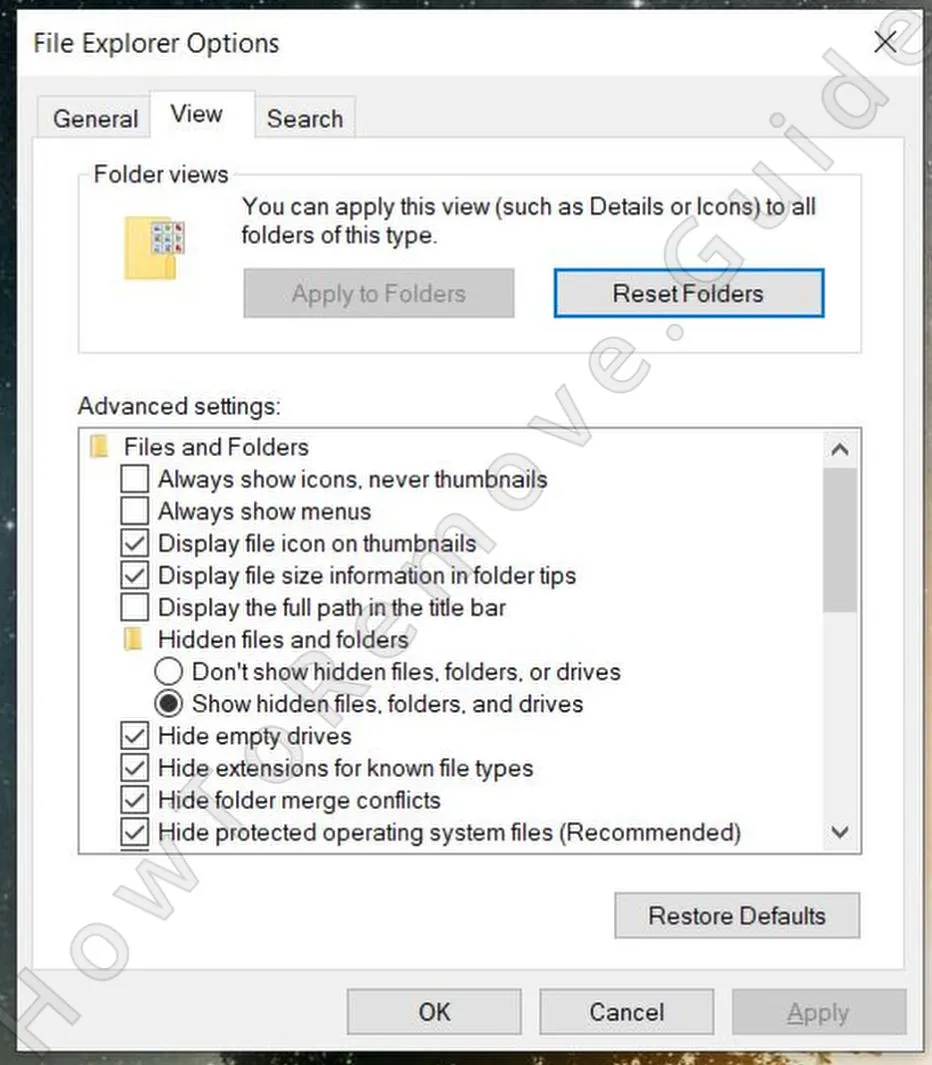 Hidden content often conceals Altrusis App fragments, so search for Folder Options from the Start Menu, open it, switch to the View tab, and enable Show hidden files, folders, and drives. This reveals directories malware frequently uses within user profiles.
 - 1.2Locked files interrupt progress, which is why installing LockHunter is worthwhile. This free utility integrates into the context menu, shows which process is holding a file, and can unlock and delete stubborn executables or DLLs without requiring registration.
If you prefer to avoid third-party tools, we keep the guide largely hands-on. In this case, the app helps remove locked files, which is often essential for a complete cleanup.
LockHunter is free, contains no ads, and needs no registration. You can download and install it in a couple of minutes.
Remove Altrusis App Processes From the Task Manager
Ending a visible process is only part of the job. Altrusis App may rely on launchers, scheduled tasks, or startup items to come back. Stop what’s running, remove the on-disk payload, and then address persistence so the system remains stable after a restart.
2. How to Delete Altrusis App Processes in the Task Manager
- 2.1To identify the binary behind Altrusis App, press Ctrl + Shift + Esc to open Task Manager. Watch running processes and note unusual resource spikes.
- 2.2If you see the compact view, click More details. The full interface shows background processes, publishers, and columns that help spot anomalies.
- 2.3
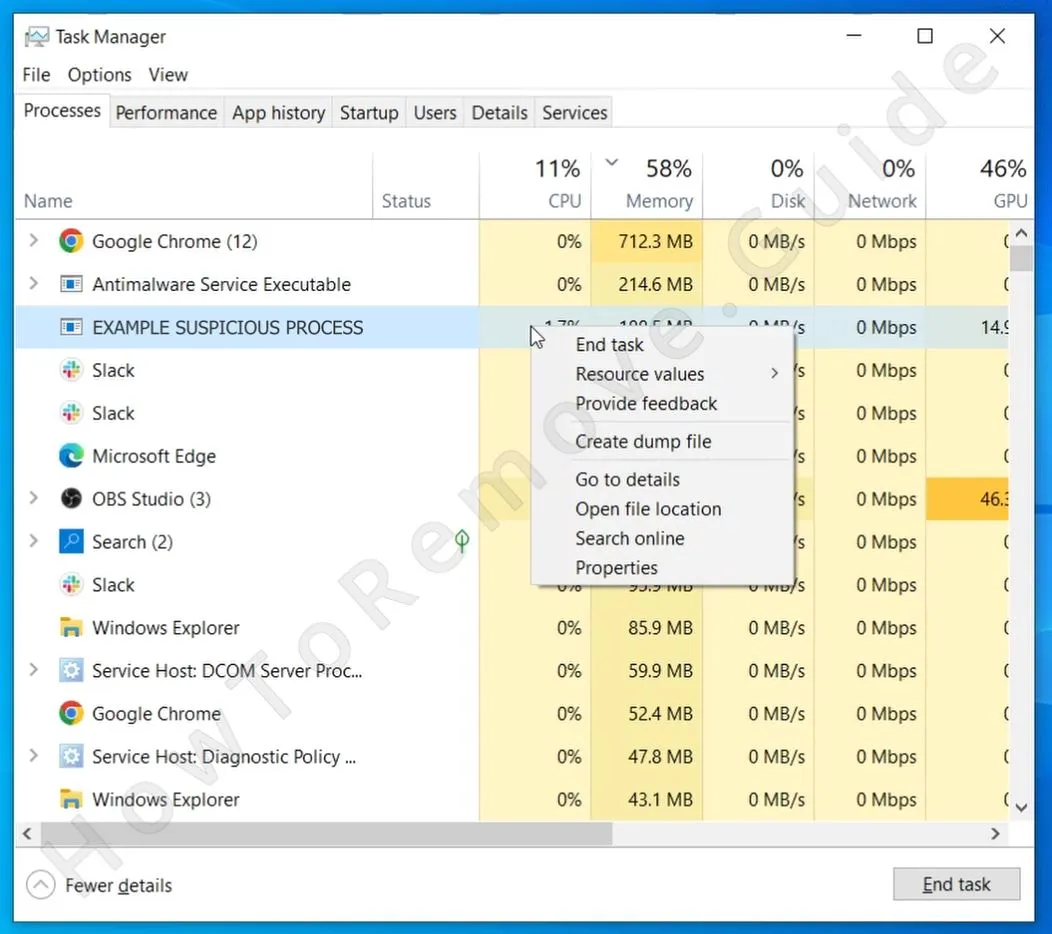 To surface outliers quickly, sort by CPU or Memory and inspect unfamiliar names using atypical resources. Threats rarely identify themselves plainly.
 - 2.4When something stands out, right-click it and choose Open file location. Jumping to the folder shows the executable’s path and whether it sits in a questionable user-space directory.
- 2.5Try deleting the containing folder immediately. If Windows blocks removal, use LockHunter, select What’s locking this file?, release the handle, then delete the file and its folder through the tool.
- 2.6After removing the payload on disk, return to Task Manager and End task on the same process. Doing this now prevents an immediate respawn and keeps the environment clean for the next steps.
We tested that SpyHunter successfully removes Altrusis App* and we recommend using it. It will block Altrusis App from reinstalling itself and it will make sure your device is clean from any malware.
Try Free For 7 Days*
Buy now15% OFF if you buy straight without trial.
Delete Altrusis App Virus Files
Startup folders and user directories are common launch points. Altrusis App may also drop temporary items that help it revive after removal. Clearing these areas reduces the places it can restart from once the main executable is gone, improving the odds that changes persist after reboot.
3. How to Get Rid of Altrusis App Files
- 3.1Check Windows Startup locations—frequent relaunch sources for Altrusis App: C:\ProgramData\Microsoft\Windows\Start Menu\Programs\Startup and C:\Users\YourUsername\AppData\Roaming\Microsoft\Windows\Start Menu\Programs\Startup. Remove shortcuts or executables you did not add yourself.
- 3.2Inside those Startup folders, keep desktop.ini and delete any other suspicious files. If a file is locked, use LockHunter to discover the holder and remove it safely.
- 3.3Inspect application roots C:\Program Files and C:\Program Files (x86). Look for newly created, empty, or oddly named folders – especially ones without a clear vendor – and remove those you verify as unrelated to trusted software.
- 3.4Review user-level paths: C:\Users\YourUsername\AppData\Local\, C:\Users\YourUsername\AppData\Local\Programs, and C:\Users\YourUsername\AppData\Roaming\Microsoft\Windows\Start Menu\Programs. These often contain helper launchers, updaters, or scripts.
- 3.5
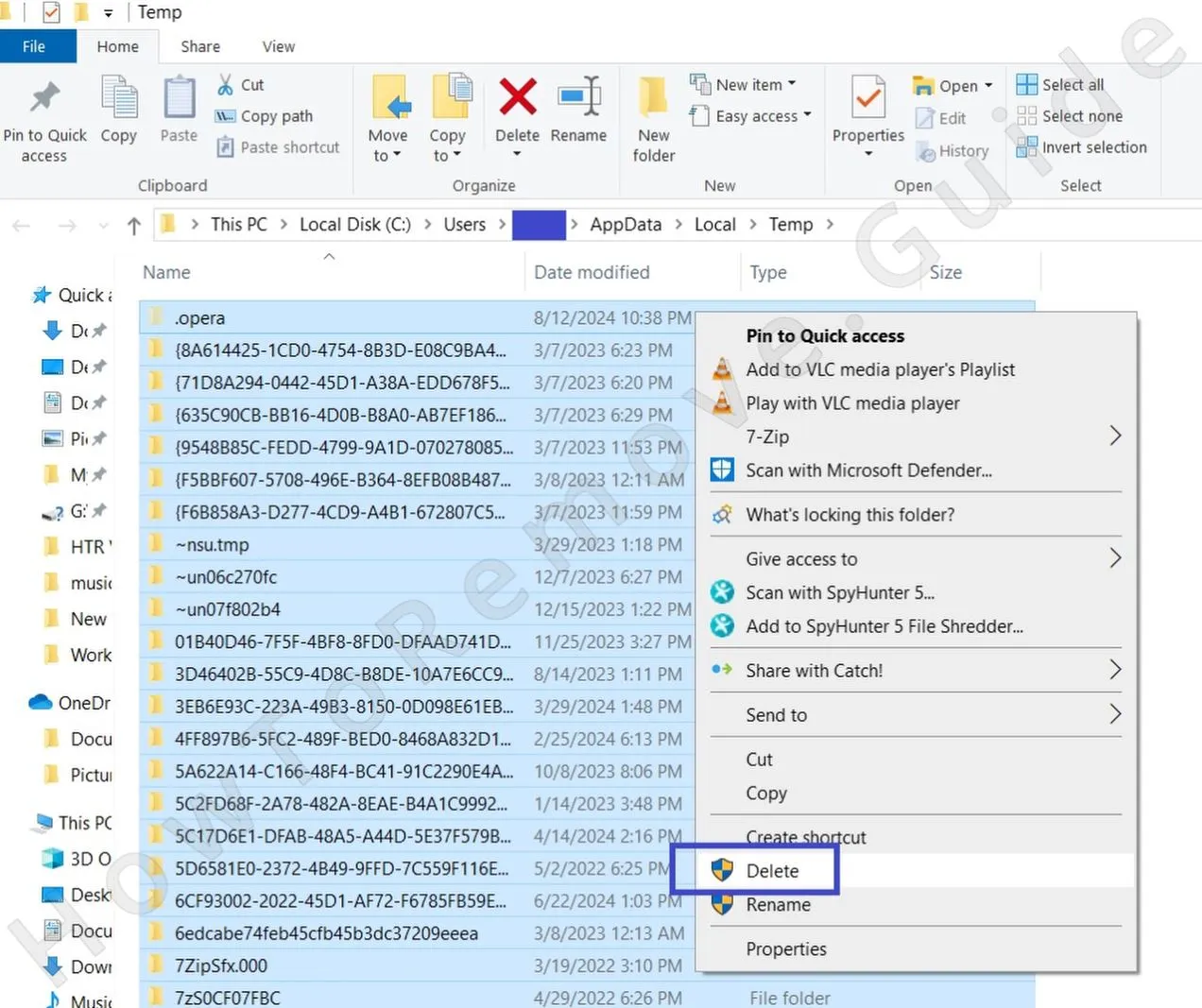 Clear temporary data: open C:\Users\YourUsername\AppData\Local\Temp, press Ctrl + A to select all, delete the contents, then empty the Recycle Bin to prevent easy restoration.
Get Rid of Altrusis App Scheduled Tasks
Persistence often relies on scheduled jobs that trigger at logon or on a timer. Altrusis App may hide behind a bland task that launches a script from a profile directory. Removing the job and its target file closes this loop and prevents silent returns after restart.
4. Eliminate Altrusis App Scheduled Tasks
- 4.1
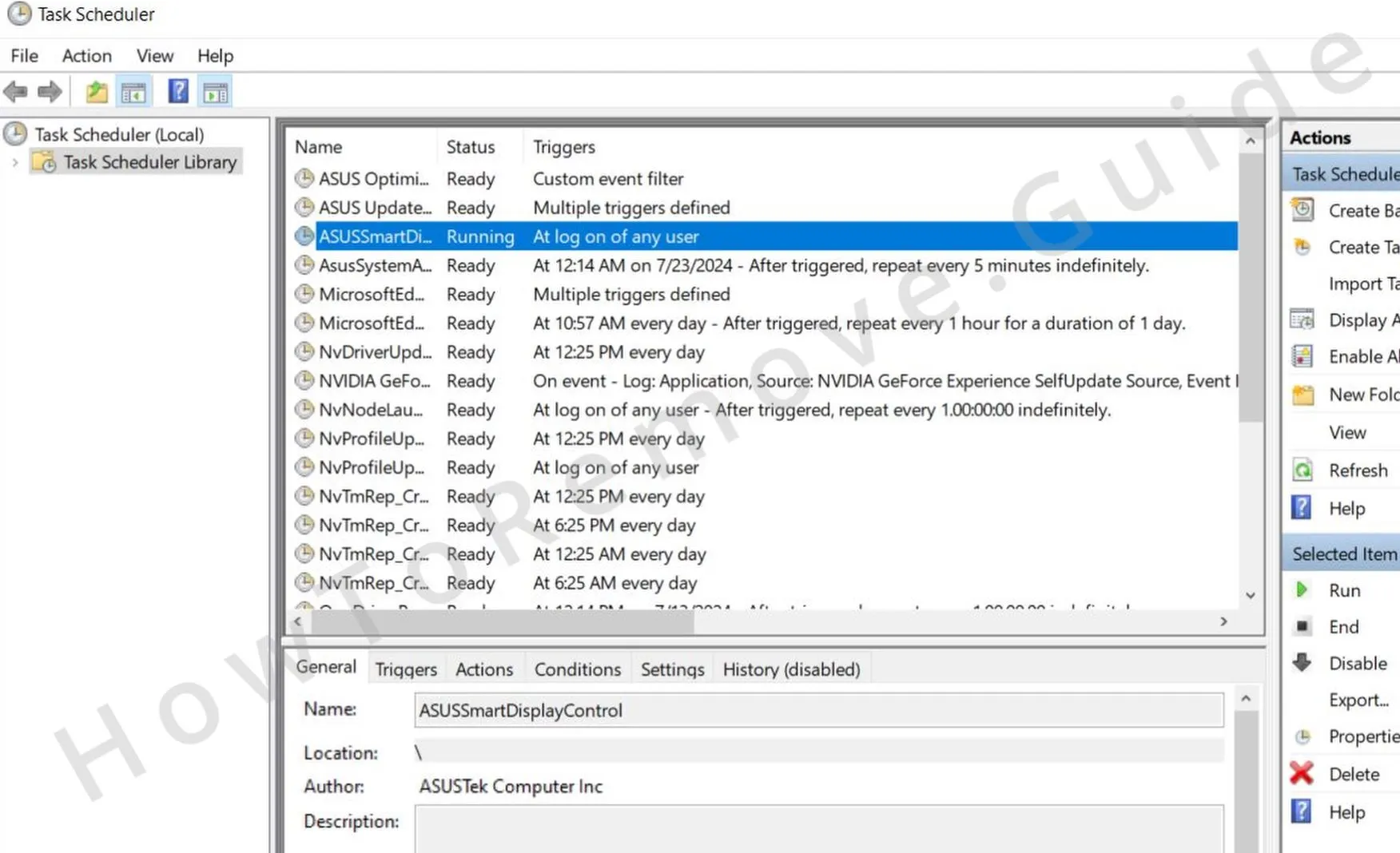 Because scheduled automation can restart Altrusis App, type Task Scheduler in the Start Menu search and open it. Expand the Task Scheduler Library to list tasks across top-level and vendor subfolders.
 - 4.2Double-click any task to open Properties. The Actions tab shows the command or file that runs and any arguments passed at launch.
- 4.3Be wary of actions that reference AppData or Roaming – especially paths inside a user profile. If you do not recognize the invoking program, treat it as suspect and continue checking.
- 4.4For any task you judge illegitimate, copy the full path from Actions, then delete the task in Task Scheduler. Removing the entry disables its trigger-based launch.
- 4.5Browse to the copied path and delete the referenced executable or script. Without its payload, a recreated task has nothing valid to start.
- 4.6Work through every folder under the Task Scheduler Library, including vendor folders. Persistence often hides behind generic names and innocuous descriptions.
Uninstall the Altrusis App Malware App Through the Windows Registry
Standard uninstallers can leave configuration or autostart data behind. Altrusis App may persist through run keys or service entries that reference missing binaries and later rebuild them. Target precisely – remove only entries that clearly relate to the unwanted behavior.
5. Remove Altrusis App Through the Registry
- 5.1Because configuration items can preserve Altrusis App, press Win + R, type regedit, and press Enter to open Registry Editor. It exposes startup, policy, and service settings used during boot and logon.
- 5.2Press Ctrl + F and search for the exact name of the app you uninstalled earlier. You may find orphaned keys left by its uninstaller, including shell or service references.
- 5.3When a match appears, select the key in the left pane and delete it. Continue with F3 until there are no more results across all loaded hives.
- 5.4Repeat the search for any other program names you removed while cleaning processes and startup items. Clearing their remnants prevents chained relaunchers from restoring files.
- 5.5Run a separate search for Altrusis App. Even one value pointing to a user-space path can re-create dropped components after restart.
- 5.6Manually review these commonly abused locations for autostarts and policy entries:
HKEY_CURRENT_USER\Software\Microsoft\Windows\CurrentVersion\Run
HKEY_CURRENT_USER\Software\Microsoft\Windows\CurrentVersion\RunOnce
HKEY_CURRENT_USER\Software\Microsoft\Windows\CurrentVersion\Policies\Explorer\Run
HKEY_LOCAL_MACHINE\Software\Microsoft\Windows\CurrentVersion\Run
HKEY_LOCAL_MACHINE\Software\Microsoft\Windows\CurrentVersion\RunOnce
HKEY_LOCAL_MACHINE\Software\Microsoft\Windows\CurrentVersion\Policies\Explorer\Run
HKEY_LOCAL_MACHINE\Software\Microsoft\Windows\CurrentVersion\RunServices
HKEY_LOCAL_MACHINE\Software\Microsoft\Windows\CurrentVersion\RunServicesOnce
HKEY_LOCAL_MACHINE\Software\Microsoft\Windows\CurrentVersion\RunOnce\Setup
HKEY_LOCAL_MACHINE\SYSTEM\CurrentControlSet\Services - 5.7In each listed path, review the right pane for values that point to unknown executables or odd directories. Delete the suspicious value only – not the entire key – to avoid disrupting legitimate components.
When you finish these steps, restart Windows. Confirm that startup is normal and that the unwanted behavior no longer appears in your browser or applications. If issues persist, run an offline scan with a reputable security suite to check for drivers, repair policy changes, and verify no scheduled tasks or run entries were missed.
