

If you’ve noticed a process or a strange file named Altrusis Service in your system, know that it’s not a one-off glitch but a member of the broader Trojan family. Think of it in the same league as infections like Altruistics or Altrusica Service (Altrusica App) – different names, but the same destructive DNA.
Trojans of this kind usually get inside user PCs through bundled installers or shady browser add-ons, or, in some cases, via free apps that look legitimate at first. Once Altrusis Service gets in, it can perform a wide range of harmful acivities that I cannot exhaustively list here. The main problems you can expect from a Trojan like this nowadays are that it can drain your resources for crypto mining, trigger scam pop-ups, quietly exfiltrate sensitive data like passwords and banking info, and perform other harmful actions.
But that’s not the entire danger. Apart from what Altrusis Service does alone, it can also connect you to a wider ecosystem of malware. If left unchecked, it can download additional threats and escalate into something far worse. If your system shows signs of Altrusis Service, treat it as something that must be deleted ASAP. In the following lines, I’ll help you do exactly that.
We tested that SpyHunter successfully removes Altrusis Service* and we recommend using it. It will block Altrusis Service from reinstalling itself and it will make sure your device is clean from any malware.
 Try Free For 7 Days*
Buy now15% OFF if you buy straight without trial.
 OFFER
OFFERAltrusis Service Removal Guide
Begin with the simplest fix: try removing Altrusis Service via Windows’ built-in uninstall options before you attempt anything advanced. This first sweep is quick, safe, and sometimes clears the problem entirely. Even when it doesn’t fully resolve things, it trims leftovers and makes later detection and cleanup steps more precise and easier to verify.
Quick Steps to Remove Altrusis Service
- 1.1Visibility comes first with Altrusis Service. Open the Start Menu, choose Settings (gear icon), and go to the panel where you manage installed apps and system preferences, including uninstall controls.
- 1.2In Settings, select Apps. You can review every installed program here and switch the view by name, size, or install date to spot recent additions quickly.
- 1.3Change sorting to Installation date so the newest entries float to the top. This makes unfamiliar or irregular programs easier to spot during the first pass.
- 1.4If something looks unknown, select it and click Uninstall. Follow the prompts to the end so the uninstaller can remove any services or scheduled components it set up.
- 1.5When the uninstaller finishes, open C:\Users\YourUsername\AppData\Local\Programs. Look for leftover folders or helper files that match what you just removed and take note of any stragglers.
- 1.6Delete any remaining matching folder by hand. Restart Windows afterward to release file locks and confirm nothing attempts to auto-start from that directory again.
Restart your PC and check whether the unwanted program is gone. If residual components remain, that’s common with persistent threats. The next sections focus on revealing hidden files, stopping active processes, and removing persistence so the changes hold after a reboot.
SUMMARY:
How to Fully Get Rid of Altrusis Service
Active components often reveal their own storage paths while running. If Altrusis Service is currently executing, you can trace file locations, stop processes, and remove scheduled triggers more accurately. Move methodically, confirm every path before deleting, and avoid broad removals outside items you’ve positively identified.
1. Preparing for the Altrusis Service Removal
- 1.1
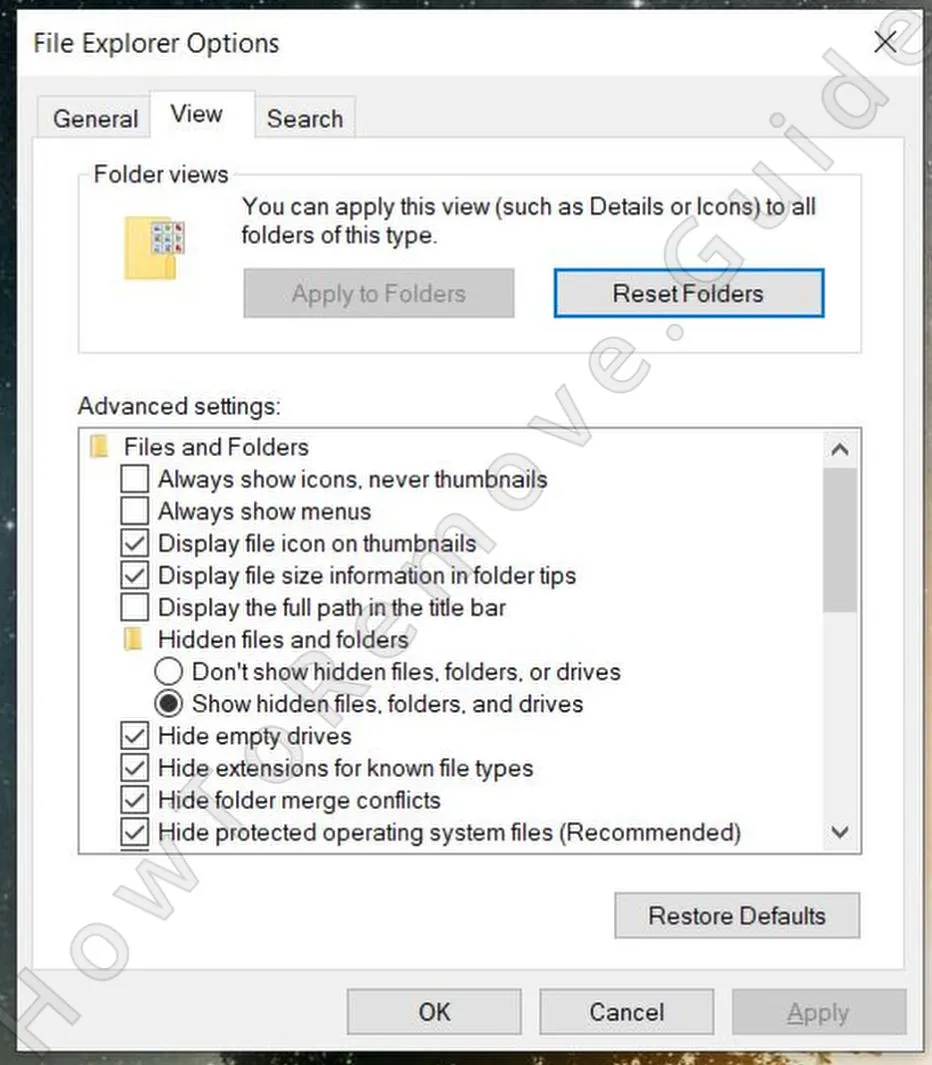 Hidden items often hide fragments of Altrusis Service. Search for Folder Options from the Start Menu, open it, switch to the View tab, and enable Show hidden files, folders, and drives to expose user-profile directories malware favors.
 - 1.2Locked files can stall progress, which is why installing LockHunter helps. The utility integrates with the context menu, shows which process holds a file, and can unlock and delete stubborn EXEs or DLLs without registration.
We get it if you prefer to avoid extra software and keep things hands-on. In this case, a lock-removal tool can be necessary to delete stubborn files that resist normal removal.
LockHunter is free, contains no ads, and doesn’t require an account. The installer is small and the setup takes only a couple of minutes.
Remove Altrusis Service Processes From the Task Manager
Stopping a visible process is only part of the job. Altrusis Service often leans on secondary launchers, scheduled tasks, and startup entries to return. Terminate what’s running, remove the on-disk payload, then finish persistence cleanup so the system remains stable across restarts.
2. How to Delete Altrusis Service Processes in the Task Manager
- 2.1To identify the binary tied to Altrusis Service, press Ctrl + Shift + Esc to open Task Manager and watch active processes and resource use.
- 2.2If you see the compact view, click More details. The expanded view shows background processes, publishers, and performance columns that help expose anomalies.
- 2.3
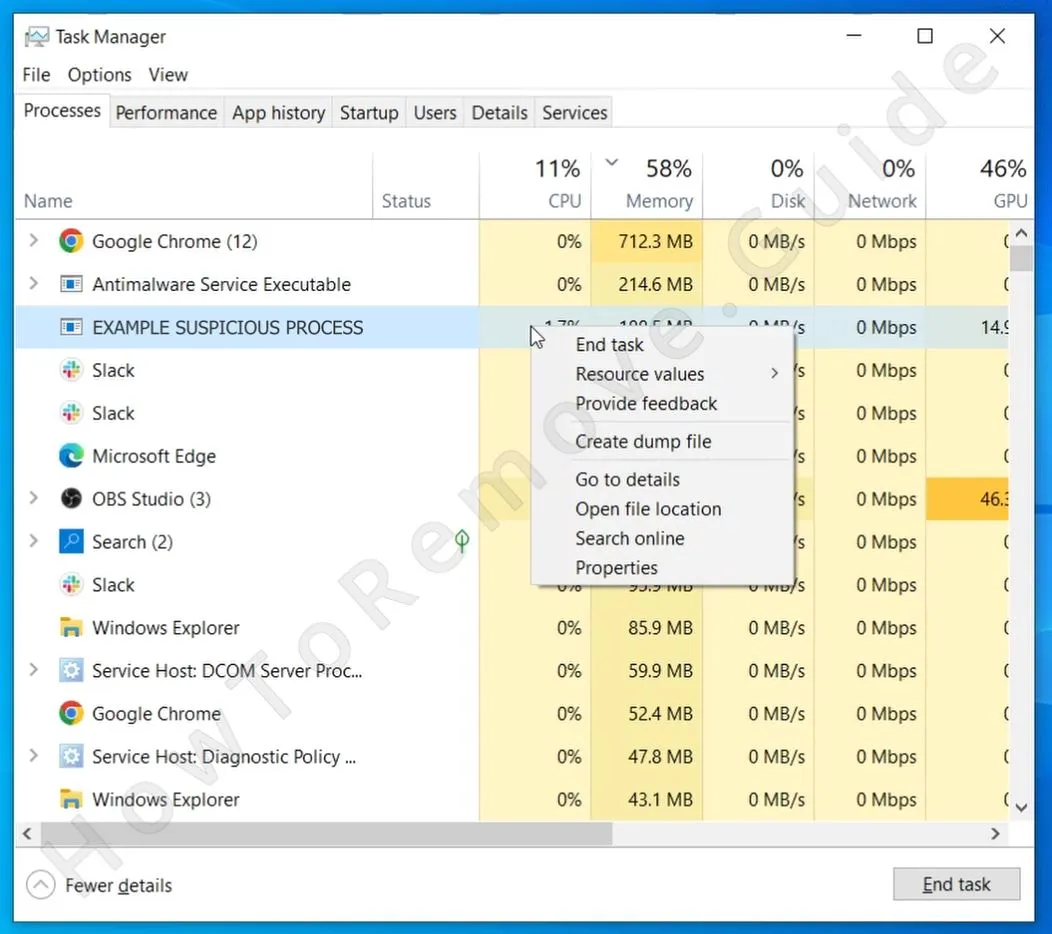 Which column exposes outliers fastest? Sort by CPU or Memory and review unfamiliar names that consume unusual resources. Malware rarely labels itself clearly.
 - 2.4When a candidate stands out, right-click it and choose Open file location. Jumping to its folder reveals the executable’s path and whether it lives in a questionable user-space directory.
- 2.5Try deleting the containing folder immediately. If Windows blocks deletion, use LockHunter, pick What’s locking this file?, release the handle, and remove the file and folder through the tool.
- 2.6After removing the payload on disk, return to Task Manager and End task on the same process to prevent an immediate respawn and keep the environment clean for the next steps.
Delete Altrusis Service Virus Files
Relaunch components often sit in startup folders and user profiles, and some temporary data can quietly bring Altrusis Service back after you think it’s gone. Clearing these locations trims the pathways the program can use to restart itself. Move carefully, remove only items you can attribute to the unwanted app, and keep default system files intact.
3. How to Get Rid of Altrusis Service Files
- 3.1Inspect the Windows Startup folders – common relaunch points for Altrusis Service: C:\ProgramData\Microsoft\Windows\Start Menu\Programs\Startup and C:\Users\YourUsername\AppData\Roaming\Microsoft\Windows\Start Menu\Programs\Startup. Remove shortcuts or executables you did not intentionally place there.
- 3.2Within those Startup directories, keep desktop.ini intact and delete any other suspicious files. If deletion is blocked because a process holds a handle, use LockHunter to unlock and remove the item safely.
- 3.3Check the main application directories, C:\Program Files and C:\Program Files (x86). Look for newly created, empty, or oddly named folders, especially ones lacking proper vendor names, and remove what you determine is unrelated to trusted software.
- 3.4Continue by examining user-level paths: C:\Users\YourUsername\AppData\Local\, C:\Users\YourUsername\AppData\Local\Programs, and C:\Users\YourUsername\AppData\Roaming\Microsoft\Windows\Start Menu\Programs. These directories frequently house auxiliary launchers, updater stubs, or scripts.
- 3.5
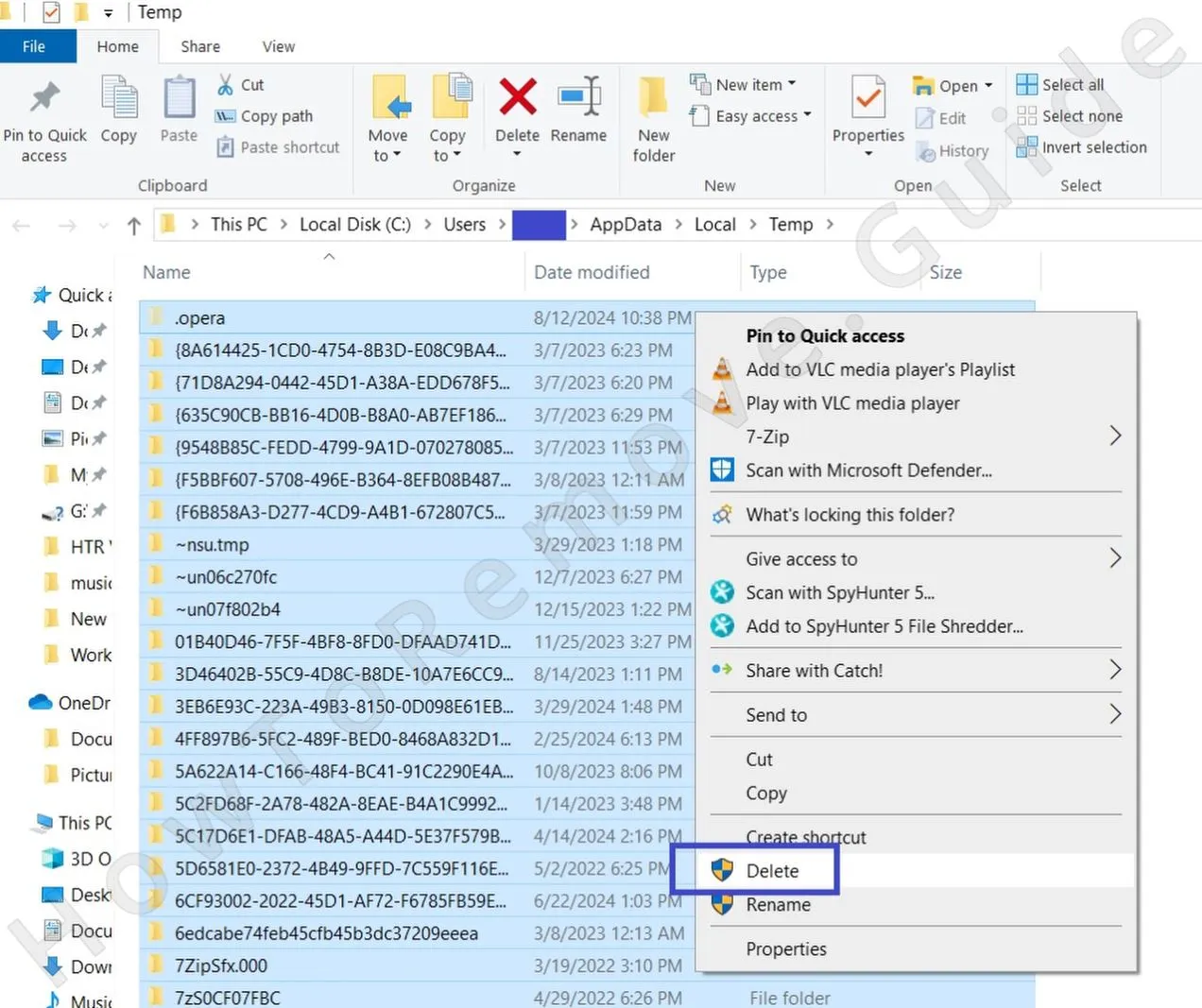 Finally, purge transient content. Go to C:\Users\YourUsername\AppData\Local\Temp, press Ctrl + A to select all, delete the files, and then empty the Recycle Bin so nothing can be restored by a simple revert
Get Rid of Altrusis Service Scheduled Tasks
Persistence often uses scheduled jobs that trigger at logon or at timed intervals. Altrusis Service can hide behind a generic task name that launches a script from a profile folder. Removing the job and the file it targets shuts this loop so the system doesn’t quietly re-run the unwanted code after a restart.
4. Eliminate Altrusis Service Scheduled Tasks
- 4.1
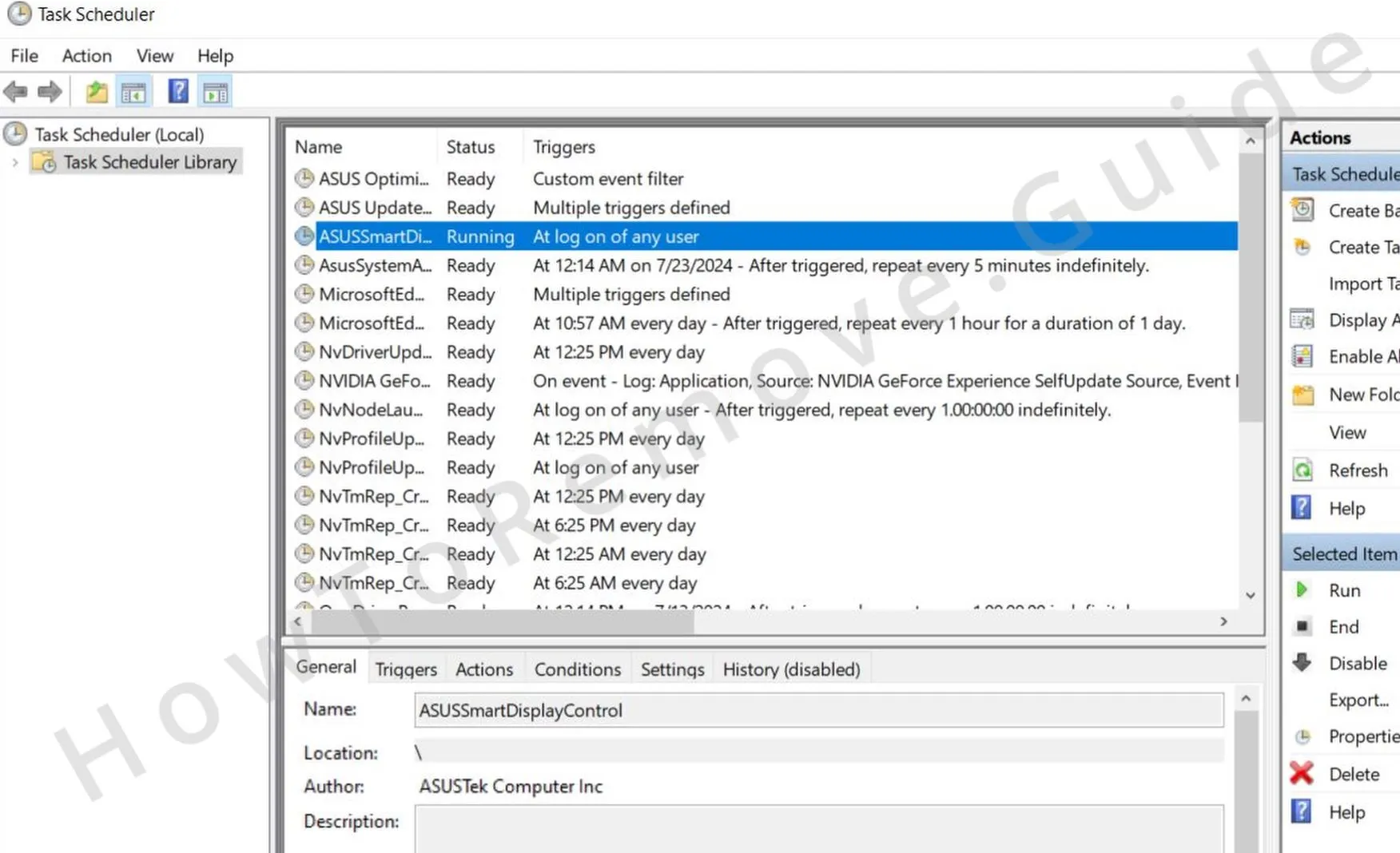 Because scheduled automation can restart Altrusis Service, type Task Scheduler into the Start Menu search and open it. Expand the Task Scheduler Library to list tasks across top-level and vendor-created subfolders.
 - 4.2Double-click a task to open Properties and review its configuration. The Actions tab shows the command or file that will run and any arguments passed at runtime.
- 4.3Treat actions that reference AppData or Roaming with caution, especially when the path points into a user profile. If you don’t recognize the invoking application, keep investigating.
- 4.4When you decide a task is illegitimate, copy the full path from Actions, then delete the task inside Task Scheduler to disable its trigger-based execution.
- 4.5Navigate to that copied path and delete the referenced executable or script. Removing the payload prevents any later task recreation from having a valid target.
- 4.6Work through every folder under the Task Scheduler Library, including vendor subfolders. Persistence often uses generic names and innocuous descriptions, so a thorough review matters.
Uninstall the Altrusis Service Malware App Through the Windows Registry
Standard uninstallers may leave configuration data or autostart values behind. Altrusis Service can persist using run keys or service entries that point to missing binaries and later replace them. Precision is essential here – remove only entries tied to the unwanted behavior so you don’t disrupt legitimate services or Windows features.
5. Remove Altrusis Service Through the Registry
- 5.1Because configuration entries can preserve Altrusis Service persistence, press Win + R, type regedit, and press Enter to open Registry Editor. This tool exposes startup, policy, and service settings used during boot and logon.
- 5.2Press Ctrl + F and search for the exact name of the app you previously uninstalled. You may uncover orphaned keys left by the uninstaller, including shell or service references.
- 5.3When a match appears, highlight the key in the left pane and delete it. Continue searching with F3 until no additional results are found across all loaded hives.
- 5.4Repeat the search for other suspicious program names you removed earlier when cleaning processes and startup items. Clearing their leftovers blocks chained relaunchers from restoring files.
- 5.5Run one dedicated search for the threat name as well. Even a single value pointing to a user-space path can be enough to rebuild dropped components after a restart.
- 5.6Manually review these frequently abused paths for autostarts and policy entries:
HKEY_CURRENT_USER\Software\Microsoft\Windows\CurrentVersion\Run
HKEY_CURRENT_USER\Software\Microsoft\Windows\CurrentVersion\RunOnce
HKEY_CURRENT_USER\Software\Microsoft\Windows\CurrentVersion\Policies\Explorer\Run
HKEY_LOCAL_MACHINE\Software\Microsoft\Windows\CurrentVersion\Run
HKEY_LOCAL_MACHINE\Software\Microsoft\Windows\CurrentVersion\RunOnce
HKEY_LOCAL_MACHINE\Software\Microsoft\Windows\CurrentVersion\Policies\Explorer\Run
HKEY_LOCAL_MACHINE\Software\Microsoft\Windows\CurrentVersion\RunServices
HKEY_LOCAL_MACHINE\Software\Microsoft\Windows\CurrentVersion\RunServicesOnce
HKEY_LOCAL_MACHINE\Software\Microsoft\Windows\CurrentVersion\RunOnce\Setup
HKEY_LOCAL_MACHINE\SYSTEM\CurrentControlSet\Services - 5.7Within each listed path, check the right-hand pane for entries pointing to unknown executables or odd directories. Delete the suspicious value only – not the entire key – to avoid disrupting legitimate services or system components.
When you finish these steps, restart Windows. Confirm that startup is normal and that the unwanted behavior no longer appears in your browser or applications. If issues persist, run an offline scan with a reputable security suite to check drivers, repair policy changes, and verify no scheduled tasks or run entries were missed.
