

When Ayintothefre.org is in, it doesn’t announce itself, it just slides into your browser and starts redirecting you to weird sites and blasting you towards questionable ads. One trick it often uses is a fake “Allow” button posing as a CAPTCHA. If you clicked it, you basically handed it the keys. I’ve seen this same tactic with other hijackers like Iadispatcher, Searcherone and Search-redirect.com. Ayintothefre.org’s not going to crash your system, but it will ruin your browsing experience and might expose you to scams. If you’ve noticed any of this stuff happening, don’t wait. Check your browser settings and follow the removal guide below to take control back.
We tested that SpyHunter successfully removes Ayintothefre.org* and we recommend using it. It will block Ayintothefre.org from reinstalling itself and it will make sure your device is clean from any malware.
 Try Free For 7 Days*
Buy now15% OFF if you buy straight without trial.
 OFFER
OFFERAyintothefre.org Removal Tutorial
Alright, so listen – fixing something like Ayintothefre.org doesn’t need to turn into a full-on project. Seriously, start small. The basic stuff usually works first, and if you jump straight into complicated solutions, you’ll just stress yourself out for no reason. Keep it chill. Simple is good. You’ll thank yourself later for not overthinking it.
Quick Steps to Remove Ayintothefre.org
- 1.1Open the web browser you normally use and go to its Settings menu. For Chrome, that means clicking the three vertical dots in the upper-right corner. In Firefox, you’ll find three horizontal lines in that same position. Once in Settings, navigate to Extensions or Add-ons – this area shows everything currently installed in your browser. Go through each listed item and be alert for anything strange, unfamiliar, or suspicious that could be related to hijacker behavior like sudden redirects or pop-ups. These could be subtle threats hiding in plain sight.
- 1.2Take your time to look over every installed extension. Focus on its name, description, and what permissions it’s requesting. Browser hijackers often use generic or misleading names and icons to avoid detection. If something doesn’t look right, click Remove right away to eliminate the risk. When unsure about a name or function, quickly search it online to see if others have flagged it as suspicious. This kind of proactive caution can prevent long-term system instability and even stop future infections before they start spreading again.
- 1.3Next, go to the browser’s Privacy and Security section, then find and open Site Permissions or the setting most similar to it. You’ll see a list of websites that have requested access to sensitive features like notifications, microphone, camera, or even your location. While some trusted sites do legitimately need these permissions, malicious websites abuse them to track activity or push ads. Review the full list one site at a time, especially those with names that aren’t immediately familiar or that seem irrelevant to your browsing habits.
- 1.4If you find any website with access that you didn’t deliberately allow, click into the related permission setting and revoke its access immediately. Doing this helps stop those sites from exploiting your system or misusing browser features. Some rogue websites may secretly activate permissions you didn’t knowingly approve. Once this is done, close and restart your browser to make sure the permission changes are fully applied. If Ayintothefre.org is still active after restarting, you’ll need to move forward with more thorough removal techniques in the next sections.
If you’re still seeing signs of Ayintothefre.org, move on to the deeper cleanup steps provided below.
SUMMARY:
| Name | Ayintothefre.org |
| Type | Browser Hijacker |
| Detection Tool |
Some threats reinstall themselves if you don’t delete their core files. We recommend downloading SpyHunter to remove harmful programs for you. This may save you hours and ensure you don’t harm your system by deleting the wrong files. |
How to Remove the Ayintothefre.org Virus
Here’s the thing – Ayintothefre.org isn’t just annoying, it actually messes with your browser settings in a deeper way. If you ever see that “Managed by your organization” message pop up, yeah… that’s it. That’s the hijacker. That’s not normal. You’ll have to dig deeper than you think to actually get rid of it, or it just stays.
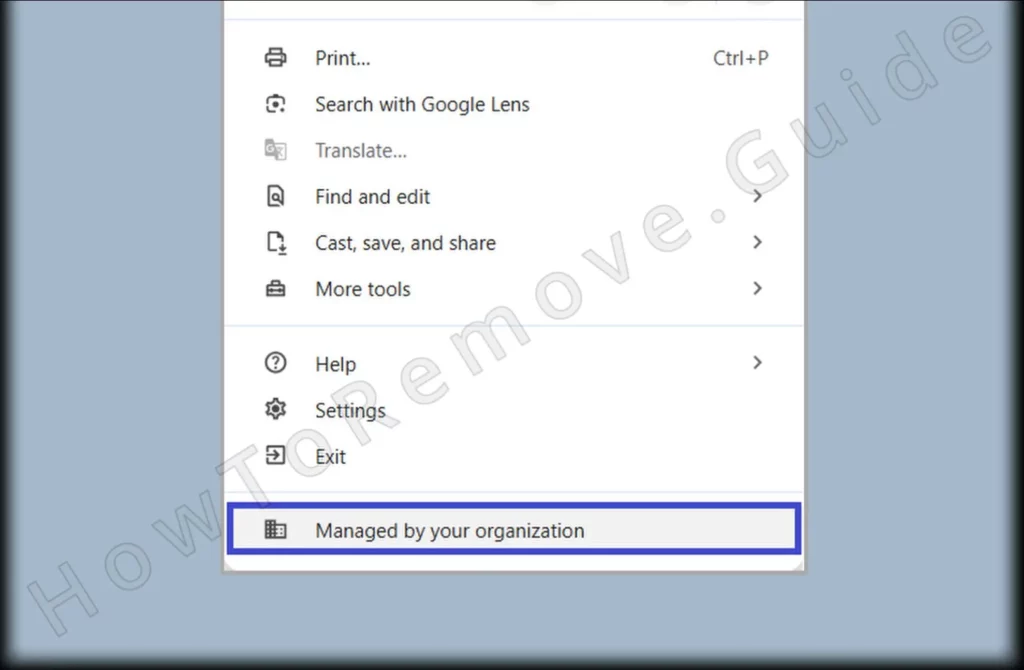
1. Identify the Ayintothefre.org Policies
-
1.1
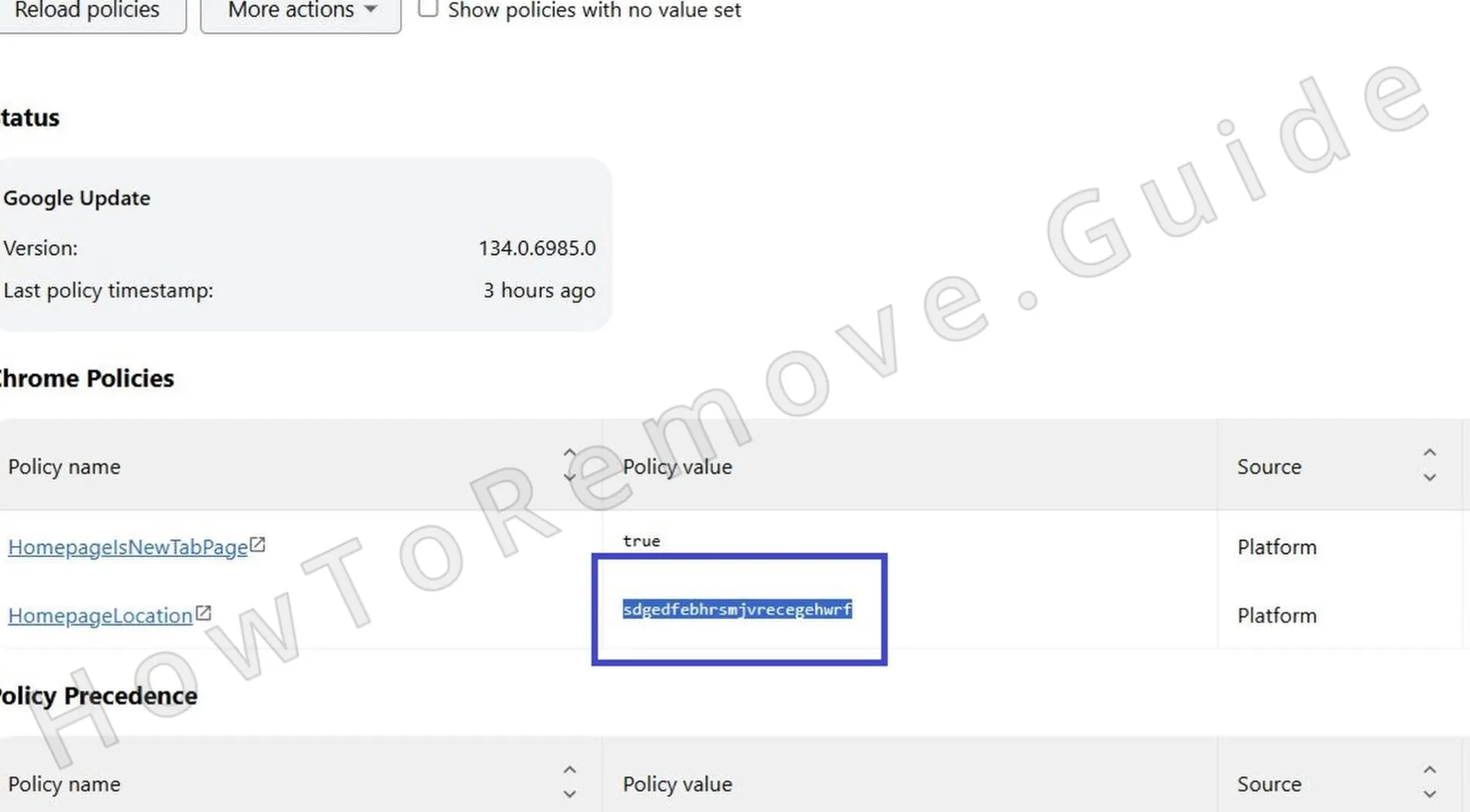 To access a list of active browser policies, type one of the following into your browser’s address bar and press Enter:
Chrome:chrome://policy
Edge:edge://policy
This page displays every policy currently enforced on the browser. Review the entries carefully, especially those with unusual titles or unfamiliar strings. Malicious extensions and hijackers often hide in obscure policy entries, so stay alert for anything that seems out of place or unexplained. - 1.2On the policy page, pay extra attention to the Policy Name and Policy Value fields. Hijackers rarely use clear, readable names – they often disguise entries using long strings of random letters and numbers. Note or screenshot anything that looks out of the ordinary, even if you aren’t sure. These pieces of information will be needed later when manually removing policies from your system.
- 1.3Return to your browser’s Extensions page and switch on Developer Mode using the toggle in the upper-right corner. This mode reveals additional technical information about each installed extension, including their unique extension ID. Write down the IDs for any items that appear sketchy or that you never intentionally installed. These IDs will be used later to help locate the correct extension folders on your hard drive for safe deletion.
- 1.4If the hijacker has prevented you from accessing the browser’s Extensions page, you can still find this information using Windows File Explorer. This method avoids browser-based restrictions and gives you direct access to the extension data stored locally. It’s useful when normal removal routes are blocked by Ayintothefre.org.
-
1.5
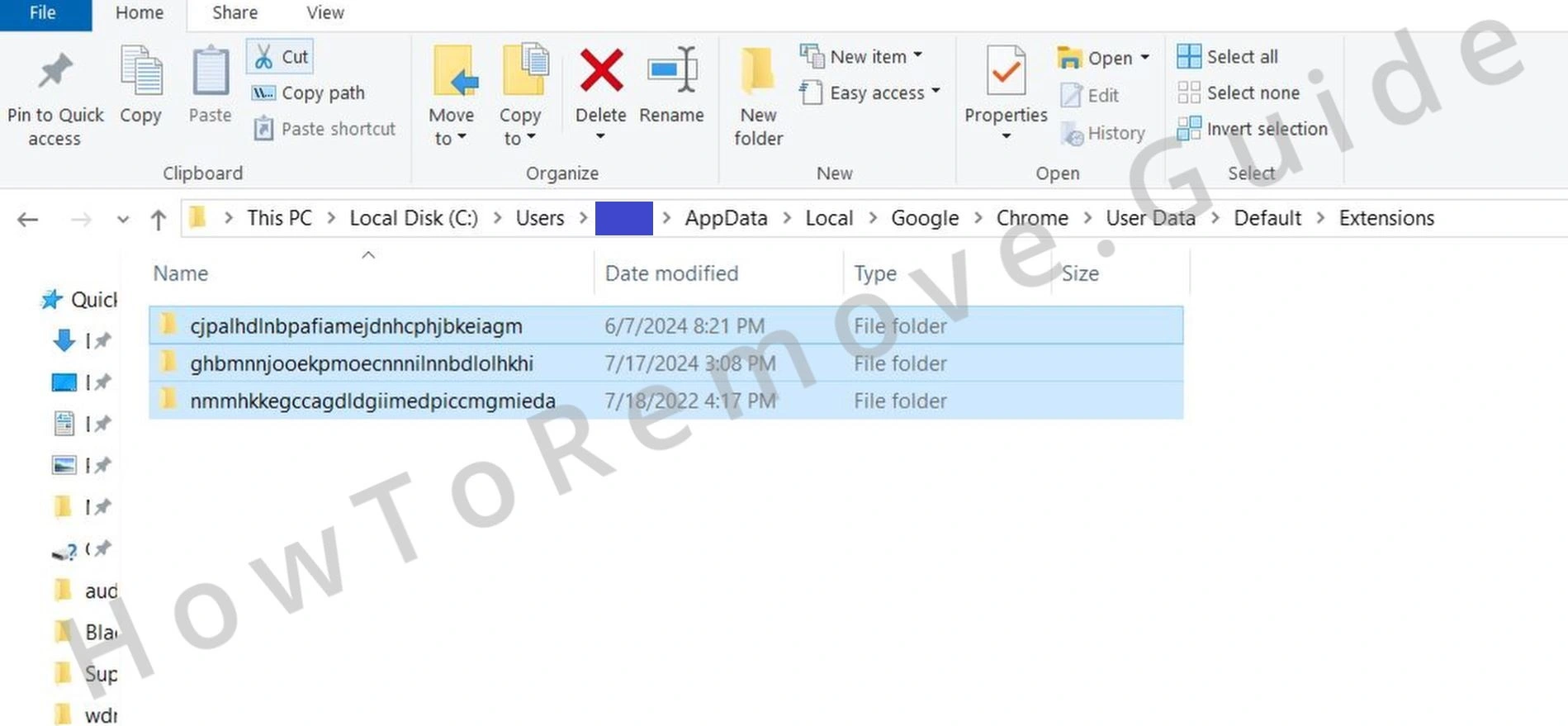 In File Explorer, navigate to the following location, replacing
[Your Username]with your actual Windows account name:C:\Users\[Your Username]\AppData\Local\Google\Chrome\User Data\Default\Extensions
You’ll see several folders here named using alphanumeric IDs. Compare these folder names to the list of suspicious extension IDs you recorded earlier. This comparison helps you pinpoint which folders are connected to known malicious extensions and ensures you remove the right files later on. - 1.6
 Go into each identified folder that corresponds to a suspicious extension ID. Select all the files inside and delete them permanently from your system. This process removes both the extension and its support files, ensuring that nothing remains behind to trigger future reinstalls or maintain any influence on your browser settings after a restart.
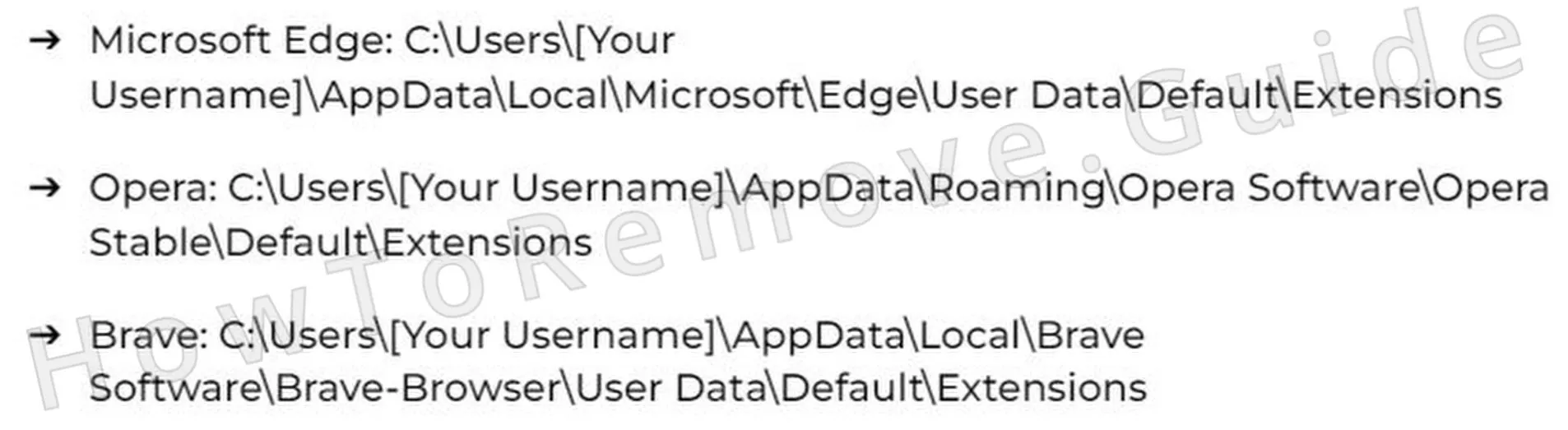
 - 1.7If you’re using a Chromium-based browser like Edge, it will have a similar Extensions directory. Locate this folder in your browser’s application data path and delete any folder whose ID matches those from suspicious extensions. Taking this step across all browsers helps guarantee that Ayintothefre.org is removed completely, especially if you switch between multiple browsers regularly.
Once you’ve completed these deletions, return to the Extensions page, reactivate Developer Mode, and scan the list one more time. If anything unusual remains, repeat the earlier steps and delete all traces until your browser shows no sign of Ayintothefre.org.
Get Rid of Ayintothefre.org Policies
So get this – Ayintothefre.org hides in the Windows Registry. Now if you’ve never poked around in there, don’t. One wrong move and your system could flip out completely. Registry stuff is no joke. If you’re not super confident, don’t even touch it. Let a good removal tool handle it. That way it’s gone and nothing breaks.
2. How to Delete Ayintothefre.org Policies Through the Registry
-
2.1Press Win + R to open the Run dialog, type
regedit, and press Enter to launch the Registry Editor. When prompted by User Account Control, confirm with Yes. This tool gives access to sensitive system-level configurations, so work with caution. Any accidental changes here can lead to serious OS malfunctions or persistent errors that are hard to reverse without backups. - 2.2In the Registry Editor, press Ctrl + F or use the Edit > Find menu, then enter the extension ID or suspicious policy value you recorded earlier. Click Find Next to begin scanning. When a match is found, right-click on the result and choose Delete. Keep pressing F3 to locate additional occurrences. Be thorough – a single leftover entry can allow Ayintothefre.org to return silently.
-
2.3
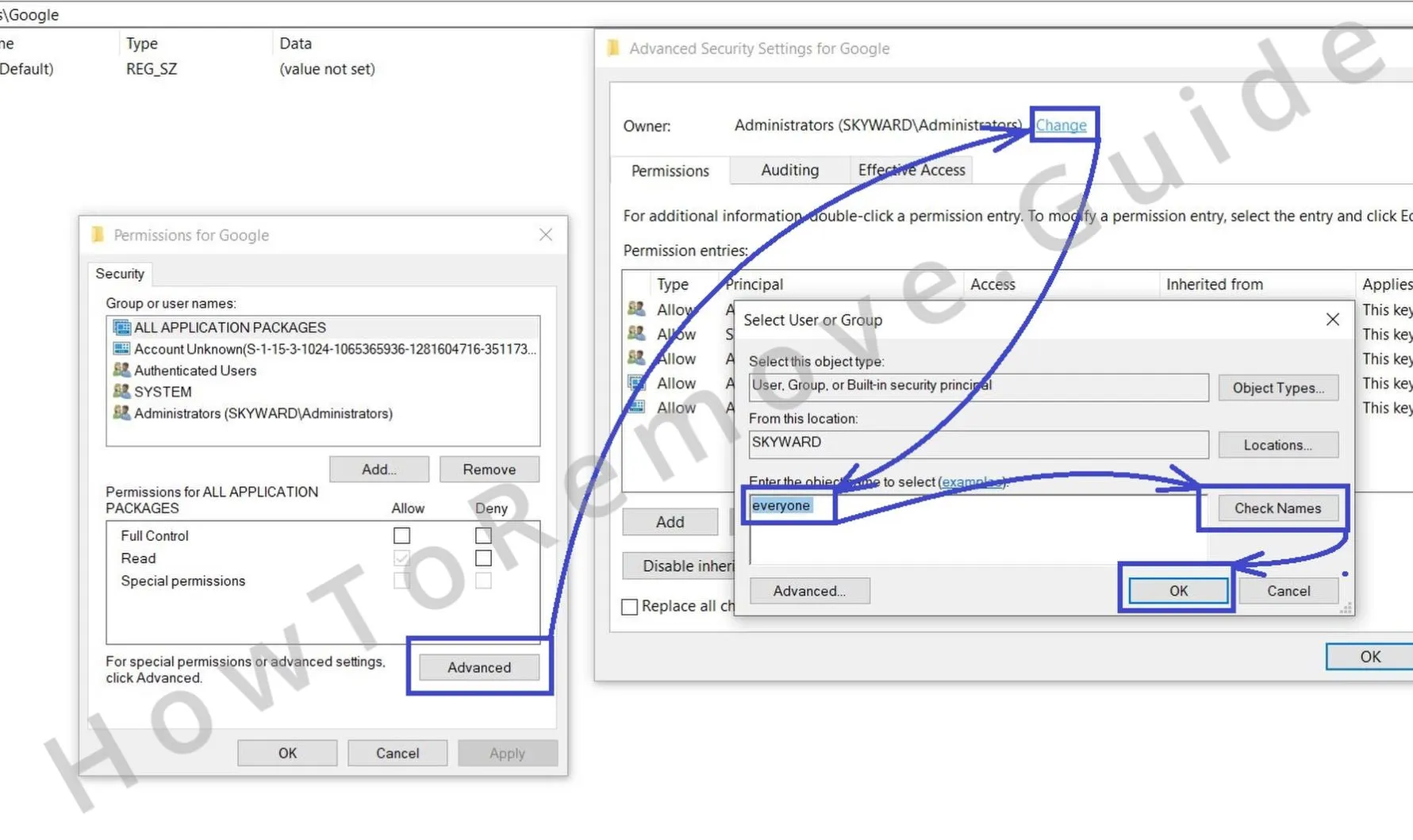 Sometimes, you’ll find that certain entries can’t be deleted due to restricted permissions. In such cases, right-click the problematic key, choose Permissions, and then click the Advanced button. Under the Owner section, click Change, type
Everyone, then hit Check Names followed by OK. This process grants you the access needed to edit or delete protected registry items linked to Ayintothefre.org. - 2.4
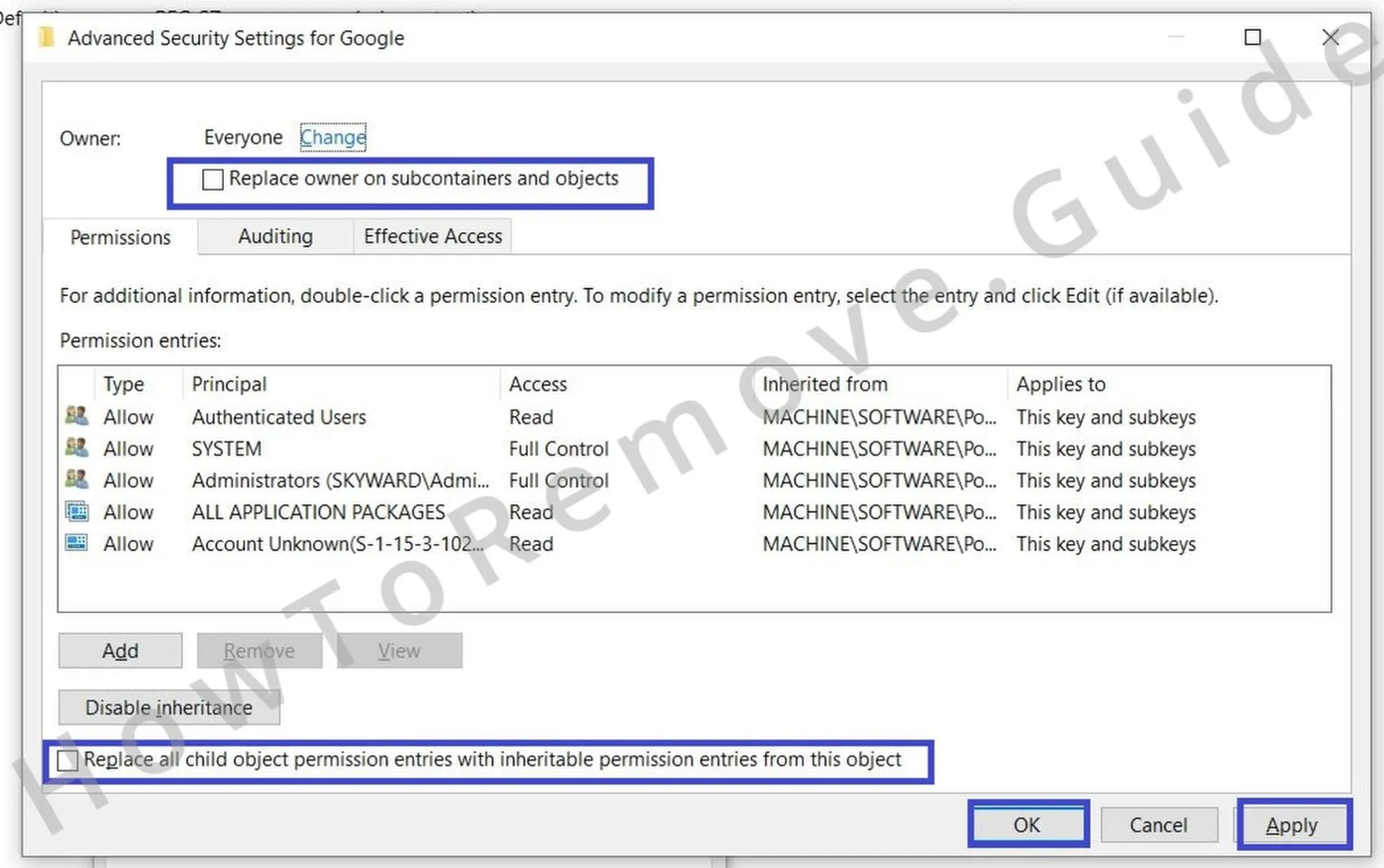 Within the same Advanced Permissions window, enable the checkboxes for Replace owner on subcontainers and objects and Replace all child object permission entries with inheritable permission entries from this object. Click Apply, then OK to confirm. These actions help you gain full control over previously locked entries. After completing deletions, close the Registry Editor and restart your system to ensure all changes take effect properly. If the “Managed by your organization” label still appears, proceed to the next set of tools.
This gives you the access needed to delete the rogue key.
Alternative Tools to Delete Ayintothefre.org Policies
Okay, so you cleaned up everything and that annoying “Managed by your organization” thing is still showing? That’s just how Ayintothefre.org works. Hijackers like this are stubborn. You gotta stay calm, don’t freak out. Keep checking, keep removing, and don’t quit too early. Be thorough. If you keep going, you’ll eventually clear it out. It just takes time.
3. Other Ways to Get Rid of Ayintothefre.org Policies
- 3.1
 Press Win + S to open the Windows search bar, then type Edit Group Policy and select the resulting tool. This will launch the Local Group Policy Editor, where many system rules are configured. Expand the Administrative Templates folder – this is where hijackers like Ayintothefre.org often plant hidden settings to manipulate browser functions without user consent or notification.
 - 3.2
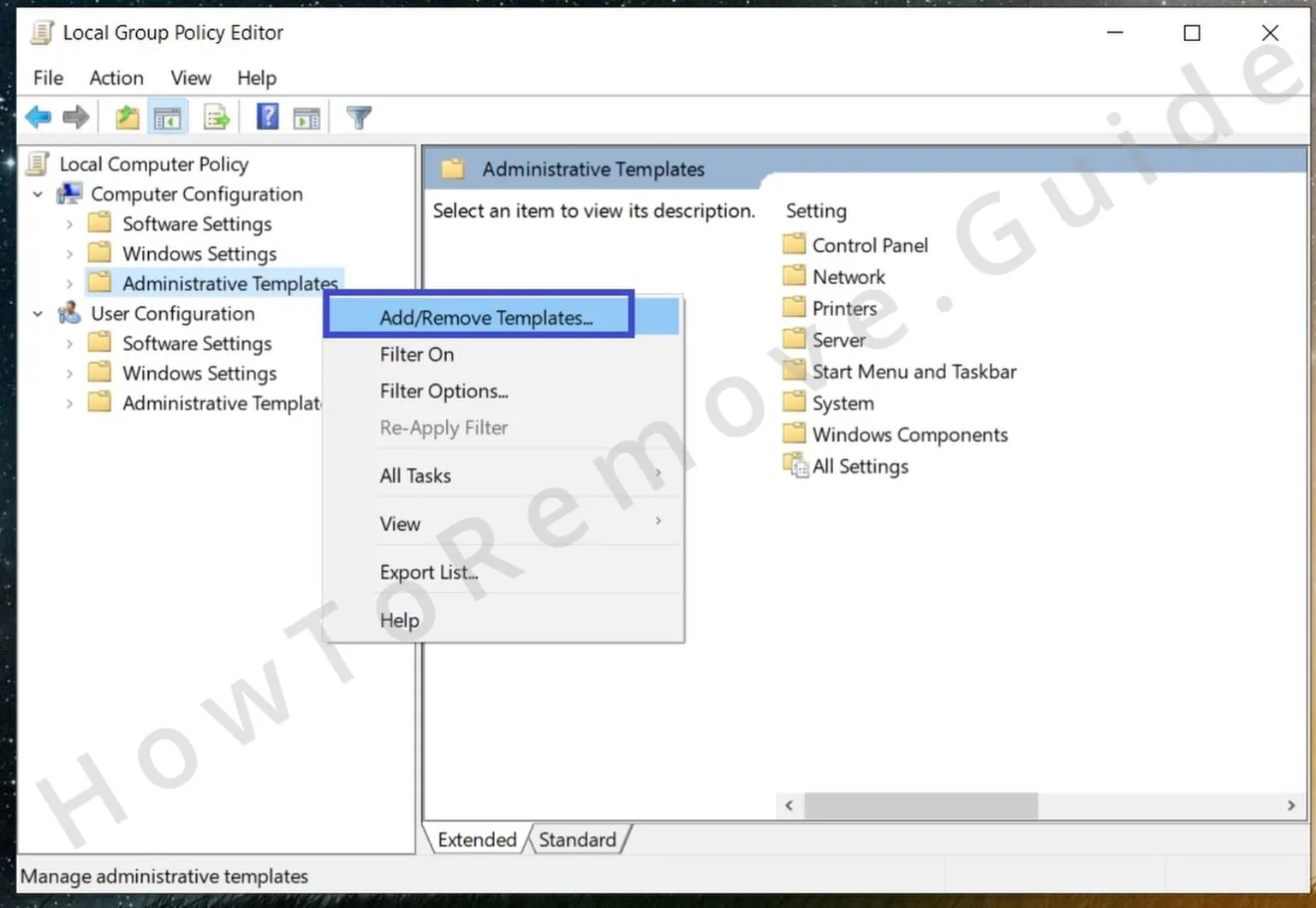
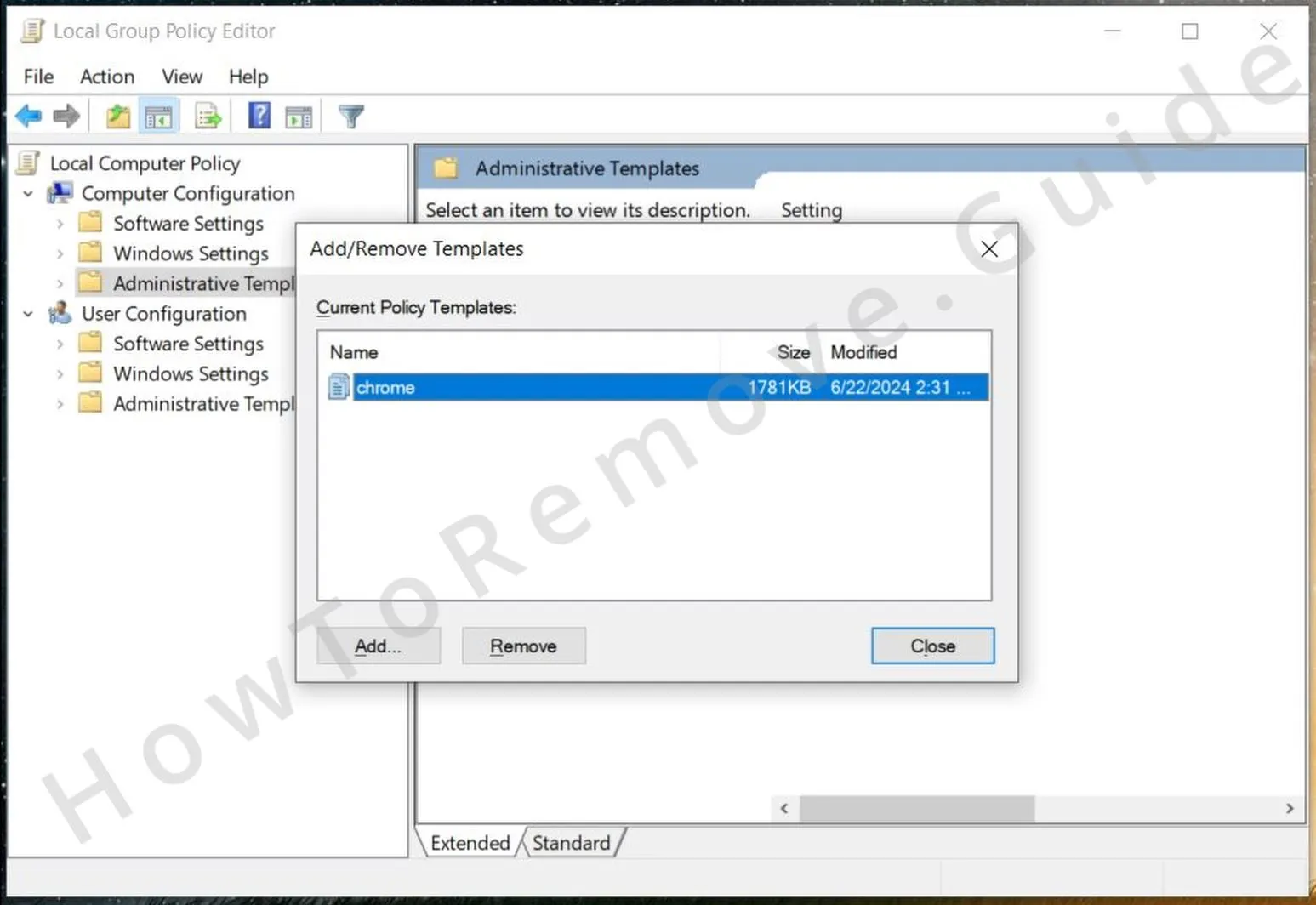 Right-click on Administrative Templates and choose Add/Remove Templates. A list will appear showing which templates are currently installed on your system. Review it carefully and remove any entry that you didn’t install yourself or that looks unfamiliar. Avoid touching known system templates unless you’re absolutely certain they were tampered with. Deleting hijacker-created templates will help cut off their browser control.
 - 3.3If you use Google Chrome, consider downloading a Chrome Policy Remover utility. This specialized tool is built to scan for and eliminate corrupted or hijacker-injected browser policies. Be sure to get the program from a trustworthy website or source. Once downloaded, right-click the file and choose Run as administrator to give it the permissions it needs for full cleanup. Let the program perform a complete scan.
- 3.4When running tools like Chrome Policy Remover, Windows might flag the app because it doesn’t recognize the developer. If you’re sure the source is safe, click More Info, then select Run Anyway to proceed. This will launch the program despite the warning. Allow it to finish scanning and cleaning up policy entries. Afterward, reboot your PC and revisit your browser settings. If you still see signs of Ayintothefre.org, repeat earlier steps to fully wipe out any lingering traces.
Uninstall Ayintothefre.org From Chrome, Edge, and Other Browsers
You think it’s over just because your browser looks normal again? Nope. Ayintothefre.org could still be hiding somewhere if even one little piece is left behind. That’s how it comes back. Most people don’t double-check everything, and that’s exactly when it hits again. Go through every setting like you’re paranoid. That little extra effort? It saves you later.
4. How to Remove Ayintothefre.org From Your Browser
- 4.1Open your browser once more and go back to the Extensions or Add-ons section for a final inspection. This is a good time to double-check everything. Scroll through each extension installed and verify that all are trustworthy and necessary. Remove anything that appears out of place or that you don’t explicitly remember installing. Even well-disguised hijacker extensions can quietly reinstall themselves over time if left alone.
- 4.2
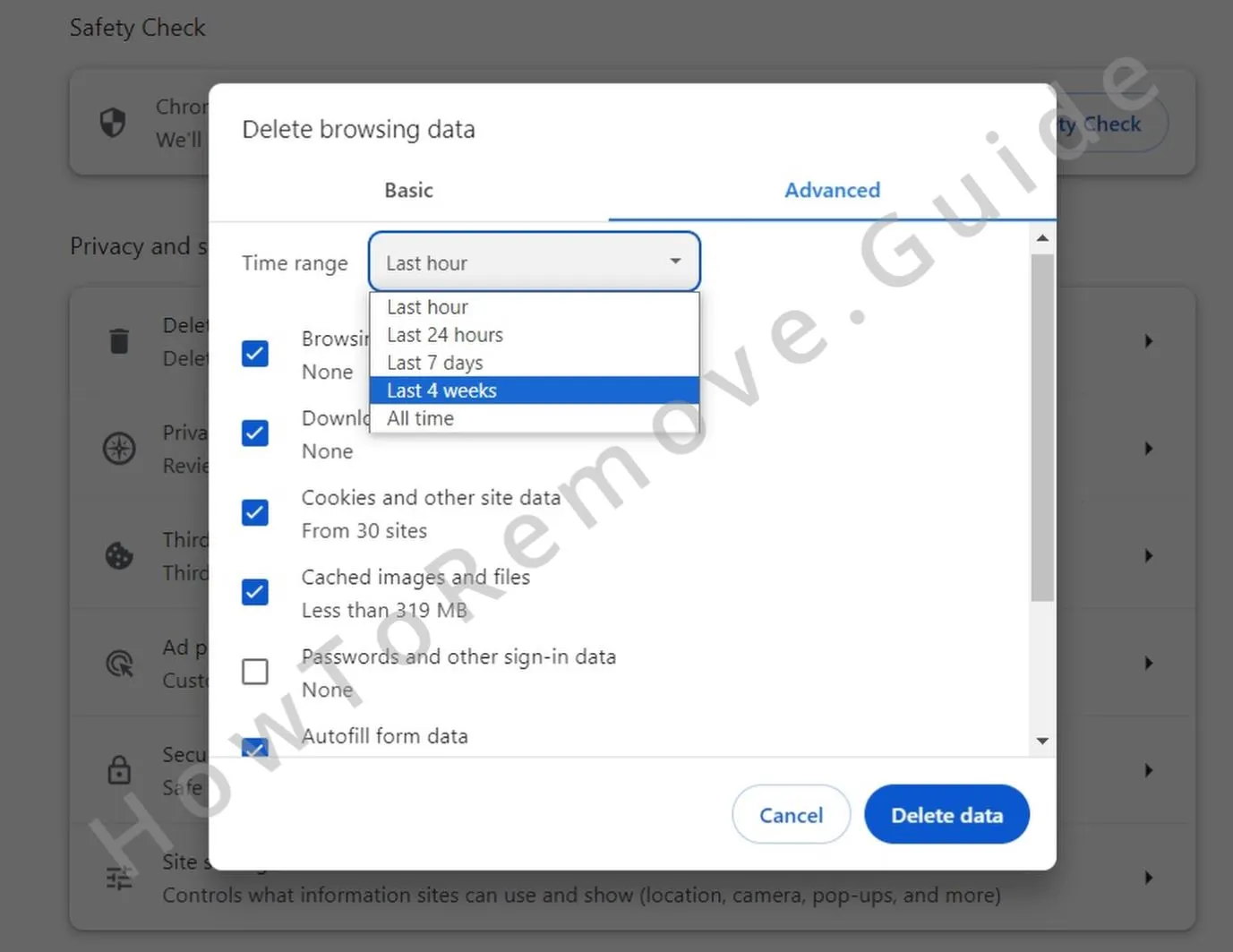 Next, open the Clear Browsing Data panel within your browser’s Settings. Set the Time Range to All Time, then select all categories except Saved Passwords, unless you want to remove those too. Click Clear Data to wipe cookies, cache, and other stored files. This step is essential to remove leftover files or session traces that Ayintothefre.org might use to keep itself active across sessions or restarts.
 - 4.3
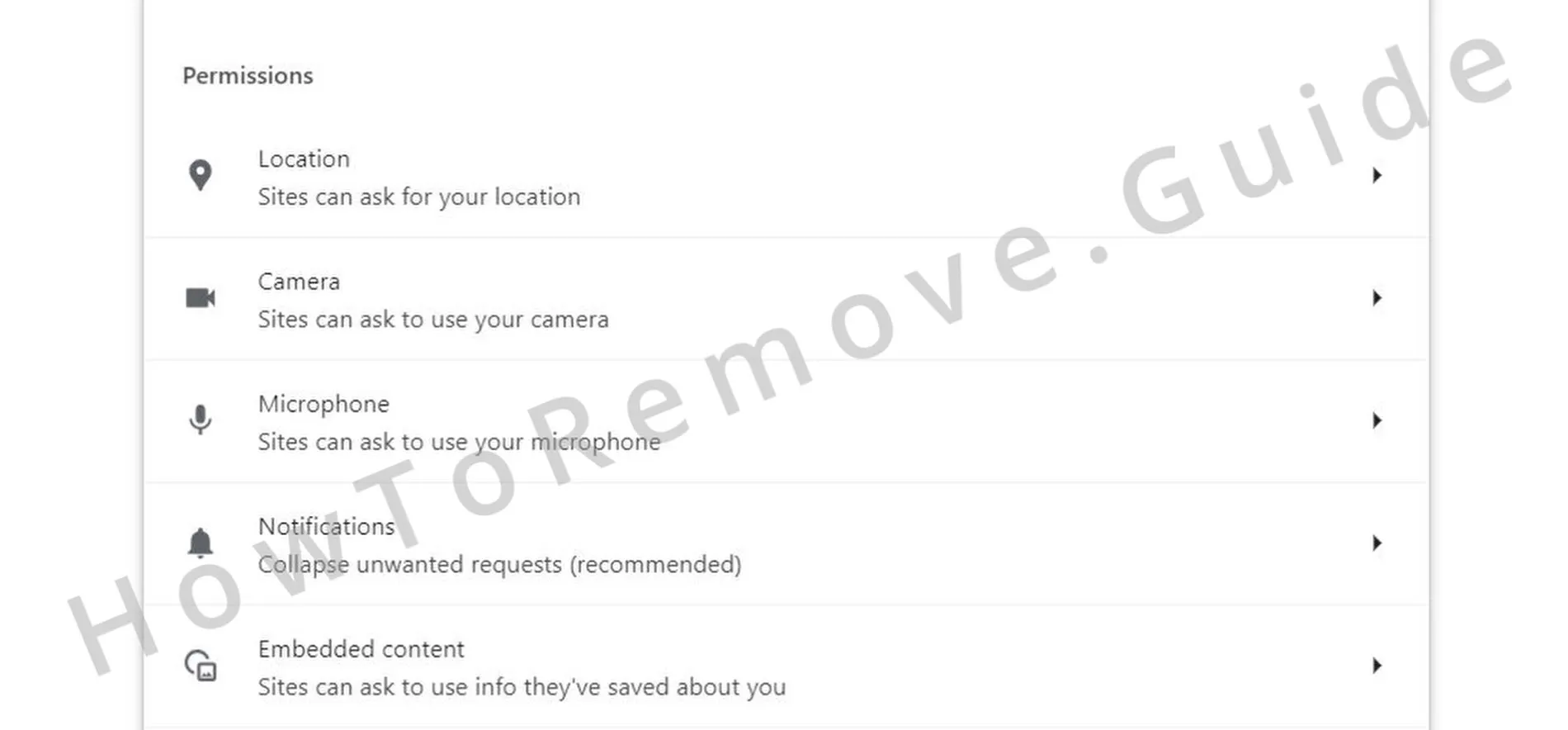 Go to your browser’s Privacy and Security menu and open Site Settings to review individual feature permissions. Look at categories like notifications, microphone, location, and camera. These permissions can be misused by harmful websites if left active. If you see any site that looks unfamiliar or questionable, use the Remove or Block option to immediately revoke its access.
 - 4.4
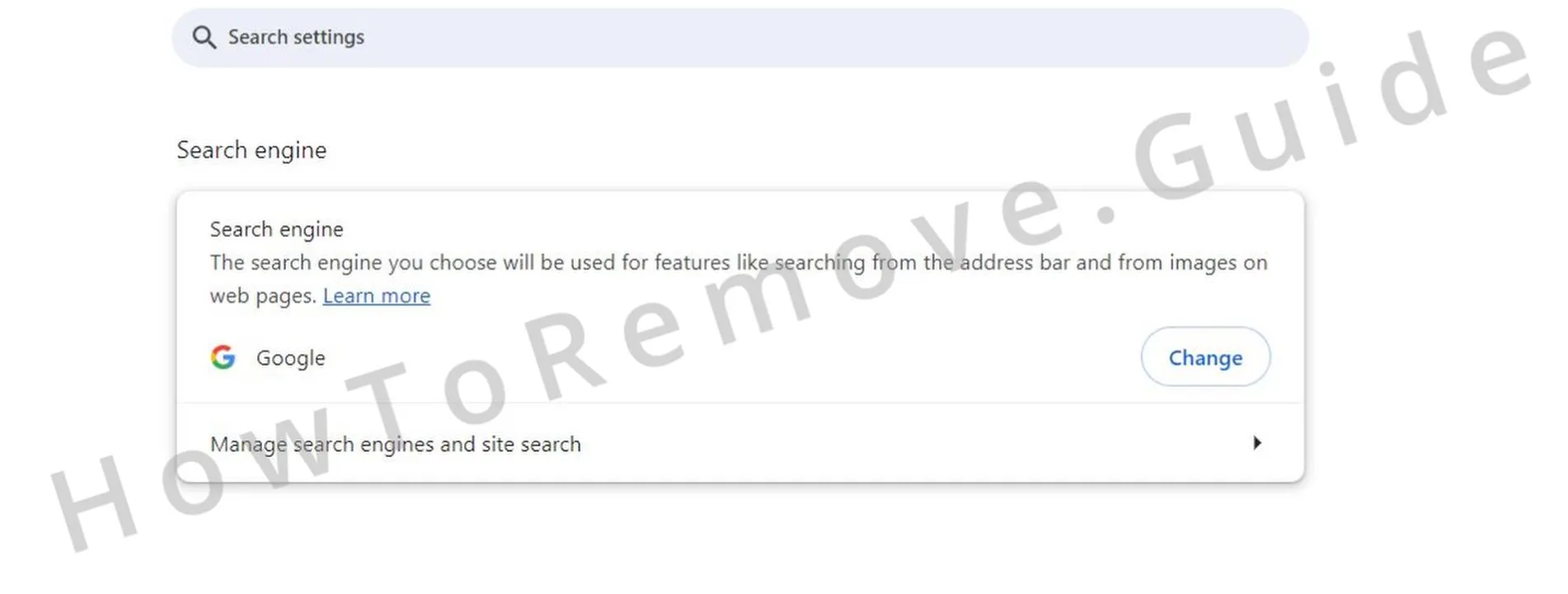 In your browser’s Search Engine settings, find and click Manage Search Engines. Review the list carefully to identify any suspicious or unexpected search services. If you see Ayintothefre.org or other unfamiliar providers, click to Remove them. After cleanup, set a reliable service like Google, Bing, or DuckDuckGo as your default to restore secure and stable search functionality.
 - 4.5Finally, visit the On Startup and Appearance sections within browser Settings. Check for any custom homepage or startup URL entries. If Ayintothefre.org or any strange address is set there, remove it and replace it with a site you trust, like your preferred homepage. This ensures the hijacker can’t launch itself automatically the next time you open your browser.
