

If you are on this page because your screen has recently been lighting up with random alerts, redirects, or pop-ups pretending to be warnings from Norton or McAfee, you are in the right place. Good news is, the situation is likely far less dramatic than it looks.
In fact, those warning messages you might be getting from an antivirus you might not even have on your PC are likely fake, especially if there’s “Health-smooth-eu3.com” written somewhere on them. This is because Health-smooth-eu3.com is a browser hijacker, the purpose of which is exactly that – to get a reaction out of you and get you to visit some sketchy site and download some trashy app.
Health-smooth-eu3.com and other similar hijackers like Health-smooth-eu2.com and My-smart-house1.com slip into your browser by gaining notification permissions through a fake CAPTCHA prompt or by sneaking in via bundled installers. After gaining browser access, they begin steering your searches toward questionable pages while filling your screen with ads and, sometimes, fake malware warnings.
So Health-smooth-eu3.com isn’t a destructive virus, yet it absolutely can expose you to unsafe sites, phishing tricks, and even potential malware downloads if you interact with anything it shows you.
The proper move is to ignore the warnings and focus on removing the hijacker. You’ll find the steps for cleaning your browser in the guide that follows right below this text, or you can use SpyHunter 5 for a quicker and cleaner removal.
We tested that SpyHunter successfully removes Health-smooth-eu3.com* and we recommend using it. It will block Health-smooth-eu3.com from reinstalling itself and it will make sure your device is clean from any malware.
 Try Free For 7 Days*
Buy now15% OFF if you buy straight without trial.
 OFFER
OFFERStep-by-step guide to removing Health-smooth-eu3.com
Work through the cleanup steadily: apply one change, test the browser, and jot down what you adjusted so it can be reversed if needed. A calm, methodical routine makes it easier to remove Health-smooth-eu3.com, reduce looping pop-ups and redirects, and avoid switching risky settings back on later by accident.
Quick steps to revert Health-smooth-eu3.com browser changes
- 1.1Open Settings in your primary browser profile to start reversing changes applied by Health-smooth-eu3.com.
On Chrome, use the ⋮ menu in the top-right corner; on Firefox, open the ≡ menu to access the main options.
Browse through Extensions or Add-ons, review every entry carefully, and flag items you do not remember installing. - 1.2Inspect each extension in detail: check its name, icon, requested permissions, and full description.
Copycat add-ons often mimic well-known ones, so choose Remove whenever the information seems inconsistent or incomplete.
If you are unsure, look up the exact “extension name” in your browser to compare the listed developer and user reviews. - 1.3Open Privacy and security and then Site permissions from the browser settings panel.
Review which sites have access to your microphone, camera, location, and notifications.
Disable permissions you do not recognize and keep a brief note so you can re-allow trusted sites later if needed. - 1.4Remove any site entries under Site permissions that still show access you never intended to allow.
Doing this cuts down repeated notification prompts, aggressive alerts, and redirects that appear when the browser launches.
When you finish, restart the browser to confirm the new settings are applied and persist.
If pop-ups and redirects stop after this round of changes, the hijacker has probably been limited to browser-level tweaks and you may not need deeper edits. If the symptoms continue, something outside the browser is likely forcing these rules back, so move on to the next sections and remove those components carefully.
SUMMARY:
| Name | Health-smooth-eu3.com |
| Type | Browser Hijacker |
| Detection Tool |
Some threats reinstall themselves if you don’t delete their core files. We recommend downloading SpyHunter to remove harmful programs for you. This may save you hours and ensure you don’t harm your system by deleting the wrong files. |
How to clear the Health-smooth-eu3.com hijacker from your browser
When the browser shows “Managed by your organization”, a policy file is usually locking certain options so a normal reset cannot touch them. The next steps focus on removing that external control so Health-smooth-eu3.com cannot quietly push its own preferences again; move slowly, confirm each tweak, and keep a record of what you changed before restarting Windows.
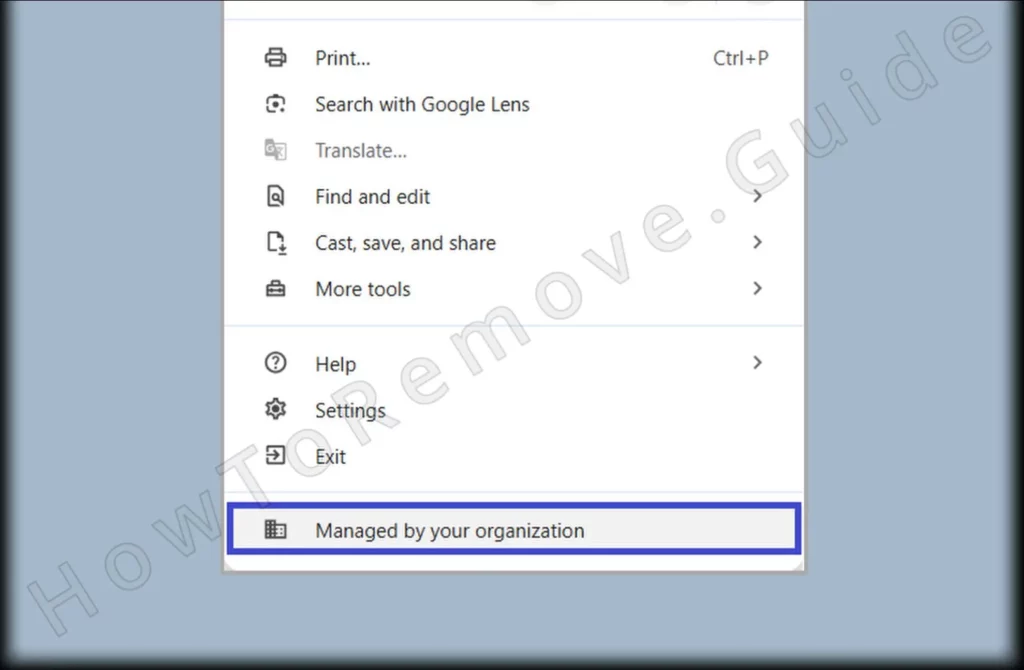
1. Identify Health-smooth-eu3.com policies that are currently steering the browser
- 1.1
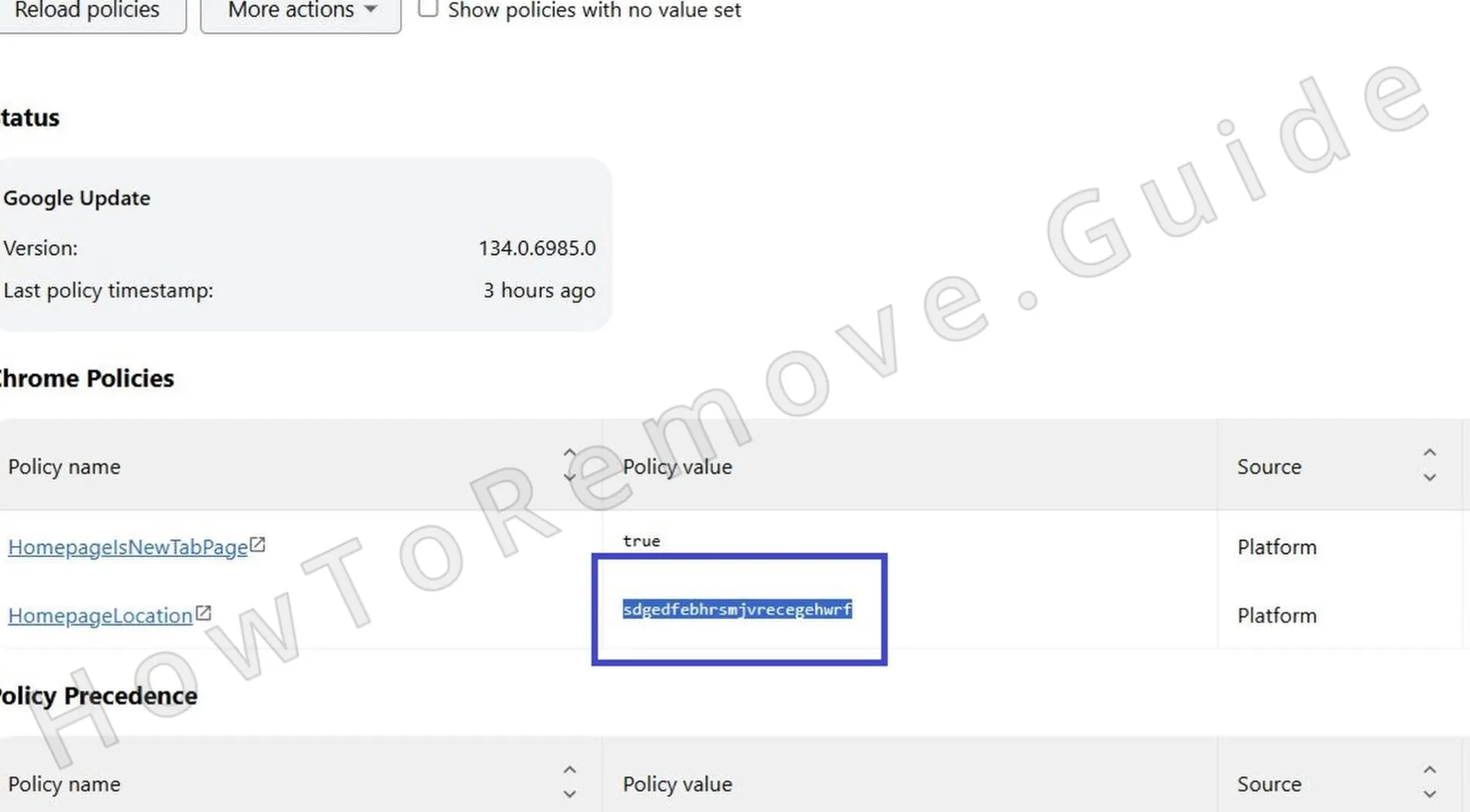 Open your browser’s policy page so you can review entries that may be associated with Health-smooth-eu3.com.
In Chrome, type chrome://policy in the address bar and press Enter.
In Edge, go to edge://policy, let the list load, and use Reload policies if you need to refresh or export the current configuration. - 1.2Go through each policy entry and watch for odd identifiers, random-looking strings, or unfamiliar names.
Write down any suspicious entries so you can match them with folders and files in later steps.
Record every policy Name and Value precisely, because they often point to the locations that must be removed. - 1.3Open the browser’s Extensions page and enable Developer mode using the toggle in the upper-right corner.
With Developer mode on, each add-on shows its extension ID and install path, which you can target directly.
Copy every suspicious ID into a text file so you can line it up with folders later. - 1.4If the Extensions page refuses to open or closes as soon as it appears, switch to File Explorer instead.
Working with the browser profile files directly sidesteps user-interface problems.
Turn on View > Show > Hidden items so the related AppData folders become visible. - 1.5
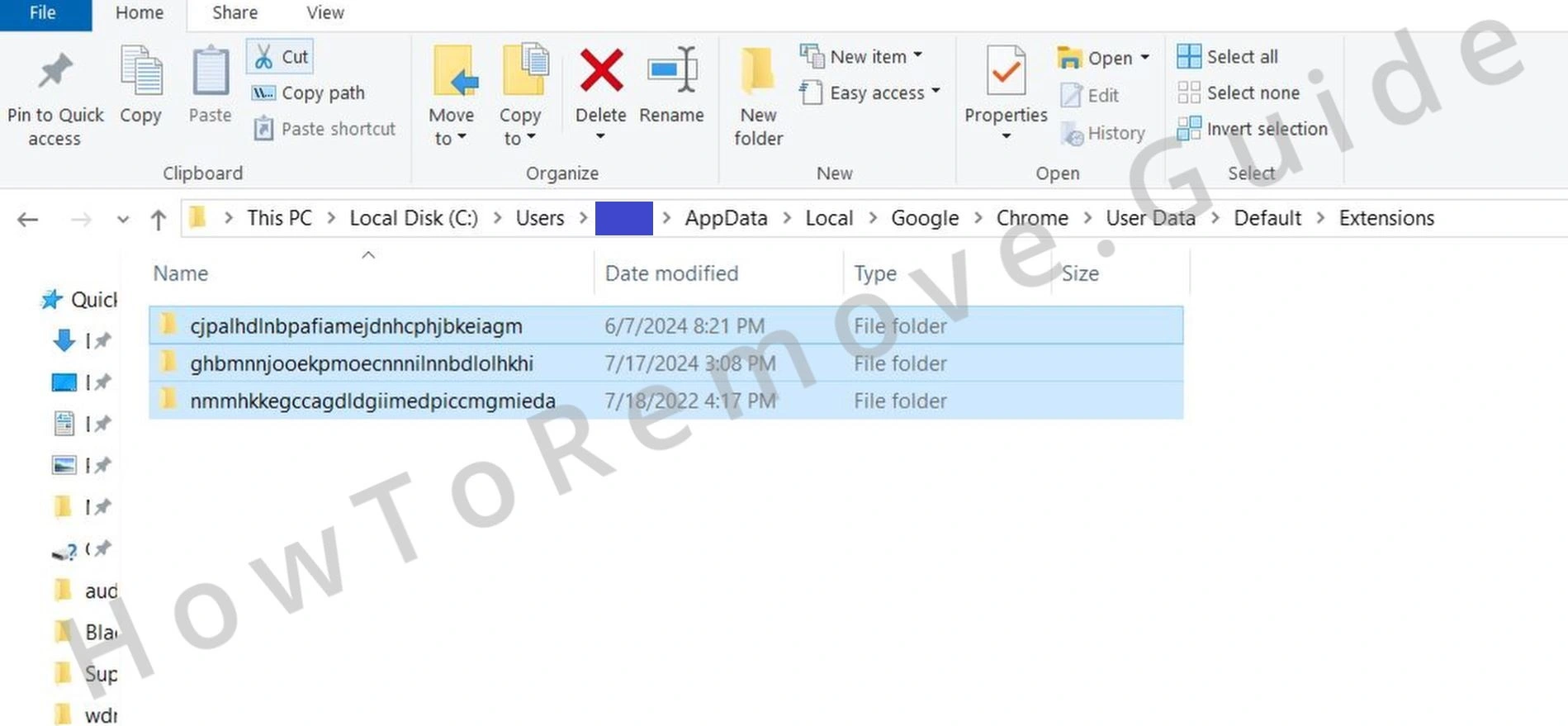 Use File Explorer to open:
C:\Users[Your Username]\AppData\Local\Google\Chrome\User Data\Default\Extensions
Each folder name here is an extension ID. Match these IDs with your notes to find the unwanted add-on, avoid deleting folders that belong to trusted extensions, and create a quick desktop backup copy before removing anything. - 1.6
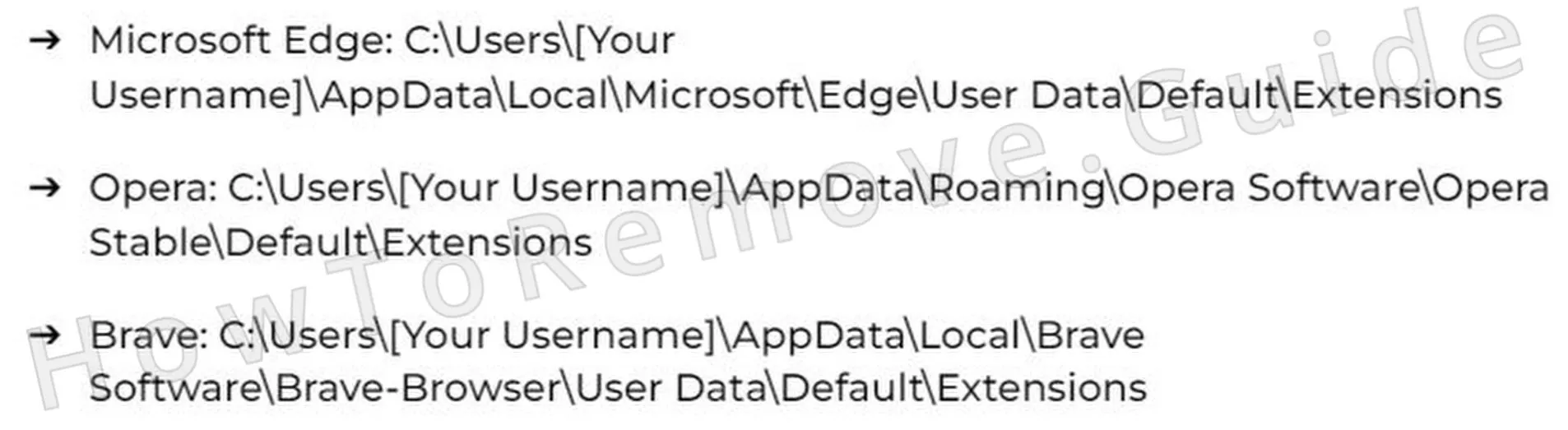 If you use another Chromium-based browser such as Brave or Opera, its extensions live in a similar path under AppData.
Always confirm both the extension ID and the folder’s location before removing anything linked to the unwanted add-on.
Open the browser’s About page to verify it is fully closed so those files can be deleted. - 1.7After deleting the suspect folder, open Extensions again with Developer mode still enabled.
Confirm that the extension entry has disappeared; if it is still listed, repeat the removal and look for leftover files that might recreate it.
Click Update in Developer mode to refresh the list and reveal any silent reinstalls.
Get Rid of Health-smooth-eu3.com Policies
Some of the rules affecting your browser are stored in the Windows Registry, where careless edits can affect stability or even startup. Focus strictly on entries that match what you logged for Health-smooth-eu3.com and avoid broad changes unless you fully understand them, so Windows stays reliable while you strip out the policy data that survives regular browser resets.
2. Delete Health-smooth-eu3.com-related policy entries from the Registry
- 2.1Press Win + R, type regedit, and press Enter to open Registry Editor and begin clearing policy entries tied to Health-smooth-eu3.com.
Before editing anything, open File > Export to create a backup copy of the registry.
Choose All under Export range and save the file in Documents or another folder you can find quickly. - 2.2Use Ctrl + F or Edit > Find to search for the policy names or extension IDs you wrote down earlier.
Click Find Next and remove only exact matches inside keys that clearly reference the browser.
Press F3 repeatedly until no further results appear in the HKCU and HKLM sections. - 2.3
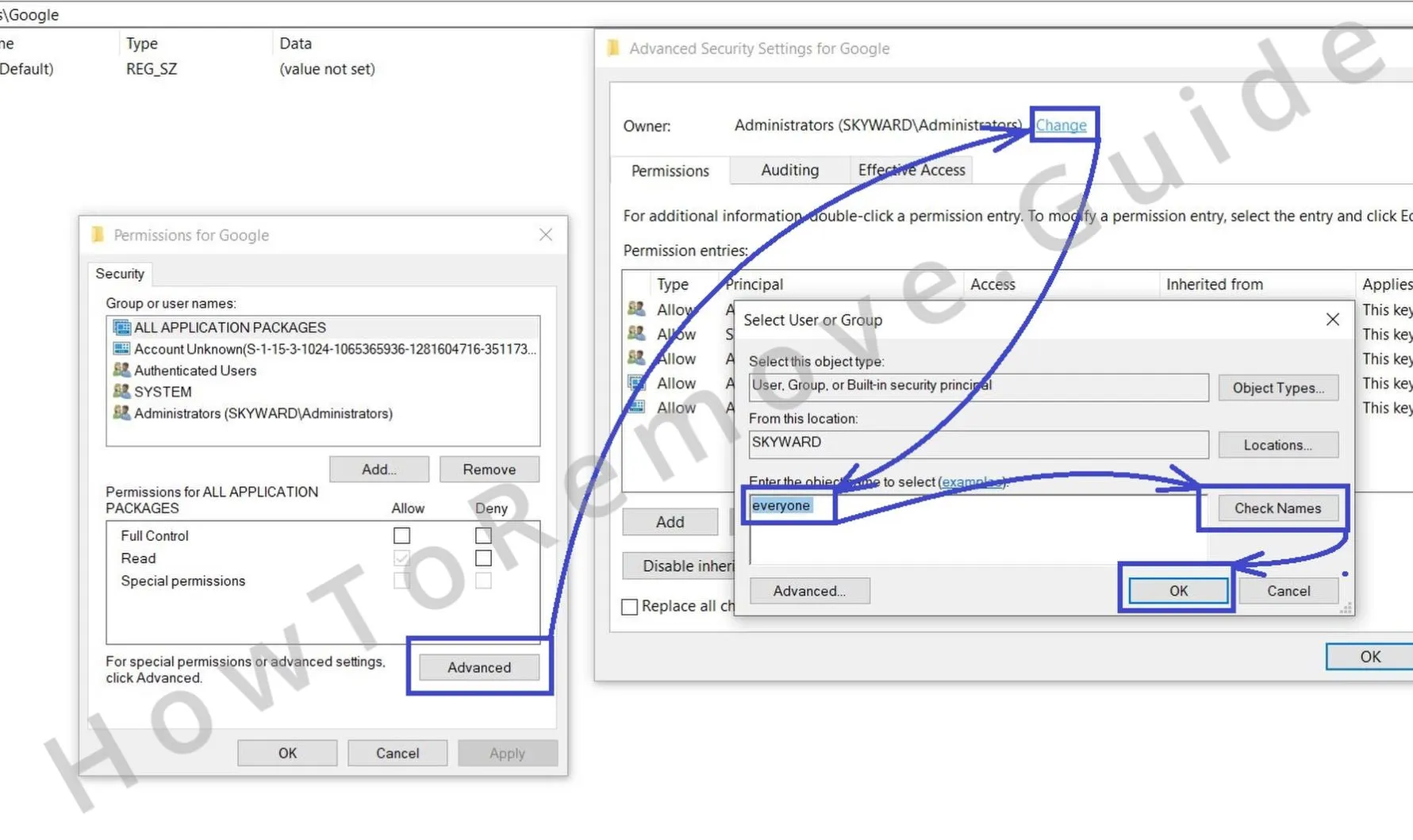 If a key refuses to delete, right-click it and choose Permissions, then click Advanced.
In the Owner field, select Change, type Everyone, use Check Names, and confirm with OK.
Grant Full Control to both Administrators and Users so you can delete the key together with its subkeys. - 2.4
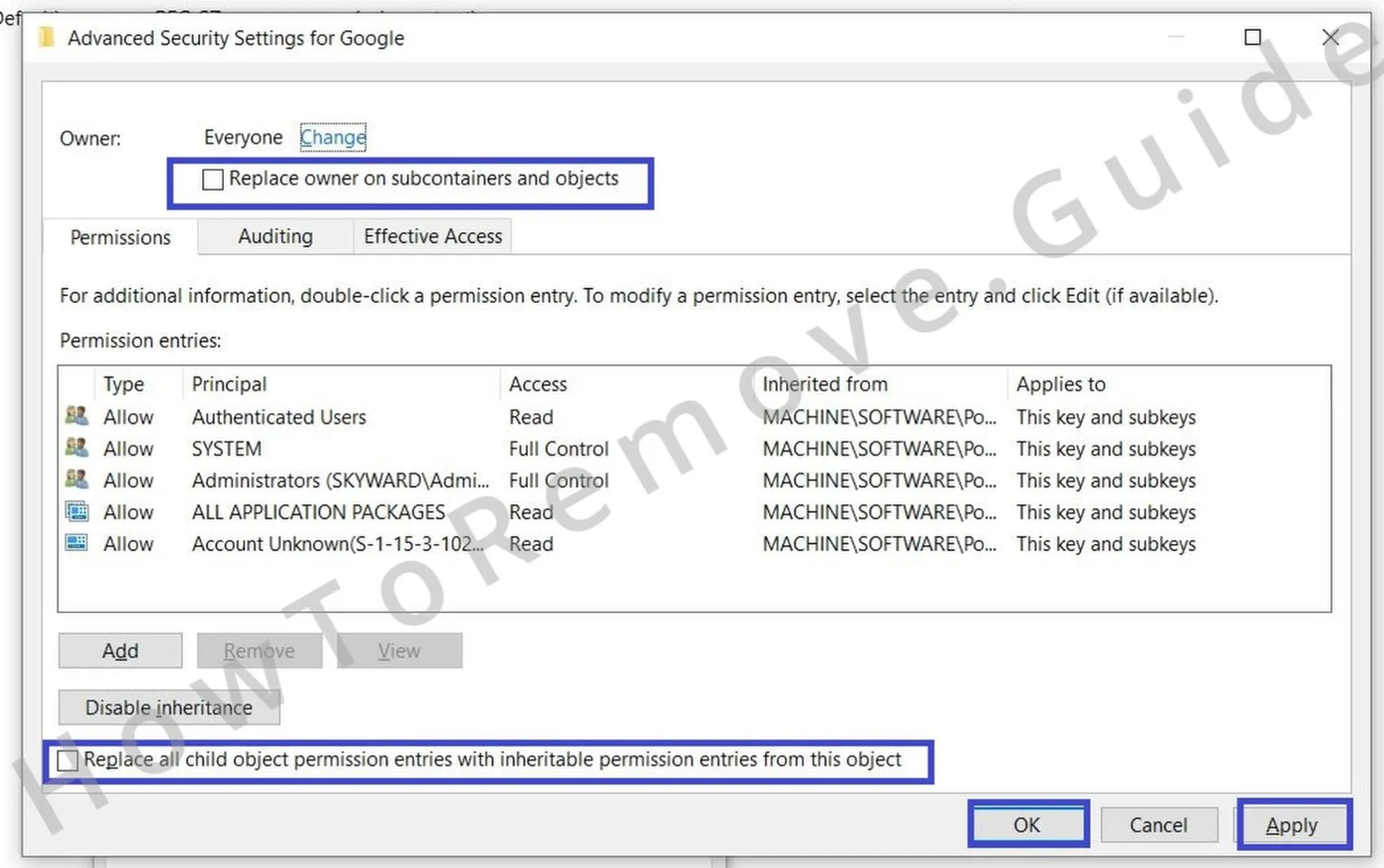 After you take ownership, enable Replace owner on subcontainers and objects and Replace all child object permission entries.
Click Apply and then OK, reboot Windows, and check whether Managed by your organization still appears in the browser.
If the banner has vanished, open regedit again and repeat your searches to confirm that no related policy values remain.
Once you finish adjusting ownership and permissions, the remaining stubborn registry keys usually delete without further errors. This lowers the risk that policy data is restored at the next startup and helps stop the browser from silently loading enforced settings again.
Additional tools to clear Health-smooth-eu3.com-enforced policies
On some systems, a leftover service, helper process, or scheduled task keeps reapplying the same restrictions after you think they are gone. Targeted utilities and policy consoles can remove the last traces tied to Health-smooth-eu3.com while avoiding broad changes to Windows, which is especially helpful if the managed banner or locked settings keep returning after a reboot.
3. Additional tools to clear Health-smooth-eu3.com-enforced policies
- 3.1
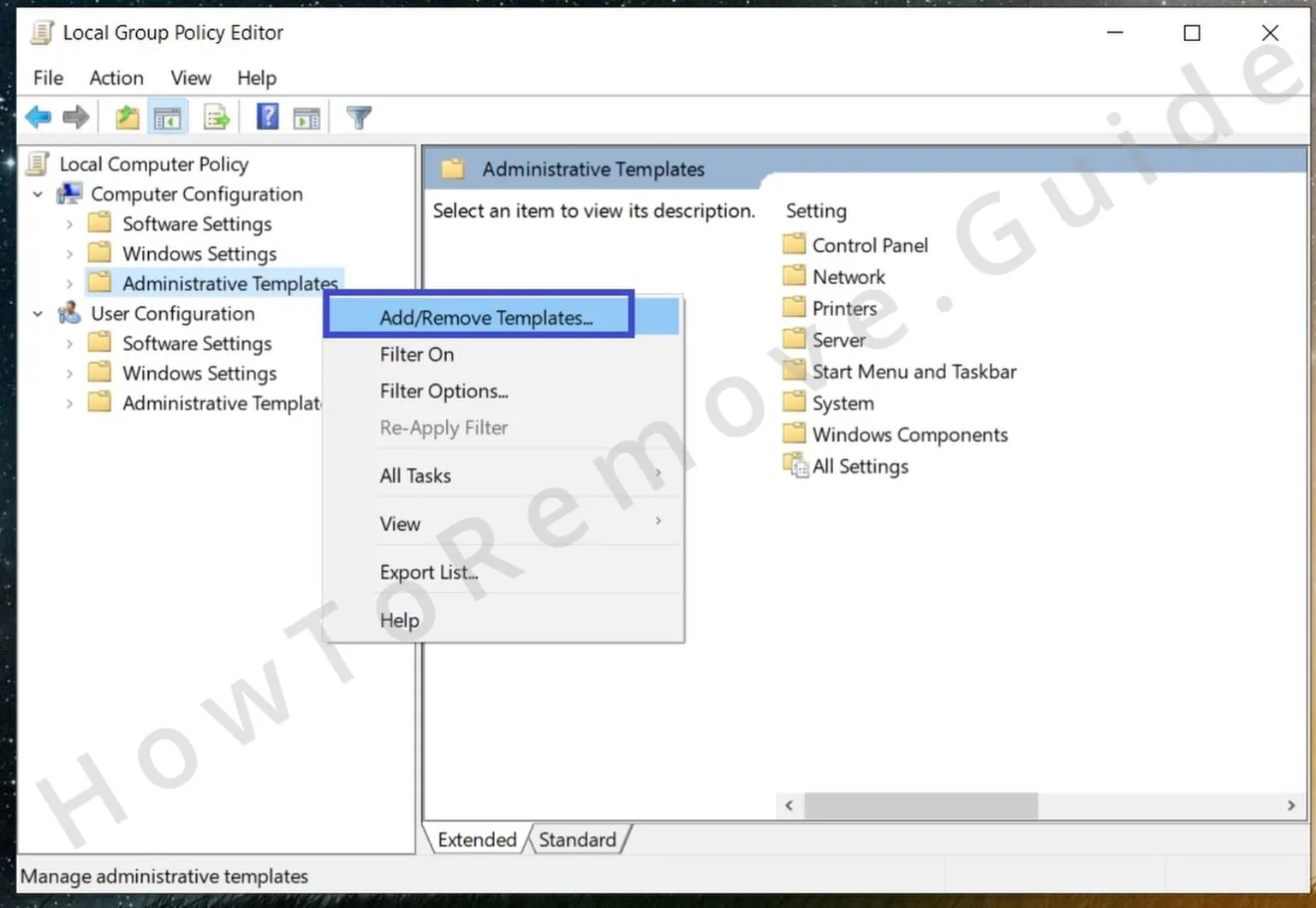 Open Group Policy Editor with Win + S and a search for Edit Group Policy to find rules that might be enforcing settings for Health-smooth-eu3.com.
In the left pane, expand Administrative Templates, where many browser-related entries are listed.
Review both Computer Configuration and User Configuration so you can see policies that apply to the device and the signed-in user. - 3.2
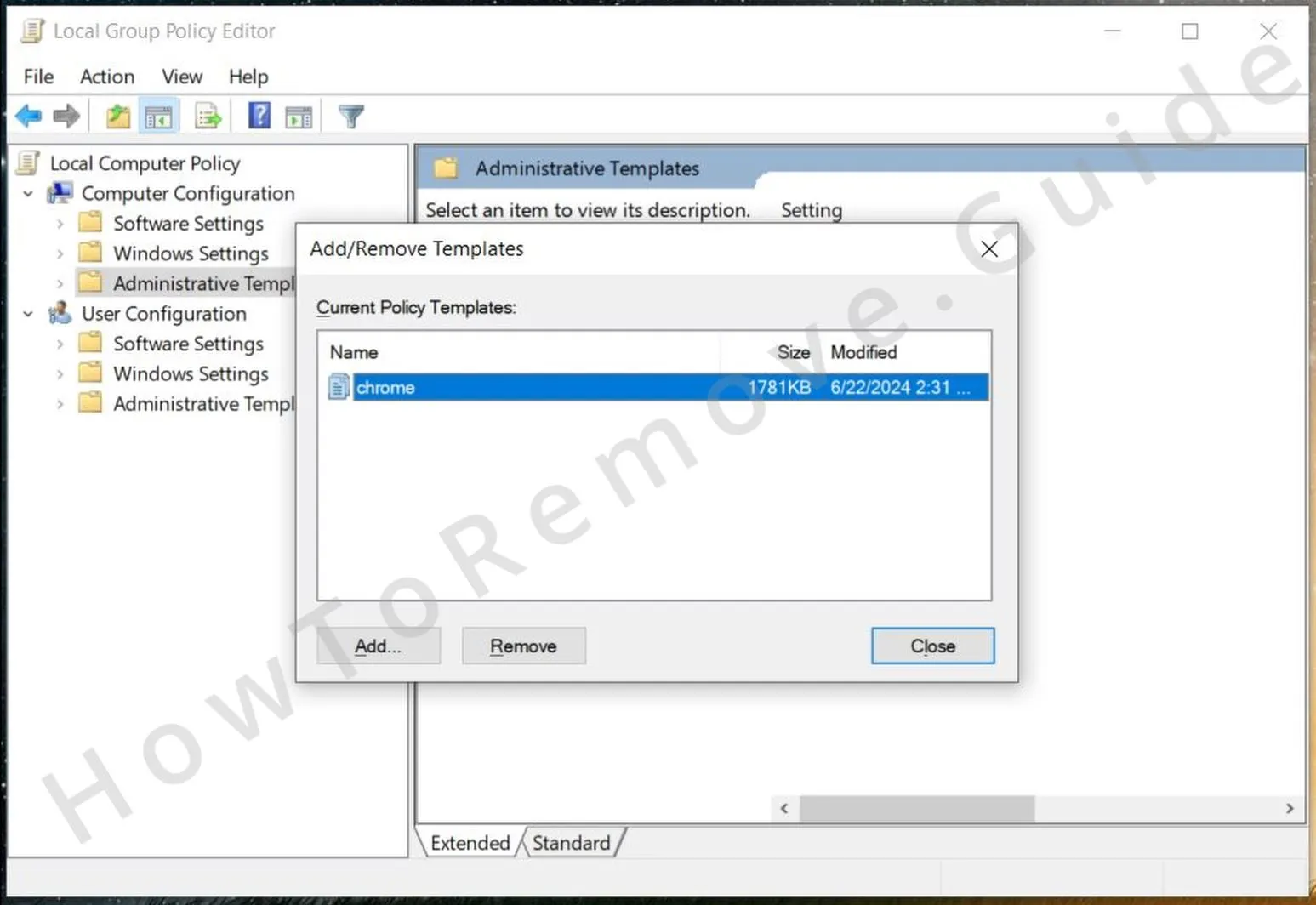 Right-click Administrative Templates and select Add/Remove Templates.
Delete templates you do not recognize to undo extra browser or system restrictions.
Next, open Windows Components, locate Microsoft Edge or Google Chrome, and set questionable entries to Not Configured. - 3.3For Chrome, the standalone Chrome Policy Remover tool can look for and remove hidden policy files.
Download it from a trusted source, then right-click the executable and choose Run as administrator so it has sufficient access.
When it finishes, open chrome://policy and press Reload policies to confirm that only expected entries remain. - 3.4If security software or Windows Defender warns about the utility, click More info and then Run anyway only when you are sure of the download source.
After the tool completes, restart the computer and recheck Group Policy Editor and Registry Editor to confirm the policies are gone.
Open Task Scheduler under Task Scheduler Library and remove tasks that exist only to reapply the same browser settings.
Uninstall Health-smooth-eu3.com from Chrome, Edge, and other browsers
Browser sync, profiles, and cache data can quietly reintroduce unwanted pages after you sign in or restart the device. Confirm that your adjustments persist across sessions so Health-smooth-eu3.com does not come back, and recheck defaults, permissions, and extensions for every browser profile linked to the same account.
4. Remove browser changes left behind by Health-smooth-eu3.com
- 4.1Open your browser’s Extensions or Add-ons page again and search for entries that could be linked to Health-smooth-eu3.com.
If something repeatedly reappears or looks out of place, choose Remove, as sync or a script may be reinstalling it.
Visit chrome://extensions or the equivalent page directly so custom themes cannot conceal items. - 4.2
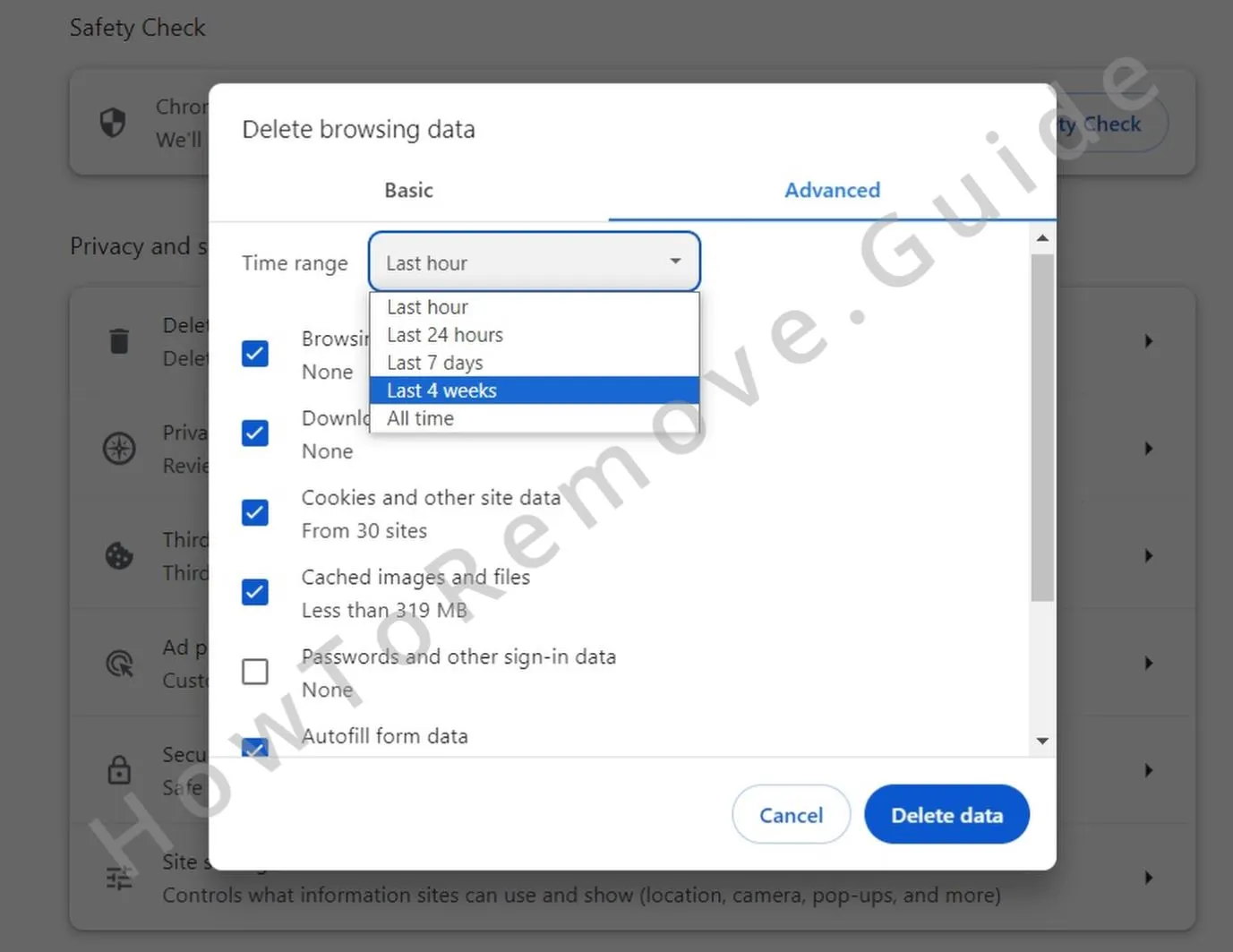 Open Clear browsing data from Settings.
Set the Time range to All time, keep Saved passwords unchecked, and click Clear data.
Do this for each browser profile and, if pop-ups quickly return, enable Clear data on exit. - 4.3
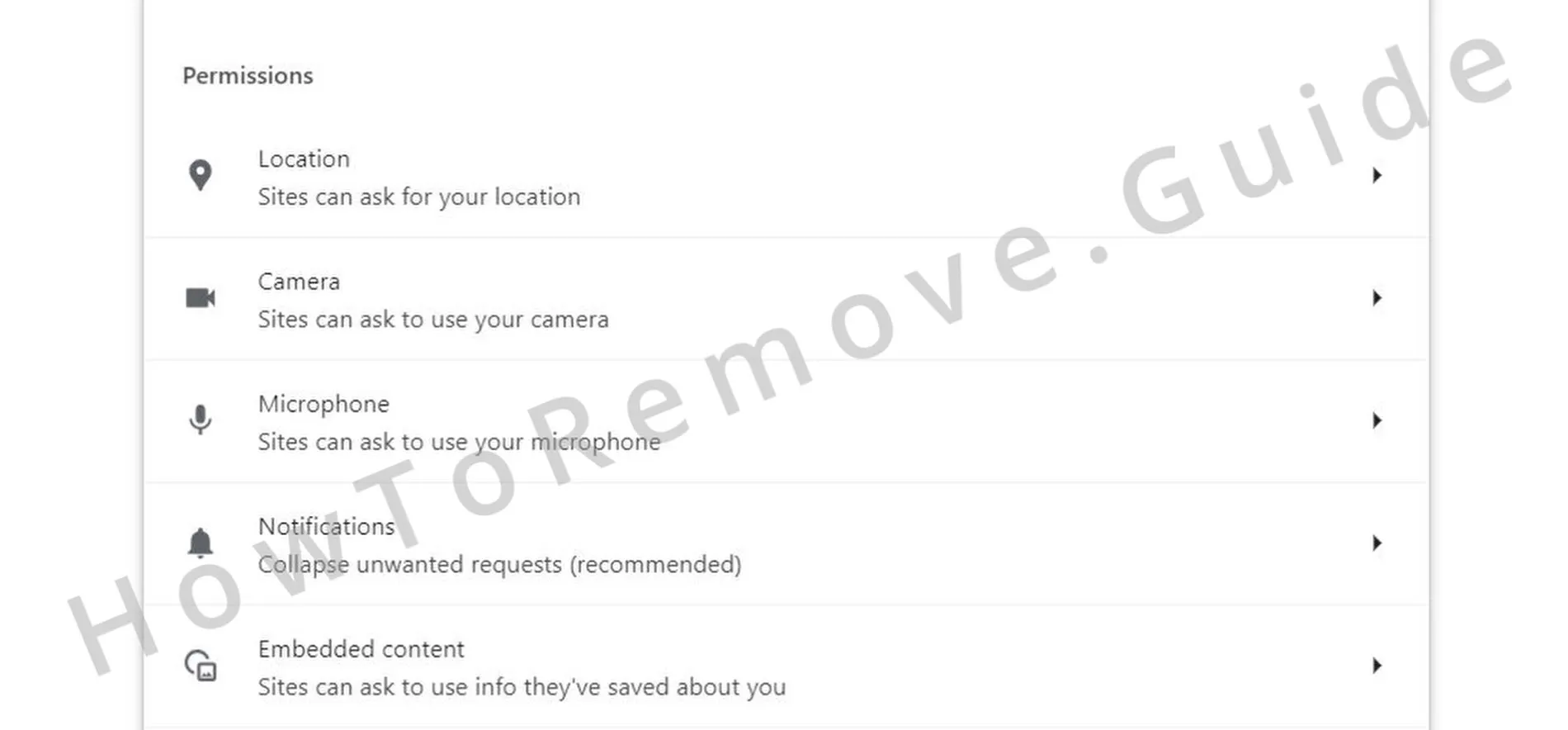 Open Privacy and Security > Site settings.
Check permissions for camera, microphone, and notifications, then Delete or Block any sites you did not intend to approve.
Use View permissions and data stored across sites to clear problematic origins in a single sweep. - 4.4
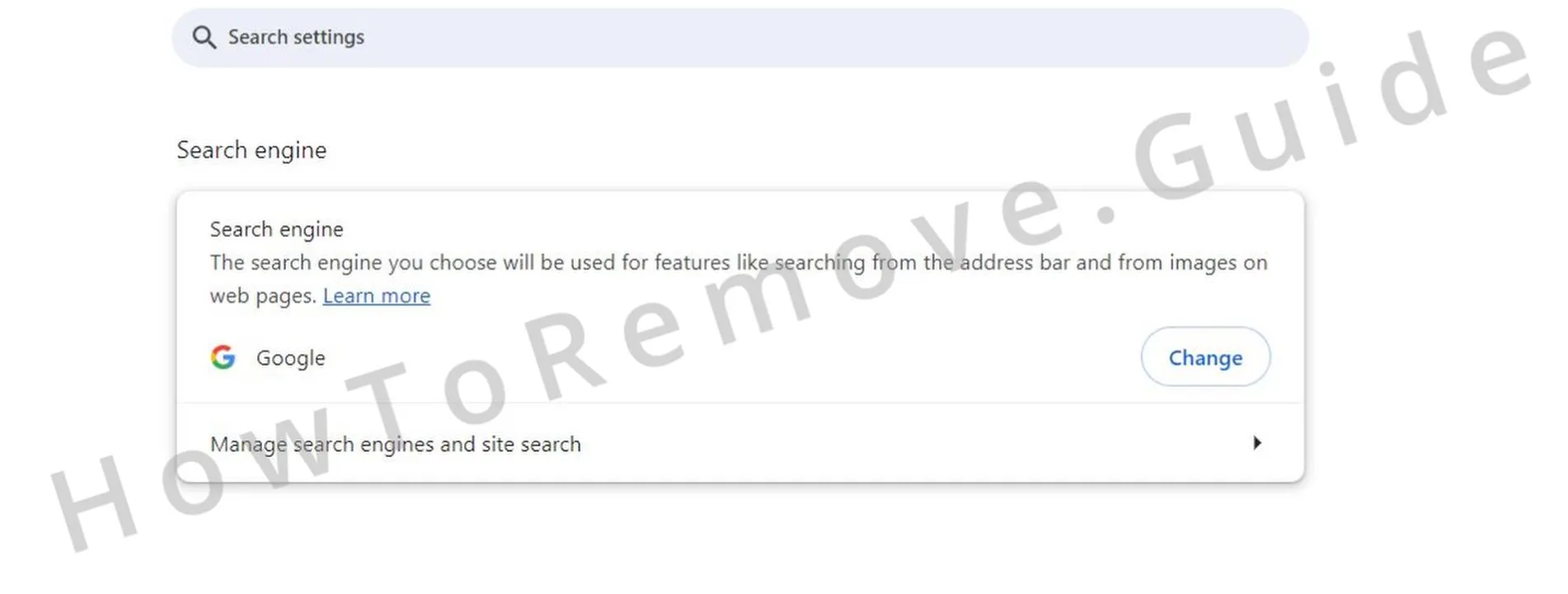 Open Search engine settings and choose Manage search engines.
Remove unknown providers and ensure the default is Google, Bing, or DuckDuckGo.
Also review On-device search shortcuts or Site search for custom entries that reroute queries. - 4.5Review On startup and appearance settings.
Delete unfamiliar URLs set as your homepage or new tab page so no unwanted site opens automatically.
Disable unwanted themes and restore the Default theme to remove theme-based scripts that could inject content.
To harden security once everything is clean, enable 2FA on important accounts, keep browser and extension auto-update turned on, and export your bookmarks before using a full Reset settings option if the same symptoms appear again.
