

Even if you think you’ve never installed anything fishy, if you noticed something called Alsulics Application on your PC, you need to act now, because this is not a program you want to keep in the system.
According to community reports and our own research, Alsulics seems to behave like a Trojan Horse, and the way it distributes itself is by piggybacking on “normal” downloads and hiding in setup wizards where the default button quietly agrees to extras.
The problem is that even seemingly safe and legitimate apps can sometimes carry this malware, which makes it difficult to avoid. Yet, now that you know what you are dealing with, you can take the necessary steps to remove it.
We tested that SpyHunter successfully removes Alsulics* and we recommend using it. It will block Alsulics from reinstalling itself and it will make sure your device is clean from any malware.
 Try Free For 7 Days*
Buy now15% OFF if you buy straight without trial.
 OFFER
OFFERThe reason you need to rid your system of this and similar malwares, like Aluc Service and Altrusica Service, is that Alsulics probably has elevated privileges at the moment, which allow it to launch various admin-level processes. It can launch a process that uses your RAM, GPU, and CPU for cryptomining, it can collect personal data and sell it for profit, or it can direct you to scams, phishing pages, and other shady content.
Trojans are highly versatile tools, so it’s hard to predict what they’ll do in any particular instance, but the important thing you need to understand is that Alsulics must be removed ASAP.
The guide below and the attached SpyHunter 5 removal tool – a professional program for protecting against malware – will help you with that.
Alsulics Application Removal Guide
Begin with Windows’ standard uninstall route before moving into manual cleanup. Removing Alsulics from Apps & Features is quick and low risk, and it may remove the main program entry if it registered correctly. Even when leftovers remain, this first pass reduces clutter and makes later checks easier to verify.
Remove Alsulics through Apps & Features
- 1.1Start with the installed-apps list if Alsulics appears there. Open the Start Menu, select Settings, and go to the area that manages installed apps and default features.
- 1.2In Settings, open Apps. Use the search box or the filters for name, size, or install date to narrow the list to entries you do not recognize.
- 1.3Sort by Installation date so recent additions move to the top. That makes it easier to inspect items that showed up around the time the problems started.
- 1.4Select a suspicious entry, click Uninstall, and finish the prompts. Do not skip removal windows that mention add-ons or companion components.
- 1.5Next, open C:\Users\YourUsername\AppData\Local\Programs. Look for leftover folders or executables connected to the removed app and note any unusual names.
- 1.6If a leftover folder is clearly related, delete it. Restart Windows afterward to clear file locks and verify that nothing returns on the next boot.
After the restart, verify that Alsulics no longer appears as an entry and that the system behaves normally. If you still notice leftovers or suspicious behavior, continue with the deeper checks below to remove hidden components and block common restart points.
SUMMARY:
How to Fully Get Rid of Alsulics
If a suspicious process is still active, it helps to identify its footprint before you start deleting files at random. With Alsulics running, you can inspect file locations, parent processes, and likely triggers, which makes persistence easier to remove. That context reduces guesswork and helps confirm that all components have been handled.
1. Prepare for the Alsulics removal
- 1.1
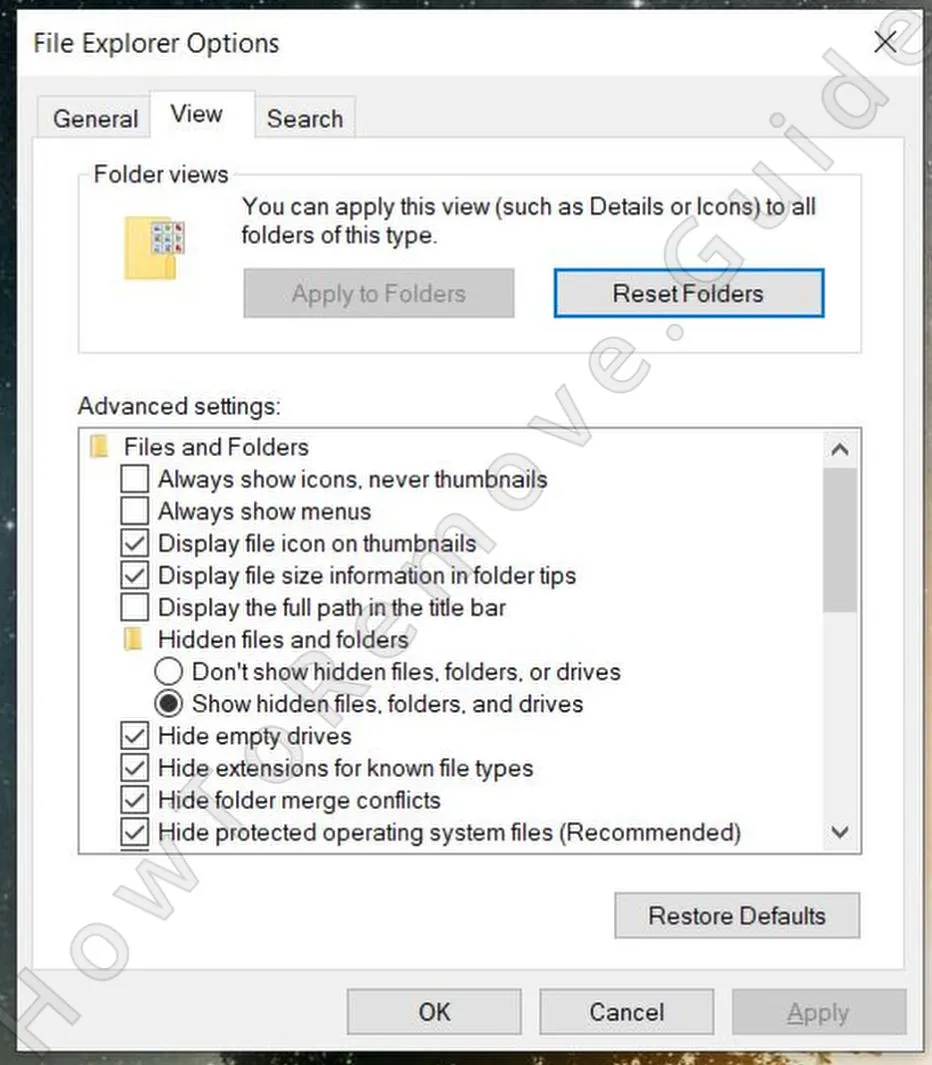 Show hidden items so you can spot files left behind by Alsulics. Search for Folder Options from the Start Menu, open it, switch to the View tab, and enable Show hidden files, folders, and drives. Hidden folders are common stash points.
 - 1.2Locked files can interrupt cleanup, so install LockHunter to remove items Windows reports as in use. It adds a right-click option, shows what is holding a file, and can delete stubborn executables or DLLs after unlocking them.
If you prefer to avoid third-party utilities, most of the cleanup for Alsulics can still be done manually. When Windows reports that a file is “in use,” a lock-release tool mainly saves time by avoiding repeated restarts or failed delete attempts.
LockHunter is free and usually installs within a couple of minutes. Once installed, you can open it from the right-click menu on a file or folder that refuses to delete during Alsulics cleanup.
Remove Alsulics Processes From the Task Manager
Stopping a single executable rarely ends persistence, because helper components can create startup entries, scheduled tasks, or small launchers that bring it back. The steps below help you locate the running binary for Alsulics, remove the files it starts from, and then stop the process so it cannot immediately restart while cleanup continues.
2. Stop suspicious Alsulics processes and delete their files
- 2.1Use process details to map what Alsulics is doing. Press Ctrl + Shift + Esc to open Task Manager and review running apps, background processes, and resource spikes.
- 2.2If the simplified window opens, click More details. The expanded view shows publishers, command names, and startup impact, which makes it easier to judge what belongs there.
- 2.3
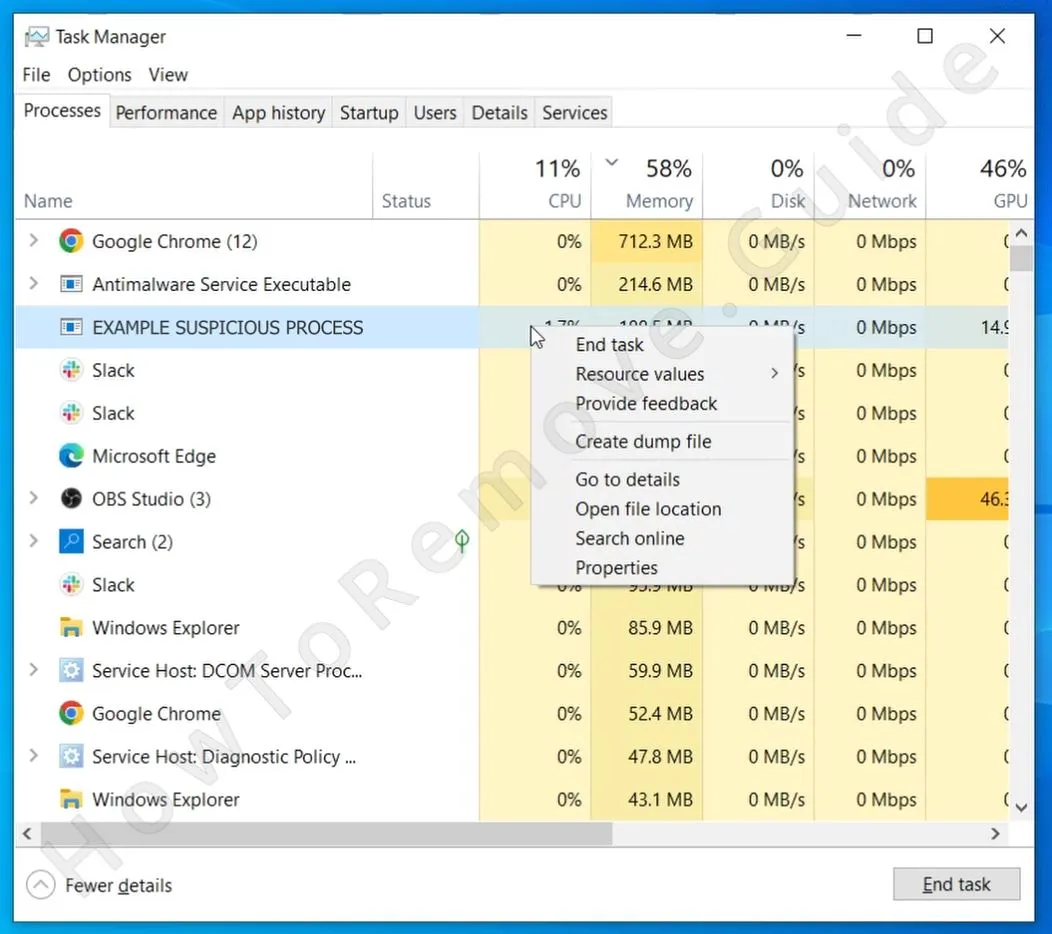 Sort by CPU or Memory and look for unfamiliar names or steady high usage. Malware often hides behind generic labels or random strings.
 - 2.4Right-click anything questionable and choose Open file location. The folder path and file names usually show whether it belongs to software you intentionally installed.
- 2.5Try deleting the containing folder. If Windows blocks the action, open LockHunter, select What’s locking this file?, release the lock, and remove the file and its folder from inside the utility.
- 2.6Return to Task Manager and use End task on the same process. Ending it after the file is removed reduces immediate respawns and keeps the next checks more stable.
Delete Alsulics Trojan Files
Many threats stay persistent by dropping small launchers and helper files into common system and user folders, then tying them to logon or other triggers. At this stage, the goal is to remove those launch points and leftovers so Alsulics cannot quietly rebuild itself. Check the locations below in order and delete only items you cannot identify.
3. Remove Alsulics startup entries and leftover folders
- 3.1Begin with the startup locations that can relaunch Alsulics: C:\ProgramData\Microsoft\Windows\Start Menu\Programs\Startup and C:\Users\YourUsername\AppData\Roaming\Microsoft\Windows\Start Menu\Programs\Startup. Delete unknown shortcuts or executables.
- 3.2Inside each Startup folder, leave desktop.ini in place and remove other suspicious items. If Windows blocks the deletion, use LockHunter to unlock and remove them.
- 3.3Check the main program directories next – C:\Program Files and C:\Program Files (x86). Delete recently created, empty, or oddly named folders that do not match software you knowingly installed.
- 3.4Review user-level locations too: C:\Users\YourUsername\AppData\Local\, C:\Users\YourUsername\AppData\Local\Programs, and C:\Users\YourUsername\AppData\Roaming\Microsoft\Windows\Start Menu\Programs. These paths often store launchers, updater stubs, or scripts.
- 3.5
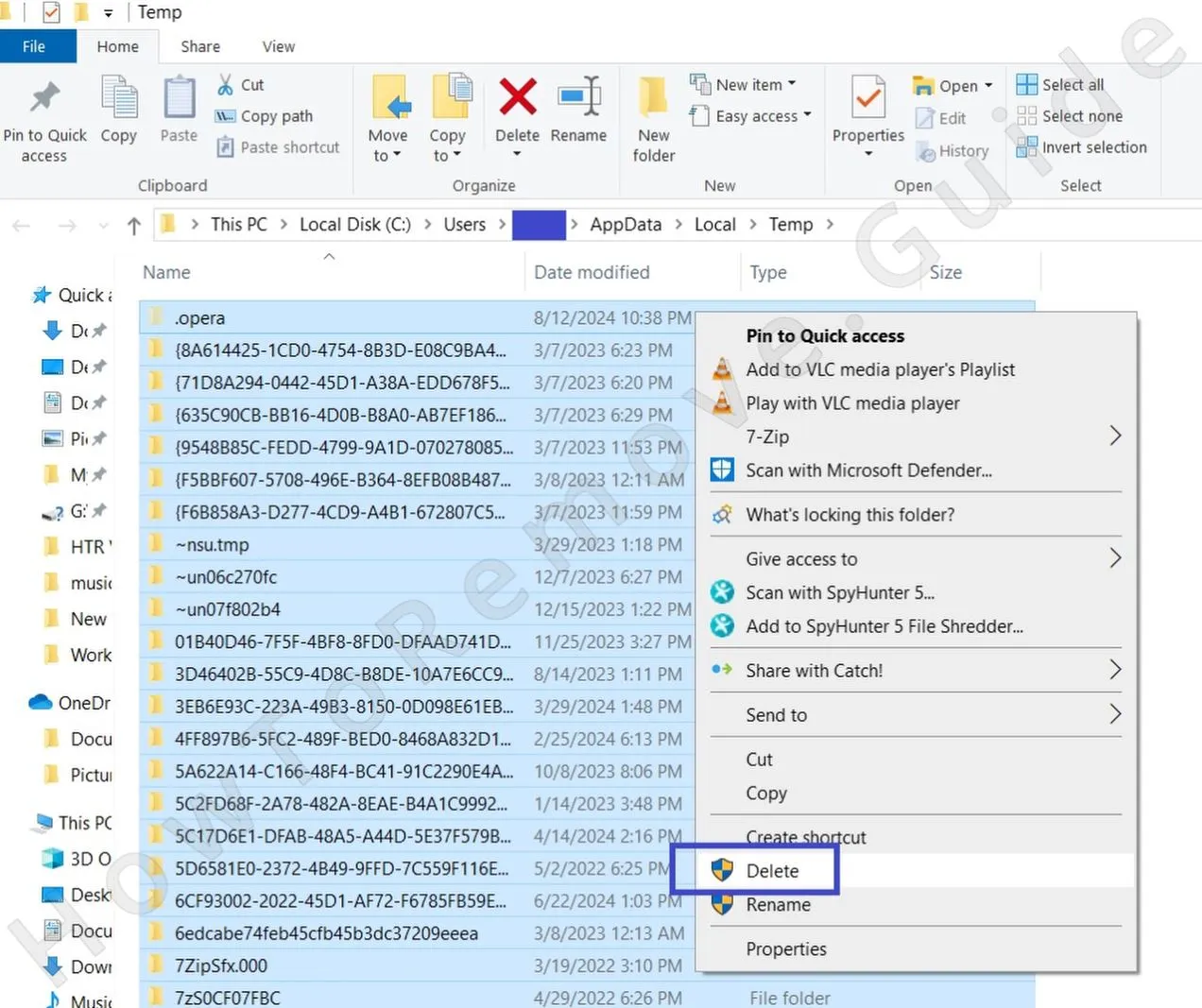 Clear temporary files: open C:\Users\YourUsername\AppData\Local\Temp, press Ctrl + A to select everything, delete the contents, and empty the Recycle Bin.
Remove Suspicious Alsulics Scheduled Tasks
Scheduled tasks are a common persistence method because they can run on a timer, at logon, or after specific system events without opening a visible window. Reviewing what each task launches helps you identify the exact trigger that brings Alsulics back.
4. Disable scheduled tasks that relaunch Alsulics
- 4.1
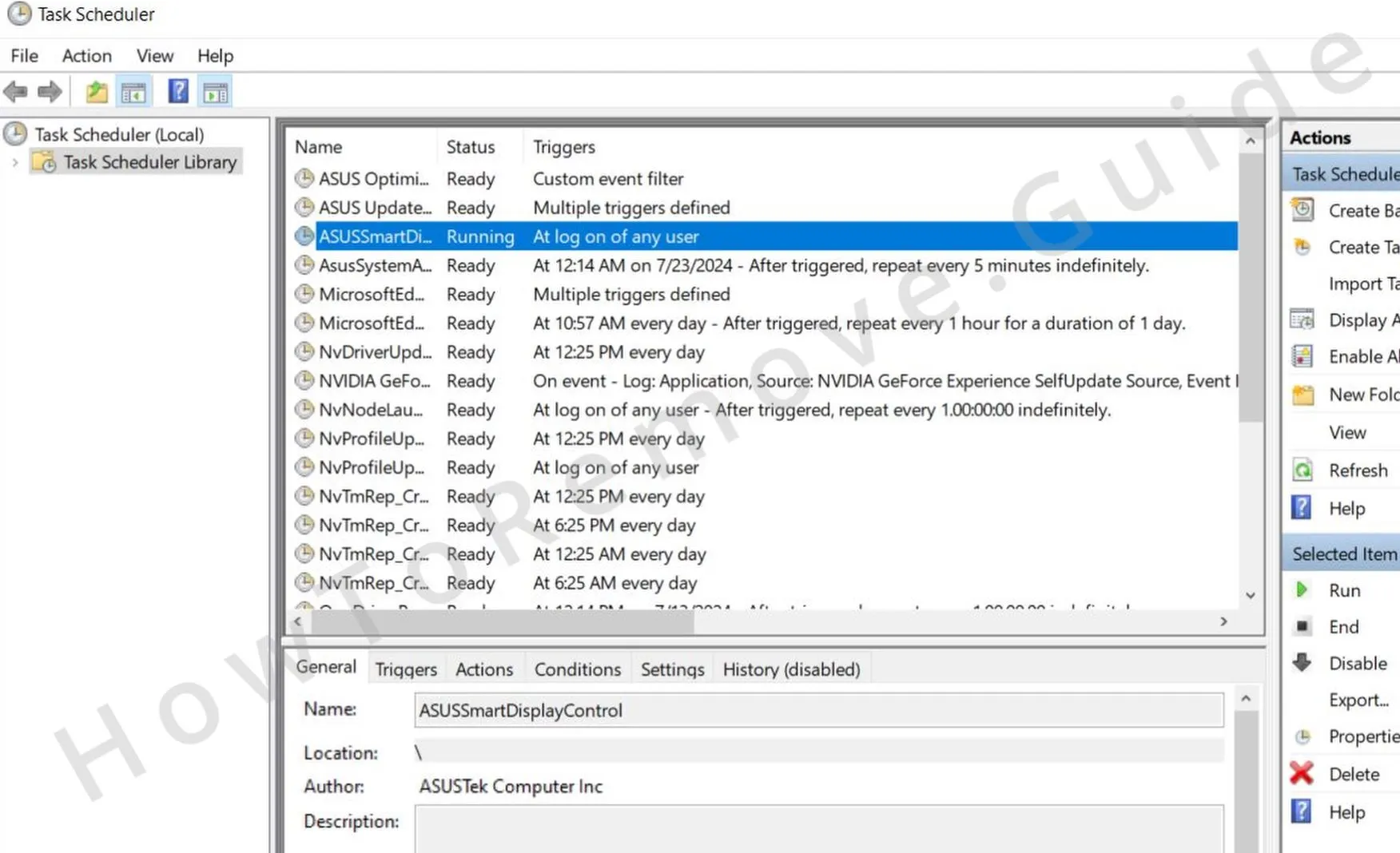 Open Task Scheduler to find triggers that can relaunch Alsulics. Search for it from the Start Menu, launch it, and expand the Task Scheduler Library to review tasks for your account and system folders.
 - 4.2Double-click a task to open Properties. Check Actions to see which command or file is launched and what parameters are supplied.
- 4.3Focus on tasks that point to user directories such as AppData or Roaming, especially when the names are unfamiliar. Legitimate vendor tasks usually point to normal program folders.
- 4.4If a task looks illegitimate, copy the full path shown under Actions, then delete the task in Task Scheduler to stop automatic execution.
- 4.5Browse to the copied path and remove the referenced executable or script. Deleting the task without removing its payload can leave a restart point behind.
- 4.6Repeat this review for every folder under the Task Scheduler Library, including subfolders created by installers. Persistence often hides behind generic task names.
Remove Alsulics Application Persistence Entries in the Windows Registry
Even after visible cleanup, Registry values can still point to missing executables, enforce unwanted policies, or add autostart entries that recreate components. Work carefully and remove only entries you confirm are unwanted. The goal is to delete startup hooks linked to Alsulics without damaging normal Windows keys.
5. Remove Alsulics Application traces with Registry Editor
- 5.1Open Registry Editor to review autostart data that may keep Alsulics active: press Win + R, type regedit, and press Enter.
- 5.2Press Ctrl + F and search for the exact name you identified and removed earlier. This often reveals orphaned keys such as services or shell extensions.
- 5.3When a match appears, select the key in the left pane and delete it. Continue with F3 until no more entries appear across all hives.
- 5.4Repeat the search-and-delete cycle for any other suspicious app names you found earlier. Removing those traces helps block helper components from restoring deleted files.
- 5.5Run one final search for the same name to verify that no entries remain. A lingering value that points to an old path can sometimes recreate files at startup.
- 5.6Also inspect these common autostart and policy locations:
HKEY_CURRENT_USER\Software\Microsoft\Windows\CurrentVersion\Run
HKEY_CURRENT_USER\Software\Microsoft\Windows\CurrentVersion\RunOnce
HKEY_CURRENT_USER\Software\Microsoft\Windows\CurrentVersion\Policies\Explorer\Run
HKEY_LOCAL_MACHINE\Software\Microsoft\Windows\CurrentVersion\Run
HKEY_LOCAL_MACHINE\Software\Microsoft\Windows\CurrentVersion\RunOnce
HKEY_LOCAL_MACHINE\Software\Microsoft\Windows\CurrentVersion\Policies\Explorer\Run
HKEY_LOCAL_MACHINE\Software\Microsoft\Windows\CurrentVersion\RunServices
HKEY_LOCAL_MACHINE\Software\Microsoft\Windows\CurrentVersion\RunServicesOnce
HKEY_LOCAL_MACHINE\Software\Microsoft\Windows\CurrentVersion\RunOnce\Setup
HKEY_LOCAL_MACHINE\SYSTEM\CurrentControlSet\Services - 5.7In each path, inspect the right pane for values that point to unknown executables or suspicious directories. Delete only the specific value so valid components stay intact.
Restart Windows and confirm normal boot behavior, then check that no relaunches, pop-ups, or unexplained resource spikes return. Verify that browsers and core apps behave normally. If problems continue, run an offline scanner to look for hidden drivers, repair changed settings, and make sure no tasks or startup entries can bring Alsulics back.
